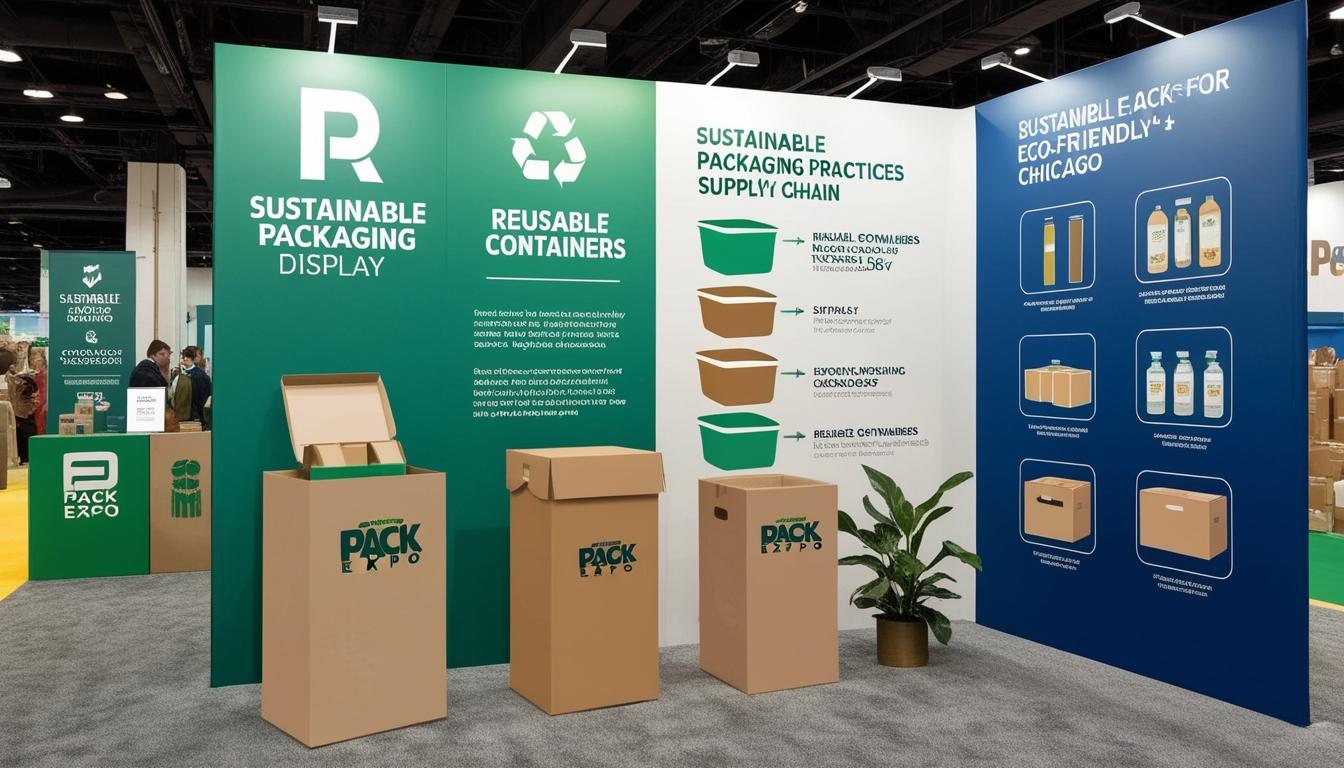
In Chicago, the recent Pack Expo at McCormick Place prominently highlighted a growing international focus on reuse strategies in waste management, particularly in packaging. This shift is being driven by heightened awareness among consumers, industry leaders, and policymakers about the environmental benefits of reusable packaging. The event, which took place in early 2024, was a testament to this evolving mindset, showcasing a multitude of resources and educational programmes aiming to promote sustainable practices in the supply chain.
Tim Debus, President and CEO of the Reusable Packaging Association (RPA), was one of the event’s key speakers. Addressing attendees, Debus spoke of a "global awakening" in recognising the value of reusables in environmental conservation. He elaborated on how this understanding is forming a new vision for packaging—one that maximises resource utilisation through multiple reuse cycles and integrates them into continuous utility.
Sustainability was the overarching theme of the exhibition, with the inclusion of "Sustainability Central," a specially curated section focusing on minimising energy consumption and carbon footprints in packaging and processing. Additionally, The Learning Center by the RPA offered a series of educational presentations and panel discussions about reusable packaging solutions.
Debus identified four significant trends—or "megatrends"—currently shaping the reusable packaging industry. These trends are contributing to a transformative change in market dynamics in favour of reusables.
The first megatrend is technology, integral to asset management in packaging solutions, particularly through its role in tracking and tracing. This technological enhancement allows businesses to gain comprehensive visibility over their supply chains, from start to finish, thereby significantly improving management and distribution efficiency. Within this realm, artificial intelligence (AI) is poised to revolutionise the sector. AI applications in reusable packaging are expected to digitise the economy and supply chains, enabling robust data handling capabilities that support predictive analytics, inventory management, and market disruption responses.
Public policy forms the second notable trend. Legislation at both state and federal levels could provide incentives for companies to reduce source materials in their packaging, aiding reusable strategies. Linked to this is the international progress on the United Nations plastics treaty, which aims to impose legally binding rules on plastic production and champion reuse and recycling. Notably, a recent letter from ten US states urged the Biden administration to adopt a more assertive stance in these negotiations.
The third trend involves metrics—the need for industry-specific measurements of emissions linked to product inventories. Employing smart technologies in reusable packaging can help generate precise environmental impact data, essential for establishing performance baselines and reporting improvements.
Finally, the industry's movement towards comprehensive data utilisation is identified as the fourth trend. Enabling access to real-time, accurate data will allow corporations to meet sustainability goals and address social metrics more effectively.
Debus emphasised the intersection of these trends, highlighting their combined potential to drive significant economic growth while advancing sustainability objectives. The combination of advanced technology, proactive public policy, and the availability of reliable data represents a powerful convergence of forces that could propel the packaging industry toward a more sustainable future.
Source: Noah Wire Services