Expansion of Aquaculture Research to Bolster Fish Farming in Hawaii
In an ambitious move aimed at revitalising the aquaculture sector in Hawaii, the University of Hawai'i at Mānoa has pioneered a new initiative to enhance the cultivation of native fish species such as mullet and Mozambique tilapia. The move is centred at the Tuahine Aquaculture Research and Education Center, marking a collaborative effort to address longstanding challenges faced by the fish farming industry in the region.
The centre, referred to as TAREC, serves as a focal point for research and education about aquaculture across the Hawaiian archipelago. Its establishment comes as Hawaiian heritage places significant historical importance on aquaculture, particularly in traditional fishponds that date back many generations.
Under the leadership of Andre Seale, a professor and researcher at the University of Hawai'i, TAREC has launched programmes aimed at cultivating mullet, a traditional staple fish that boasted yields of 700,000 pounds annually in the 1900s. The population of this species has severely declined in recent years, partly attributed to climate change impacts and environmental fluctuations, according to Seale.
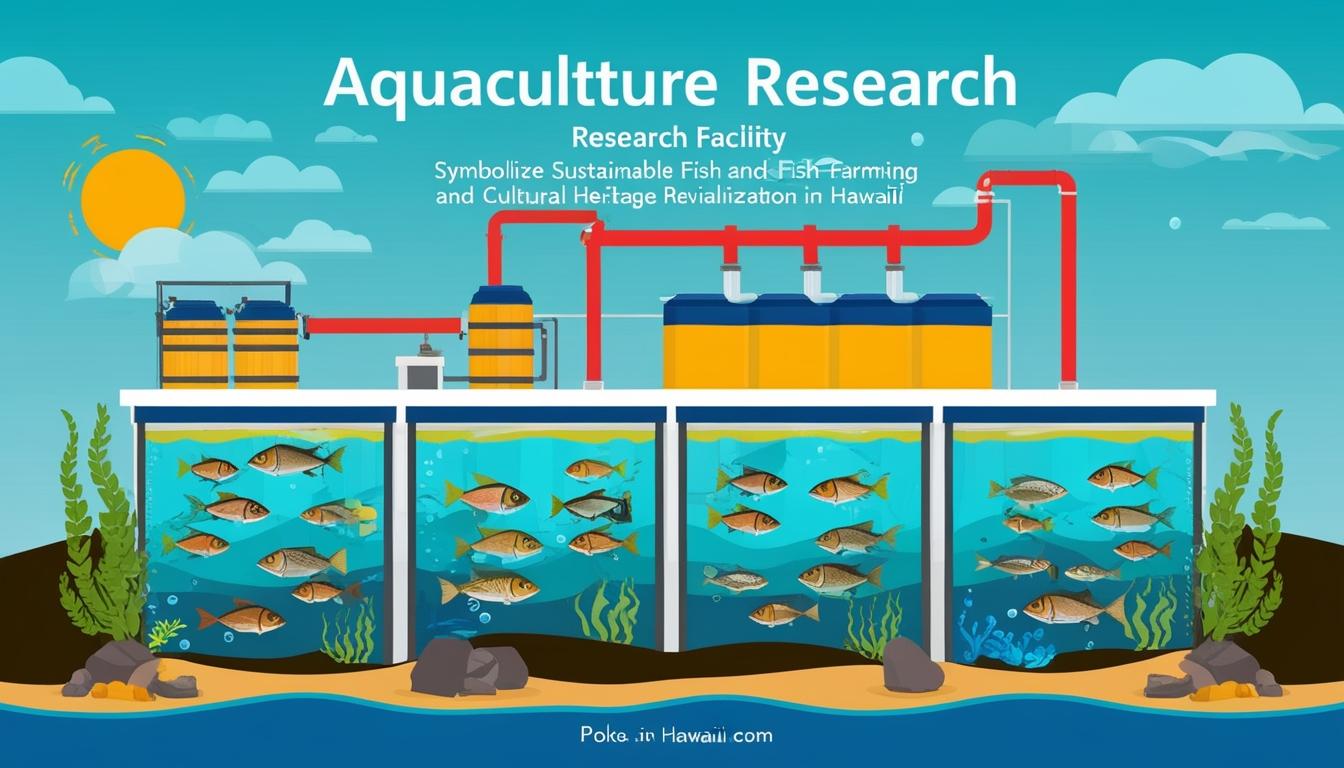
The research facility itself spans an impressive 8,600 square feet and houses 80 tanks with capacities ranging from five to 1,300 gallons, integrating an intricate water recirculation system. This technology enables the manipulation of saline concentrations to replicate various pond conditions across Hawaii, offering a controlled environment to foster fish adaptation and growth.
While the centre's approach is relatively novel, TAREC is built upon a foundation of traditional aquaculture practices. Adjustments in the management of salinity and other environmental factors are core to Seale's research, which aims to optimise conditions for young fish growth. TAREC also includes collaborative efforts with other campuses like the University of Hawaii at Hilo, bringing diverse methodologies into focus for student training and research.
Darren Okimoto, Associate Director of UH Sea Grant, underscores the cooperative nature of this venture, with UH Sea Grant contributing funds and expertise. The collaborative spirit extends to the College of Tropical Agriculture and Human Resources, enhancing the project’s capacity to train the next generation of aquaculture practitioners.
Seale's research parallels techniques akin to selective breeding used in dairy cow optimisation, focusing on growth rates and survivability under varied conditions. Such methods, though ancient in agriculture, are relatively groundbreaking in aquaculture and promise to reveal extensive insights.
Hawaii’s aquaculture industry currently generates about $90 million annually, but experts predict potential growth up to $600 million within the next decade. This would position aquaculture alongside other key local industries, including the state’s agricultural outputs of seed, cattle, and coffee.
However, achieving these targets hinges on overcoming several barriers, notably regulatory constraints and workforce development, as noted by industry leaders. Legislative support has been inconsistent, with State Senator Glenn Wakai emphasising the need for a streamlined regulatory environment in forthcoming legislative sessions.
The TAREC project is not just about food production but also ties into broader issues such as sustainability and climate adaptation. By fostering local production, the project hopes to reduce Hawaii’s heavy reliance on imported foods, strengthening food security and supporting local economies.
The initiative benefits from financial backing through various foundations, including the Stupski Foundation and Ulupono Fund, alongside individual supporters. These contributions are vital in driving forward the research and development required to ensure the success of such an innovative venture.
As TAREC continues its work, it stands to offer significant contributions toward reshaping Hawaii's aquaculture landscape, leveraging local expertise and cultural heritage to meet modern-day demands for sustainable food production.
Source: Noah Wire Services