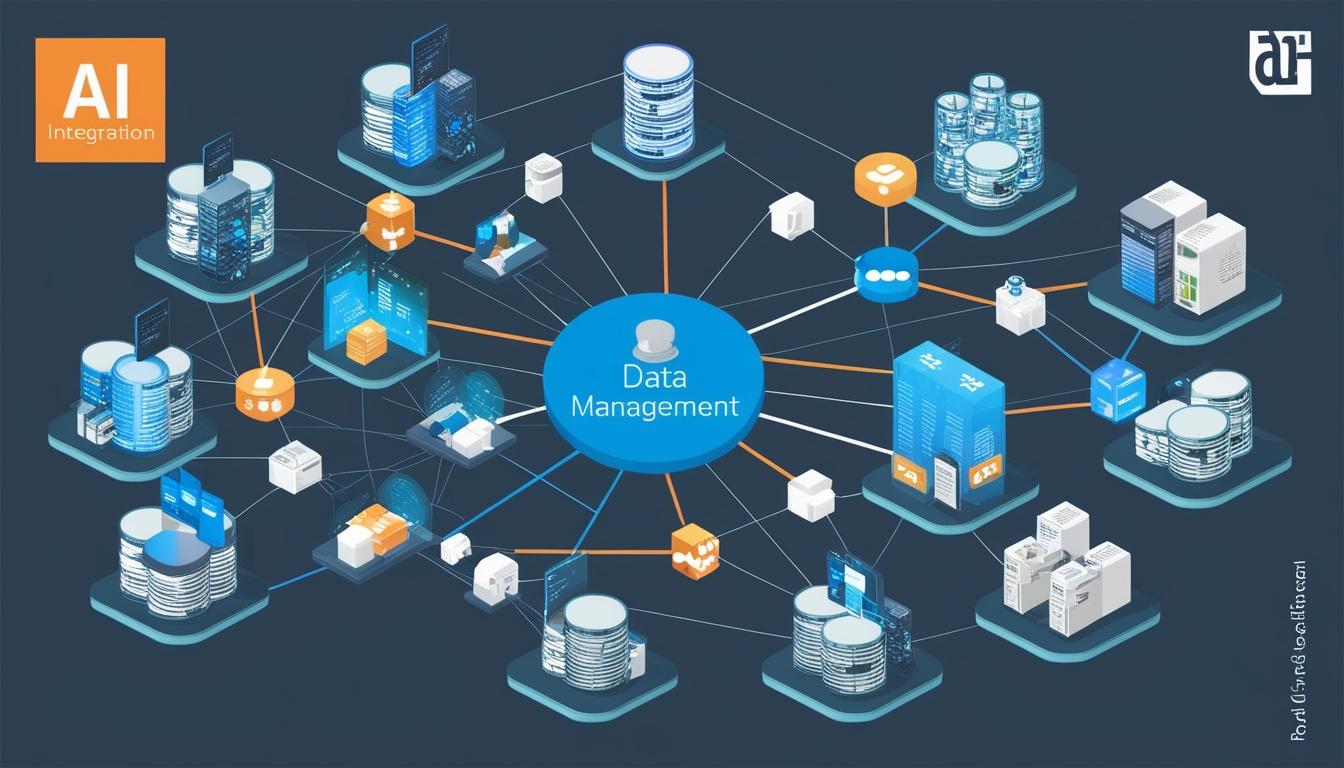
As the landscape of data management evolves to meet the rapidly expanding demands of artificial intelligence (AI) and machine learning (ML), experts at technology research and consulting firm Gartner have issued a cautionary note regarding the adoption of a single platform approach. This comes amid growing efforts by leading technology companies to market their platforms as comprehensive solutions for organisations aiming to enhance their AI capabilities.
Companies such as Snowflake, Google Cloud, Microsoft, and Databricks have been prominently involved in crafting data management and analytics platforms tailored for AI and machine learning applications. Despite the allure of a consolidated platform where users can manage all related tasks, Roxane Edjlali, a senior director analyst at Gartner, emphasises that these single-platform solutions might not fully meet the spectrum of needs required for AI-efficient data ecosystems.
Speaking in anticipation of her session at the Gartner Symposium, Edjlali elaborated on the limitations of the one-size-fits-all strategy. She noted that while a unified platform reduces the complexity of piecing together multiple components, it often falls short in areas pivotal to AI-readiness, such as observability, analytics, and AI governance. She commented, "Vendors offer appealing platforms that promise simplicity, but maturity across all necessary functionalities varies significantly."
A number of significant advancements have been made by platform providers to bolster their AI and ML functionalities. For instance, Databricks has integrated technologies from its $1.3 billion acquisition of MosaicML, a generative AI startup, to enhance its platform offering. Meanwhile, Microsoft's Fabric platform has introduced capabilities across diverse workloads, such as Data Engineering and Data Science for building AI models, and Snowflake has designed services to facilitate the integration of large language models (LLMs) into developer applications by managing the underlying infrastructure.
Despite these innovations, Edjlali points out that many enterprises face challenges in realizing a holistically integrated data platform, primarily due to the diverse nature of existing data management systems. Organizations often maintain a mix of on-premises and cloud-based systems, complicated further by multiple cloud environments stemming from mergers or differing departmental choices.
Edjlali also highlighted that keeping data management systems AI-ready is a continual process rather than a one-time setup. However, she acknowledged the role of AI itself in enhancing these systems. AI is becoming increasingly embedded within data management platforms, not only to support AI applications but also to streamline and optimise data management processes.
Overall, while the desire for a unified, simplifiable data management solution is prevalent among businesses, the journey towards achieving a fully integrated platform remains complex and laden with challenges. As AI technologies further embed into data management systems, the interplay promises to shape how organisations interact with and leverage data towards their strategic goals.
Source: Noah Wire Services