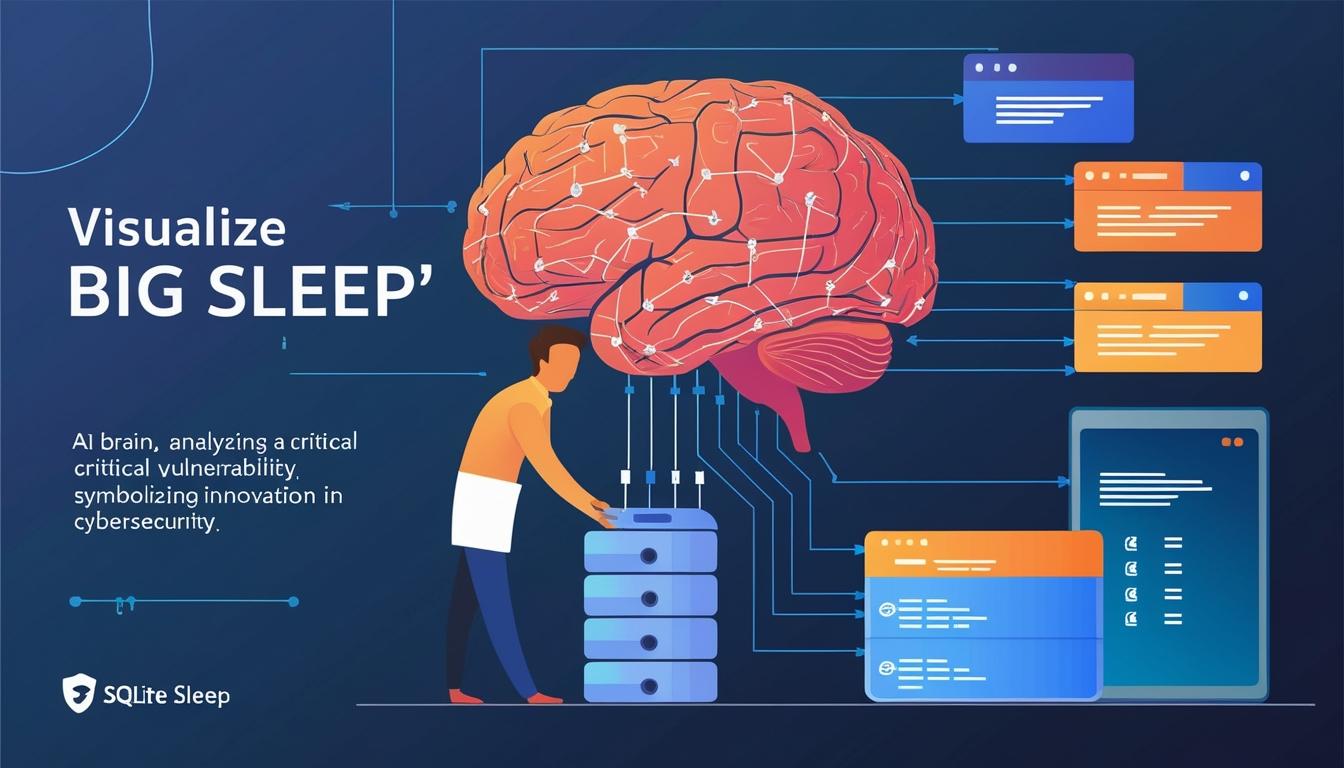
Google's AI Advances Cybersecurity with Discovery of Critical SQLite Vulnerability
In a groundbreaking development in the cybersecurity field, Google has announced that a novel artificial intelligence tool has successfully identified a critical zero-day vulnerability within the widely-used SQLite database. This latest innovation was coined "Big Sleep," a large language model (LLM) agent developed collaboratively by Google’s Project Zero and the AI research company DeepMind.
SQLite, an open-source database engine integrated across numerous applications from web browsers to embedded systems, was discovered to have a significant security flaw due to a defect in handling a special pattern in the ‘ROWID’ column. The failure to properly manage this pattern allowed a negative index to be inserted into a stack buffer. This vulnerability, if not rectified, could result in unstable behaviour or allow for arbitrary code execution by malicious actors.
Traditional techniques for identifying software vulnerabilities, such as fuzzing, typically operate by introducing unexpected inputs to discover potential weaknesses. However, Big Sleep surpasses these methods by employing AI to delve into the deeper logic of code. It is reported to work autonomously, akin to human security researchers, when scrutinising software. This characteristic allows it to unearth complex bugs that conventional systems might overlook.
During its analysis of recent changes in the SQLite source code, Big Sleep operated within a sandboxed environment, utilizing Python scripts to conduct a comprehensive review. It successfully pinpointed the negative index flaw, “-1,” which presented a serious, yet previously undetected, vulnerability.
“Finding vulnerabilities in software before it’s even released means that there’s no scope for attackers,” stated the Project Zero team at Google, underlining the defensive capabilities of this AI-driven methodology.
Big Sleep's achievement represents a significant leap forward in cybersecurity. The flaw it detected had bypassed existing testing infrastructures such as SQLite’s own systems and Google’s OSS-Fuzz project, both of which had failed to identify the issue. Upon being alerted by Google, the SQLite team promptly patched the vulnerability the same day it was discovered, thereby averting any potential exploits.
Interestingly, this is not Google's first foray into AI-assisted bug detection. In August this year, another AI tool, Atlantis, managed to identify a separate issue within SQLite. Such successes illustrate the burgeoning role of machine learning in safeguarding software integrity.
This latest development is part of Google’s broader initiative, named Project Naptime, which aims to integrate AI into cybersecurity practices. The project's objective is to create a robust LLM-powered framework that parallels the workflow of human security researchers. Google envisions a future where the Big Sleep tool will evolve further, becoming both a scalable and accessible asset in the arsenal of cybersecurity professionals worldwide.
Despite its current experimental status, Big Sleep’s early success is promising. Its developers acknowledge that traditional methods could have eventually detected the SQLite issue. However, the elegance and efficiency with which Big Sleep operated exhibits the profound potential AI holds in revolutionising cybersecurity.
Moving forward, Google intends to disseminate its findings, aspiring to bridge the gap in current vulnerability detection techniques. As the cybersecurity landscape becomes increasingly perilous with sophisticated threats, the development and deployment of AI tools like Big Sleep could help ensure a more secure digital ecosystem.
Source: Noah Wire Services