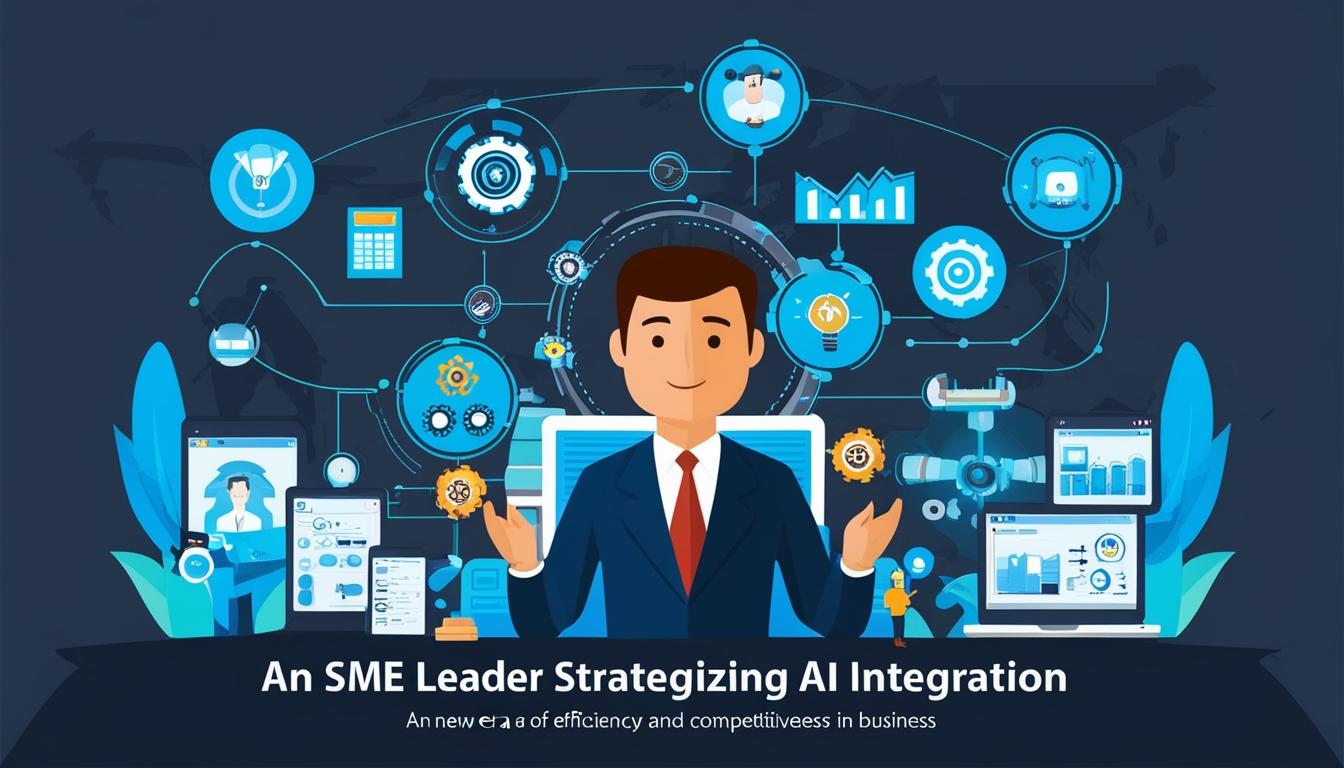
In recent developments within the field of artificial intelligence, small and medium-sized enterprises (SMEs) are being positioned at a pivotal juncture where the integration of AI technologies could drive significant operational advantages. Olivier Leroy, the head of the data lab at PMP Strategy's Paris office, has delineated a vision for SMEs to harness these "unprecedented opportunities" by charting out clear transformation roadmaps and acquiring necessary talent.
A major shift in AI technology is highlighted by the introduction and escalation of AI agents. These agents, which are autonomous systems designed to undertake tasks without direct human supervision, are poised to revolutionise traditional business processes. Salesforce CEO Marc Benioff has articulated a strategic pivot towards these agent-based systems. Through the Salesforce AgentForce initiative, the aim is to deploy one billion AI agents by 2025, which will automate tasks such as customer segmentation and marketing campaign launches, thereby broadening the scope of large-scale automation.
In the same vein, Anthropic has introduced a "Computer use" feature for its AI platform, Claude 3.5, allowing it to perform computer-based tasks akin to its competitor, ChatGPT4o. These advancements represent a shift from traditional Software as a Service (SaaS) models in the tech landscape, marking a potential leap forward for businesses in utilising technology to streamline operations.
Olivier Leroy, with extensive expertise in data analytics and strategy development, emphasises that mid-market firms could significantly benefit from integrating AI at the core of their business strategies. He draws parallels with the operational model of OpenAI, which, despite its modest employee count, has achieved a substantial market value through strategic use of AI. Leroy suggests that SMEs can similarly harness AI to transform practices like customer acquisition and strategic monitoring with relatively modest financial investment.
To navigate the integration of AI technologies, Leroy proposes four strategic steps for SMEs. Firstly, he advises adopting a "North Star" vision, which serves as a guiding concept embodying the long-term goals of a product or job role. This approach entails viewing technological integration as a progressive step towards achieving wider business objectives.
Secondly, recruiting a capable Chief Technology Officer (CTO) who can harmonise technology with business objectives is pivotal. While this may seem like a costly endeavour, Leroy suggests that the investment will pay off through the support provided by AI to less experienced staff, ultimately reducing overall employment costs.
Continuous development and integration of the latest technologies form the third cornerstone of Leroy's strategy. By staying abreast of advancements such as optical character recognition, which can significantly cut down on manual data retrieval tasks, SMEs can maintain cost-effectiveness.
Lastly, Leroy stresses the importance of monitoring technological advancements. Understanding the convergence and interaction capabilities of exponential technologies can enable firms to make informed decisions without being burdened by technical limitations.
In conclusion, Leroy envisages a future where mastering cloud computing, AI, APIs, and automation can render SMEs highly efficient despite their limited resources. While large corporations may face the challenges of retraining human resources and managing profitability amid automation, SMEs have a unique opportunity to remain competitive by re-evaluating business models and task allocations in harmony with technological advances. This, according to Leroy, not only facilitates cost savings and boosts productivity but also ensures sustained competitiveness in a rapidly evolving market.
Source: Noah Wire Services