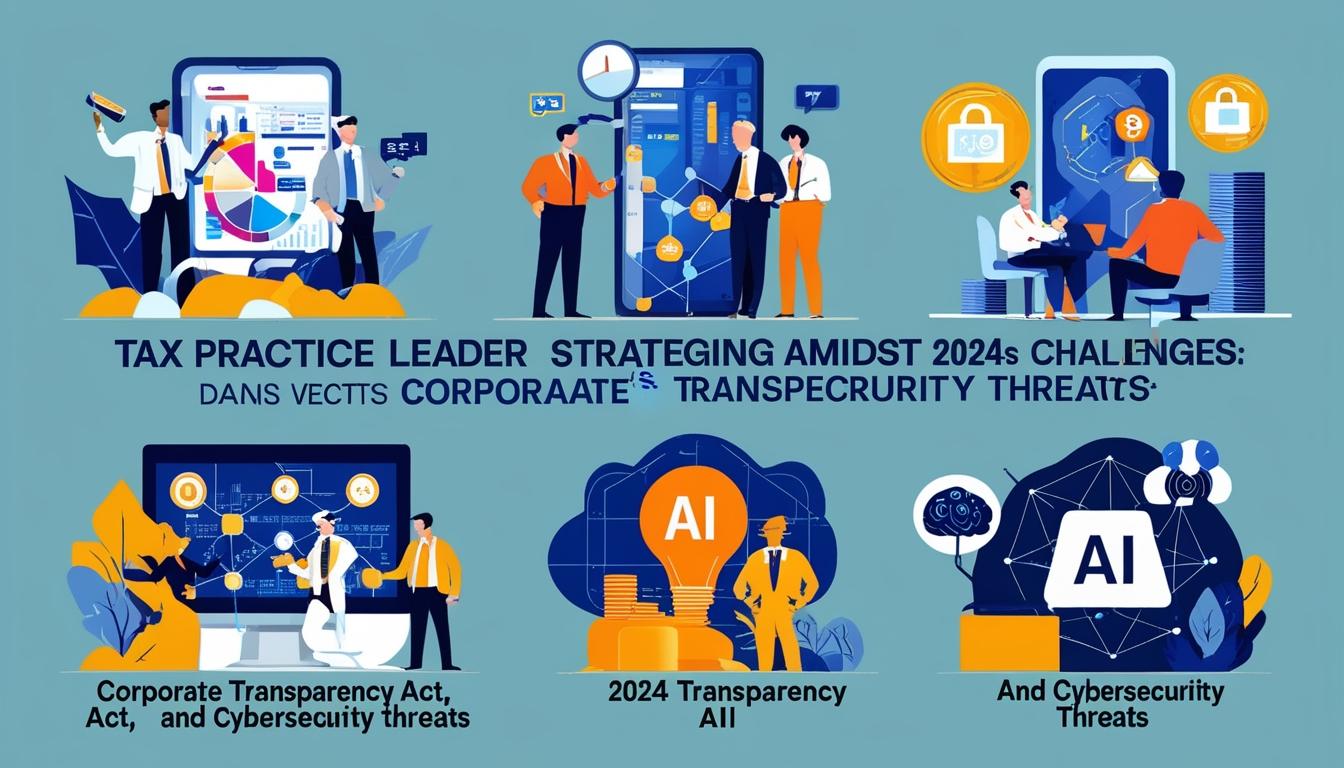
Navigating 2024: Tax Practices Confront New Challenges with the Corporate Transparency Act, Artificial Intelligence, and Cybersecurity Threats
As 2024 unfolds, tax practice leaders are faced with a complex landscape shaped by the implementation of the new Corporate Transparency Act (CTA), the integration of artificial intelligence (AI), and the ever-present threat of cybersecurity breaches. These three major areas of liability require immediate focus and strategic navigation to ensure both the protection of the practice and the effective service of clients.
Corporate Transparency Act: A New Compliance Landscape
Effective January 1, 2024, the Corporate Transparency Act introduces stringent beneficial ownership reporting requirements, posing a significant challenge for tax practices nationwide. Many small businesses are seeking the counsel of their tax advisors to meet compliance standards, which presents both opportunities and risks for practitioners.
A paramount concern under the CTA is whether the provision of advisory services on beneficial ownership could be construed as the unauthorized practice of law (UPL). Because UPL definitions vary by state, tax practitioners must carefully assess their exposure in every jurisdiction where they operate. To mitigate risks, it is advisable for firms to adopt a systematic approach to CTA services. This can include issuing written notifications to clients about the new requirements and recommending legal consultation when necessary.
Furthermore, engagement letters require immediate revision. Firms need to either adjust standard tax and financial statement engagement letters to explicitly exclude CTA services or develop specific engagement letters for CTA work that plainly outline the scope of services provided. An evaluation of whether the firm itself qualifies as a "reporting company" under CTA guidance is also essential.
Artificial Intelligence: Balancing Opportunity and Risk
Artificial intelligence is no longer a mere buzzword; it has become a practical tool within tax practices. While AI offers substantial benefits in efficiency and service delivery, it also introduces new risks that must be managed diligently. Concerns surrounding the accuracy, quality control, confidentiality, privacy, and security of AI-generated work cannot be overlooked.
Successful AI integration requires a robust implementation plan. This involves crafting clear policies that dictate authorized AI usage within the firm, stipulating what data can be input, and detailing verification procedures for AI-generated outputs. Comprehensive staff training is crucial to ensure responsible and effective AI use.
Cybersecurity: A Persistent Challenge
The sensitive financial and personal data managed by tax practices makes them appealing targets for cybercriminals. A particularly insidious threat is the "man in the middle" attack, where hackers manipulate email communications between clients and firms to enact fraudulent wire transfers. These attacks often mimic legitimate historical requests, complicating detection efforts.
To safeguard against such threats, tax practices should institute stringent wire transfer protocols with clients. Multi-factor authentication and verbal confirmation for all transfer requests are prudent steps. Regular reviews of cyber insurance policies are also necessary to ensure adequate protection against current cyber threats.
The Importance of Engagement Letters
Insurance data highlights the critical nature of engagement letters: approximately 75% of tax-related claims in 2023 lacked these documents, and over half involved disputed services without a defined scope. Engagement letters serve as a primary defence against liability claims, yet resistance to their use persists, especially with long-term clients.
Alvin Fennell, vice president at Aon, observes, "CPAs are extremely customer-sensitive. Where they have a longtime client, they hate to request an engagement letter." His advice is straightforward: attribute the requirement to insurance carrier demands.
Strategies for Effective Risk Management
To address these challenges efficiently, tax practices should adopt a proactive approach. Key steps include revising all engagement letter templates to reflect current risks, documenting AI usage policies, implementing wire transfer verification protocols, and issuing CTA notifications to clients. Further measures such as reviewing client acceptance criteria, evaluating professional liability coverage, and developing training programs for staff are instrumental in managing new risk areas.
In addition, it is advisable to review UPL regulations across all states where the firm operates, document cybersecurity procedures, and develop a comprehensive incident response plan for potential data breaches. Continuous review and adaptation of these strategies will enable practices to navigate emerging challenges effectively.
Christine Gervais, an esteemed CPA with extensive experience and a Master's degree in accounting from Southern New Hampshire University, underscores the importance of strategic risk management. Known nationally for her educational contributions to CPAs and business owners, Gervais emphasises the value of forward-thinking financial strategies in fostering client growth. When away from her professional commitments, Christine enjoys pastoral family life, tending to their many farm animals.
By staying vigilant and adaptive, tax practice leaders can steer through the complexities of 2024, ensuring both compliance and client trust remain intact amidst evolving challenges.
Source: Noah Wire Services