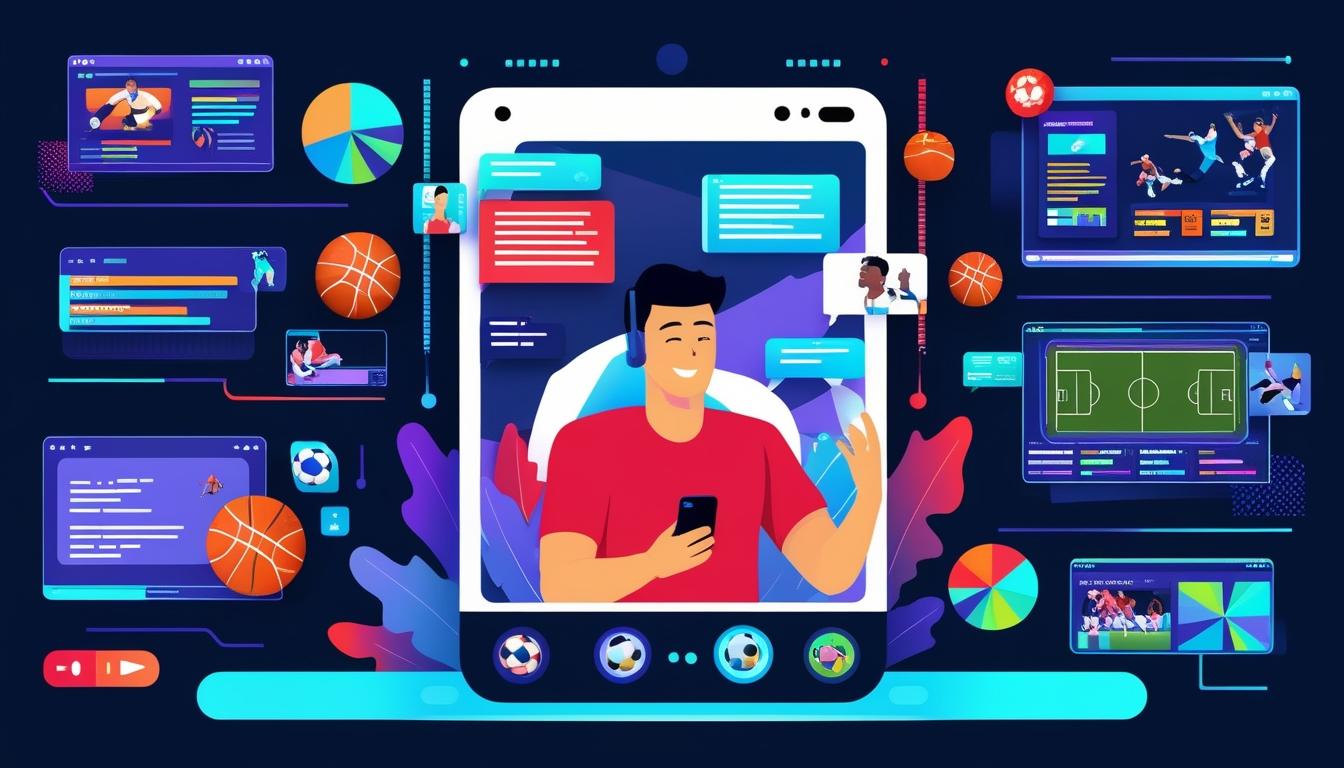
New Frontiers in Sports Broadcasting: Harnessing AI for Personalised Content
As the digital landscape continues to evolve, the sports industry finds itself at a pivotal juncture where traditional methods of broadcasting no longer suffice in meeting the demands of a diversifying global audience. Today's sports fans are more discerning, with their consumption habits shaped by an attention economy that rewards content that is not only timely but also tailored to their specific preferences. To adapt to these changing dynamics, broadcasters and rights holders are increasingly turning to advanced digital technologies, with Artificial Intelligence (AI) at the forefront of this transformation.
With the advent of AI, the personalised and localised distribution of sports content has reached new levels of sophistication, unlocking unprecedented opportunities for engagement and revenue generation. The challenge lies in understanding that no two sports fans are identical, and a one-size-fits-all approach is likely to miss the mark in such a segmented market. In essence, the capacity for personalisation must scale alongside technological innovations to accommodate the diverse demands across various demographics and geographies.
Broadcasters are capitalising on AI's ability to process vast amounts of video content and data to meet these needs. Intelligent algorithms can now generate customised clips and highlights that cater to the unique tastes and interests of individual fans. This precision in content delivery is crucial as sports organisations look to maintain and expand their market share in the face of increasing global competition and the risk of fans migrating to alternative platforms offering more compelling experiences.
Geographic and demographic differences significantly influence how sports content is consumed. For instance, younger audiences may prefer bite-sized highlights that they can watch on smartphones or tablets, whereas older demographics might still value the comprehensive coverage of live broadcasts. Moreover, cultural factors dictate the sports that are most popular and the style of presentation that resonates best in different regions. By leveraging AI, sports content producers can tap into these subtleties to enhance both localisation and personalisation, thus maintaining user engagement.
The benefits of this digital transformation are manifold. Not only does AI-driven personalisation enhance viewer engagement by delivering relevant content more effectively, but it also opens up new revenue streams. Advertisers, for example, can target specific audience segments with precision, whether they are avid followers of a particular sport or casual viewers interested in broader entertaining elements. In addition, subscription models can be tailored to suit varied levels of engagement, offering everything from all-access passes for die-hard fans to flexible, pay-as-you-go options for those who prefer occasional viewing.
As the sports industry moves further into the digital age, the role of AI in content production and delivery will undoubtedly continue to grow. By facilitating personalisation and localisation at an unprecedented speed and scale, AI not only helps broadcasters and rights holders to meet the ever-evolving expectations of modern sports fans but also to remain competitive in a rapidly shifting market landscape.
In conclusion, digital technologies, bolstered by AI advancements, are redefining the sports industry by transforming how content is produced, distributed, and consumed. This evolution is setting the stage for a more engaging and versatile approach to sports media, ensuring fans receive the content they crave, precisely how and when they wish to consume it. Throughout this transformation, the marriage of technology and sport promises to enrich both the experience for fans and the potential for industry growth.
Source: Noah Wire Services