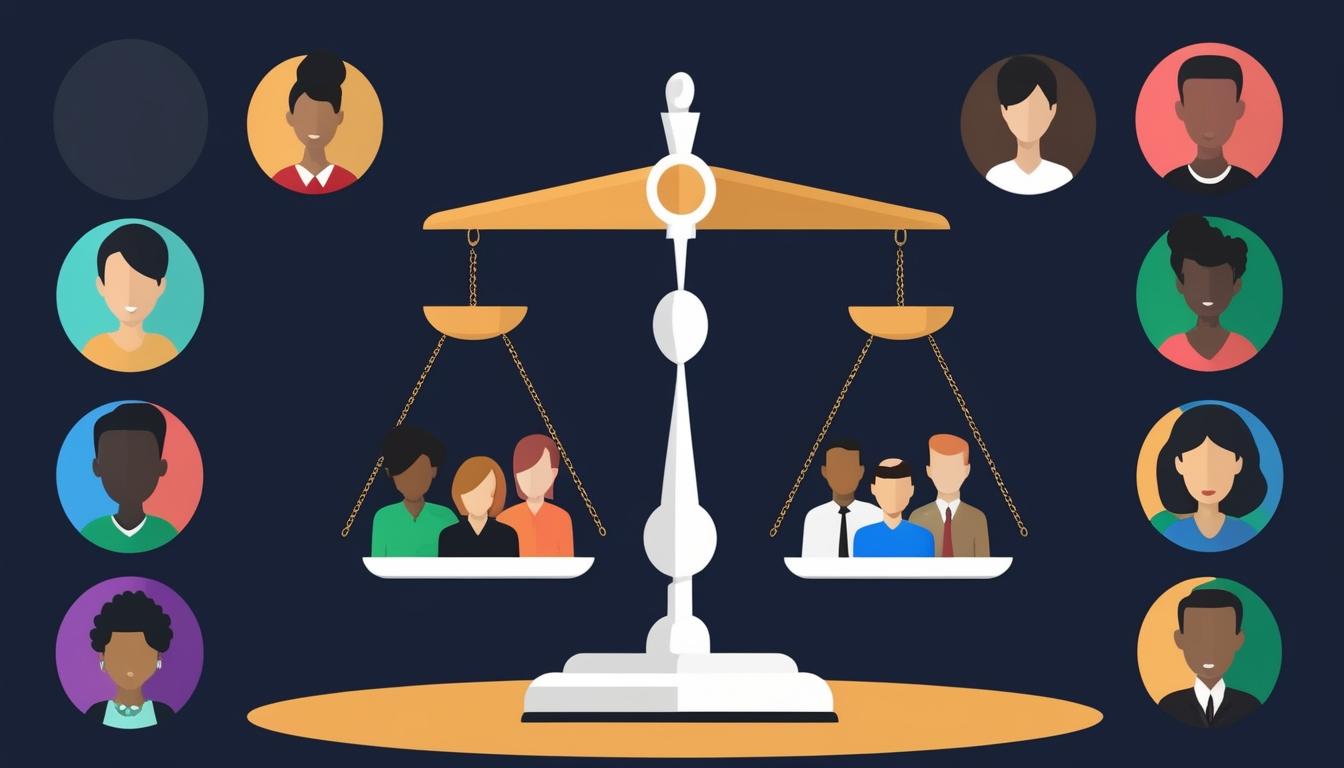
Researchers from the University of Iowa and Texas A&M University are tackling the pressing issue of bias in artificial intelligence (AI) models, with a particular focus on applications in societal and business contexts. Associate Professor Qihang Lin from the University of Iowa's Tippie College of Business and Associate Professor Tianbao Yang from Texas A&M have received an $800,000 grant from the National Science Foundation to study and propose solutions to bias in AI.
AI's integration into everyday decision-making processes is expanding rapidly, profoundly influencing various sectors such as finance, retail, and government services. These AI models boast an impressive ability to process and interpret vast data sets using machine learning algorithms. However, this very capability also highlights their susceptibility to biases, influenced by the data they learn from, which can lead to socially detrimental outcomes.
Lin and Yang's research takes a critical look at decision-making algorithms used in loan approvals and the distribution of online discounts, among other applications. Their findings indicate that AI models inadvertently propagate biases when they evaluate individuals based on demographic data such as gender, race, ethnicity, and age, potentially resulting in unfair discrimination in critical areas like loan approval and economic opportunities.
For instance, they found disparities in how AI models rated male and female groups and varied ethnicities. These biases arise because AI often uses statistical rankings to predict which applicants or consumers are most likely to engage positively with a product or service. In a commercial scenario, for example, AI models might rank potential discount recipients based on their recorded purchasing likelihood, which might favour certain groups over others due to biased training data.
Addressing these biases requires a delicate balance between algorithmic accuracy and fairness. Lin suggests one approach is adjusting the input lists to reflect a more balanced representation of different demographics, thus encouraging the models to make more equitable decisions. This involves mixing individuals from diverse backgrounds and characteristics across different ranking positions.
Despite these strides, Lin acknowledges reaching absolute fairness can sometimes reduce the effectiveness of AI models. For instance, overly equitable models might distribute discounts to individuals unlikely to use them, thereby affecting a company's bottom line. Therefore, tuning these models requires careful adjustments to maintain commercial viability while ensuring fairness.
Yang and Lin's work isn't limited to consumer discounts; they also explore insurance models, focusing on health insurance for the elderly, and how AI could potentially skew resource allocation unfavourably. These concerns highlight the broader implications of AI biases, which might influence disaster relief efforts by misallocating resources based on flawed assumptions about who needs aid most.
Thiago Serra, an Assistant Professor and Researcher at the Tippie College of Business, underscores the necessity for continued research and careful implementation of AI technologies. He emphasises that while data availability has allowed AI to flourish, it is crucial not to overestimate AI's capabilities, which can lead to setbacks reminiscent of the past AI winters—periods characterized by a loss of interest and funding due to unmet expectations.
As AI becomes ever more integrated into the fabric of modern life, the work of Lin, Yang, and their colleagues serves as a pivotal effort in ensuring these systems work fairly and effectively for everyone. Their ongoing research aims to create a framework that balances the innate power of AI with a commitment to ethical and unbiased decision-making.
Source: Noah Wire Services