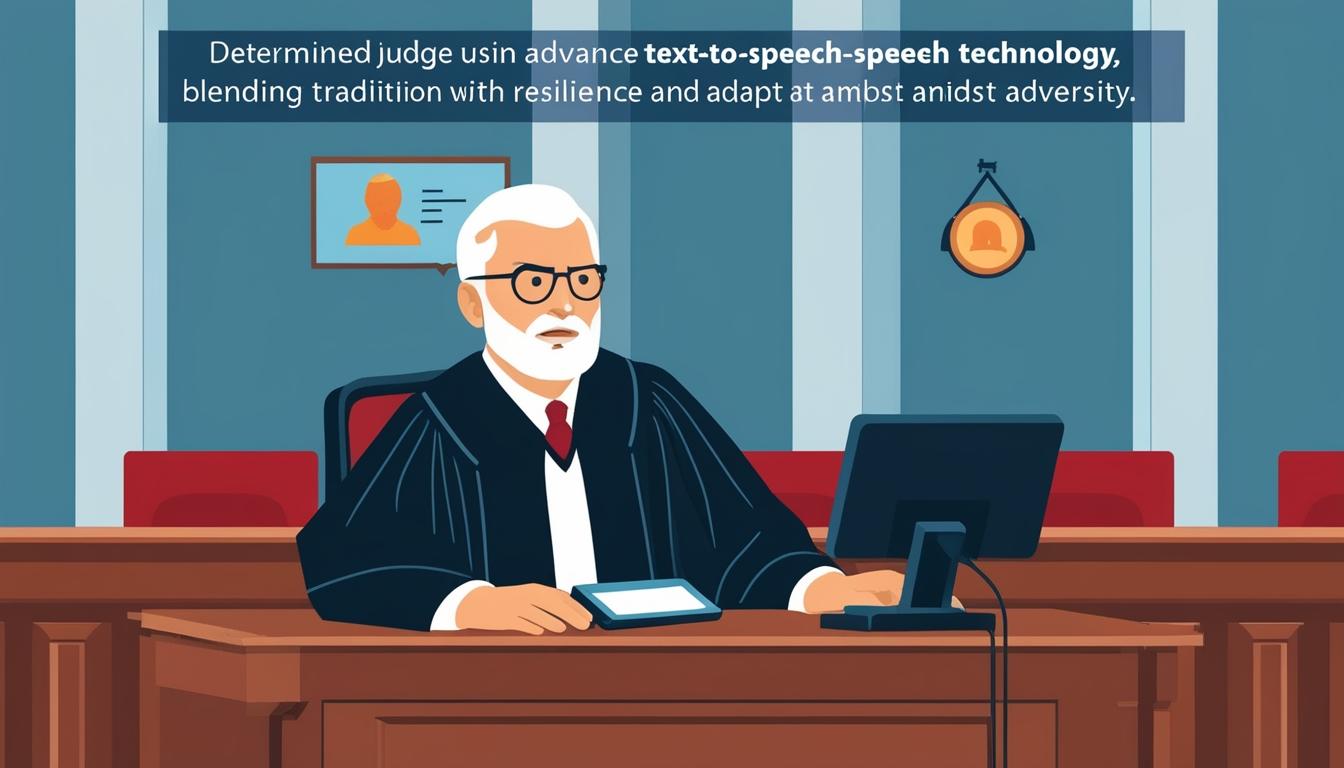
Sheriff Alastair Carmichael, who dispenses justice from the bench at Dundee Sheriff Court, is facing an unexpected battle after being diagnosed with Motor Neurone Disease (MND). The degenerative condition, known for its progressive muscle wasting effects, has begun to compromise his ability to speak—a crucial tool in his role as a presiding judge.
Diagnosed in February after noting a developing lisp, the 61-year-old Carmichael is navigating this new reality with the aid of advanced AI technology. By utilising a sophisticated text-to-speech application, the sheriff continues to conduct court proceedings despite the challenges posed by his condition. This technology allows him to type words or phrases, which are then articulated by a synthetic voice.
Sheriff Carmichael's embrace of this technology ushers in uncharted territory for the justice system, where synthetic voices replace the human touch. He has lightened the atmosphere by likening the artificial sound to that of the Daleks, iconic characters from the BBC's Doctor Who series known for their distinctive electronic intonations. The sheriff recounted asking a defendant if it felt like they were being sentenced by one of these fictional creatures, demonstrating his attempt to maintain a sense of humour amidst adversity.
The transition hasn't been without its difficulties, especially since MND previously claimed the life of Scotland rugby legend Doddie Weir two years ago, highlighting the disease's formidable nature. Sheriff Carmichael currently focuses on non-jury cases due to the challenges in engaging jurors with a synthetic voice but remains optimistic about returning to preside over jury trials in the future.
Despite these trials, the sheriff is practising touch-typing in hopes of facilitating real-time conversation capabilities with more advanced apps. This adaptation reflects a broader trend of integration and adjustment within the court system, with Carmichael noting the supportive adaptations by the defence, prosecution, and court staff.
In speaking to the Courier newspaper, Sheriff Carmichael expressed a mix of pragmatism and optimism. He described the situation as a chance to reevaluate and adapt, both personally and within the legal system. "It's not about what can't I do, but what can I do?" he remarked, reflecting his determination to remain actively involved in his judicial duties. This outlook allows him to sustain his sense of self-respect and contribution, highlighting the positive attitude he maintains throughout his journey.
Sheriff Carmichael's story illustrates the intersection of technology and human tenacity in the face of life's unpredictable challenges, and the ongoing efforts by all involved to accommodate and support him in continuing his important work at Dundee Sheriff Court.
Source: Noah Wire Services