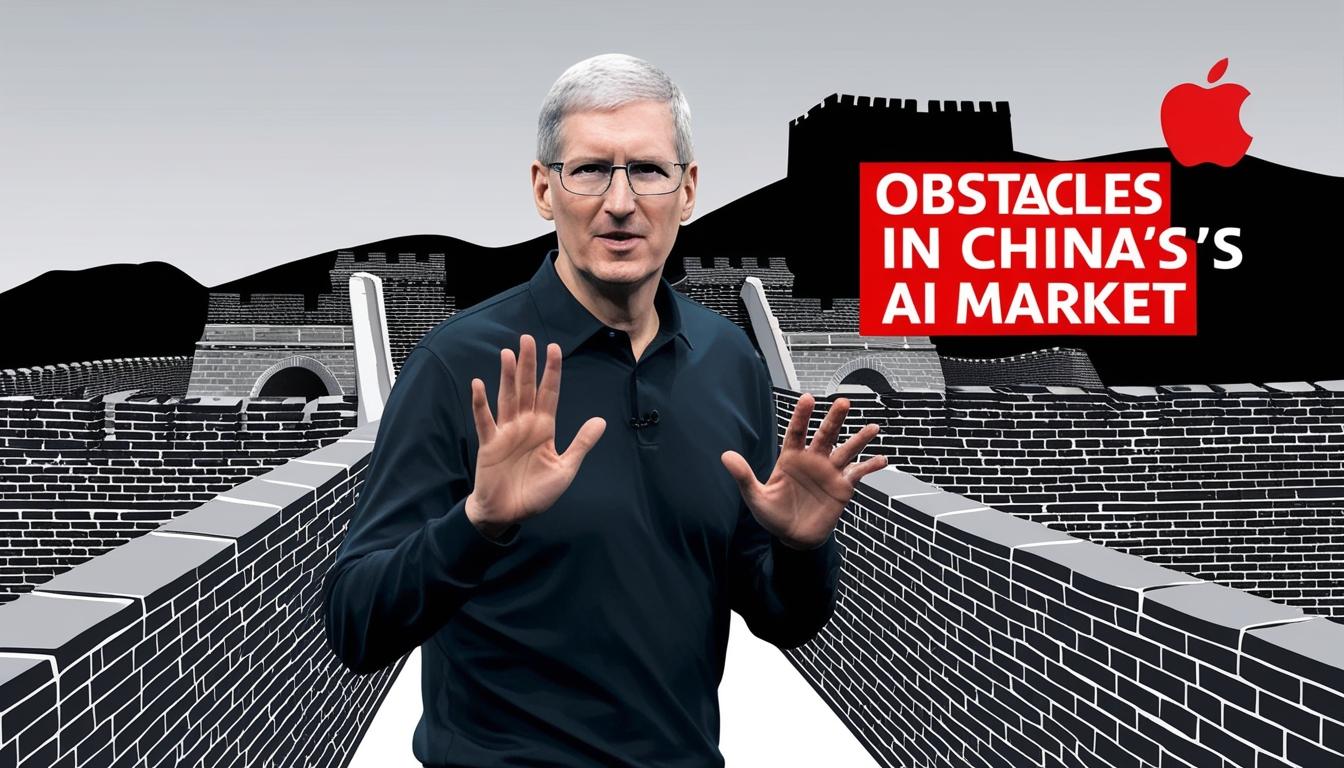
Apple Inc. is currently facing significant hurdles in its efforts to launch its Apple Intelligence platform in China. According to a report from the Financial Times, the Chinese regulatory environment presents a formidable challenge for foreign companies seeking approval for new technologies, particularly in the field of artificial intelligence (AI). A senior official from the Cyberspace Administration of China articulated that a "difficult and long process" awaits those foreign device manufacturers who aim to enter the market independently, urging a partnership with local firms as a more viable alternative.
The Chinese regulatory body has indicated that foreign companies could experience a simplified approval pathway if they opt to leverage existing large language models (LLMs) developed by Chinese tech companies. This has prompted Apple to initiate discussions with several prominent Chinese firms, including the search engine giant Baidu, social media and tech powerhouse ByteDance, and the AI startup Moonshot. These collaborations could potentially underpin the AI features of Apple Intelligence on devices sold across mainland China.
In an effort to personally navigate this intricate regulatory landscape, Apple CEO Tim Cook made a notable visit to China on Monday to participate in a CEO summit alongside Chinese Premier Li Qiang. This visit coincides with Cook’s previous remarks during a past expedition to Beijing, where he acknowledged the stringent regulatory requirements for expanding Apple's AI capabilities and expressed the company's commitment to delivering Apple Intelligence to Chinese consumers.
Since October, Apple has been progressively introducing Apple Intelligence features in the US and other international markets. The offering includes advanced tools for writing and enhancements to Siri, which utilise a combination of on-device processing, private cloud computing resources, and inputs from OpenAI's ChatGPT for more complex inquiries. However, a failure to secure approval for its proprietary AI models could force Apple to depend heavily on Chinese partners' LLMs to incorporate AI functionalities into its devices in China.
Industry analysts, including JP Morgan’s Samik Chatterjee, have expressed concerns that the underlying regulatory uncertainties could postpone the launch of Apple Intelligence in China until "well into the second half of 2025" or even later. These delays highlight the importance of adopting a flexible approach that encompasses multiple partnerships with Chinese companies to facilitate a more expedient approval process.
China represents a crucial market for Apple, accounting for approximately 17% of its overall revenue. Nevertheless, the company has recently witnessed an 8% decline in sales within the region, elevated by the mounting competition from local rival Huawei, which has already begun integrating its own AI features into its newly released smartphones. The competitive landscape, alongside the complex regulatory challenges, underscores the pressures Apple currently faces in establishing a foothold in one of its most significant markets.
Source: Noah Wire Services