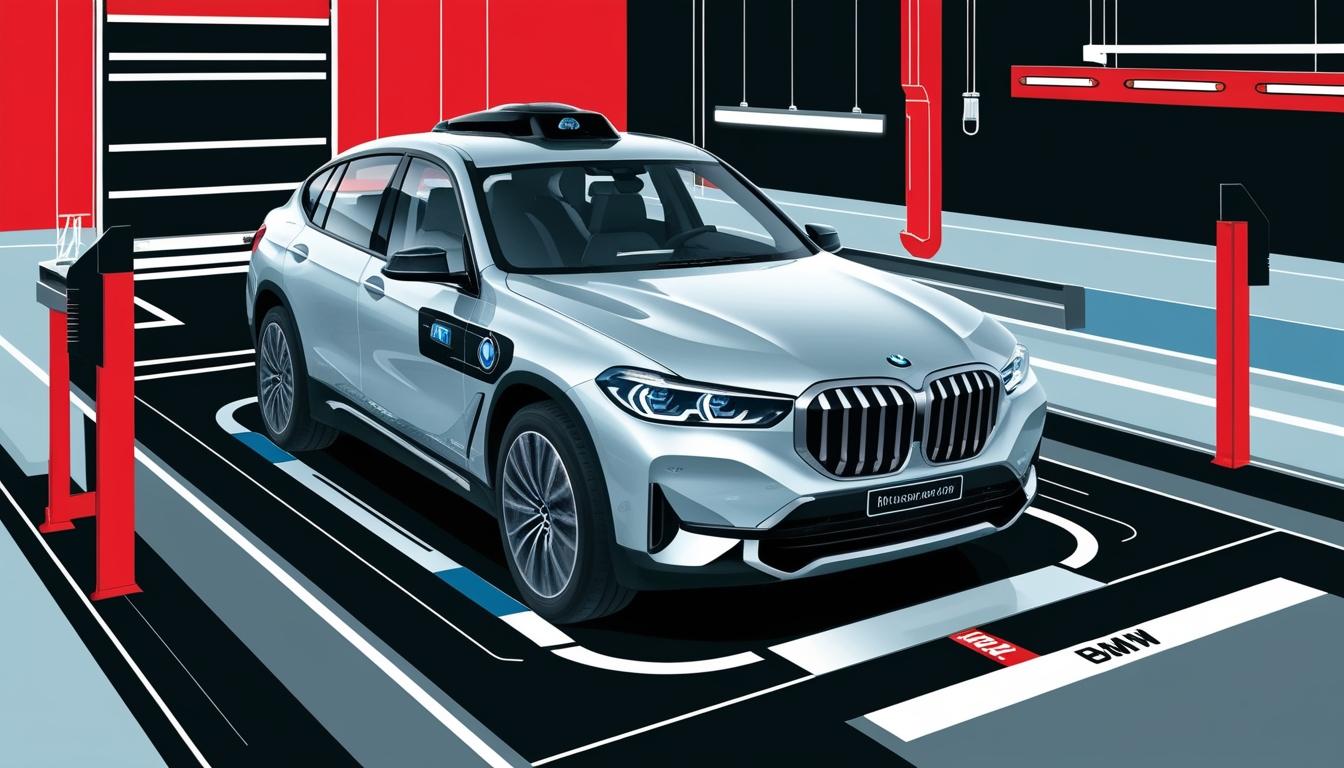
The implementation of autonomous vehicle technology at BMW marks a significant advance in manufacturing processes within the automotive industry. Following a two-year pilot programme in Germany, the company is poised to integrate these self-driving systems into several of its production facilities.
The technology relies on Lidar sensors strategically placed along a pre-defined route within the factories, allowing vehicles to navigate autonomously without an extensive dependency on a vehicle's specific equipment options or advanced on-board systems. This aspect is critical, as it allows a broad range of BMW's models to utilise this innovation seamlessly.
The initial pilot began in 2022 at the Dingolfing plant, where BMW produces the 5-Series and 7-Series models. Within this facility, the vehicles can independently manoeuvre along a circuit exceeding one kilometre, stretching from two assembly halls to a designated test area, concluding at the plant’s finishing section. The pilot programme is now transitioning into a full-scale operational phase.
In addition to Dingolfing, the Leipzig plant is reportedly undergoing upgrades to implement the same Automated Driving In-Plant (AFW) system, projected to serve roughly 90% of the BMW and Mini line-up manufactured there. This technological transition illustrates BMW's commitment to enhancing production efficiency while integrating cutting-edge technology into its manufacturing process.
Looking ahead, BMW plans to introduce the automated driving technology at its Regensburg and Oxford plants by 2025. Furthermore, a new facility in Debrecen, Hungary, set to commence series production, will likewise adopt this advanced automated system.
Milan Nedeljković, the BMW board member responsible for production, highlighted the benefits of this technology, stating, "Automated Driving In-Plant optimizes our production process and delivers significant efficiency gains for our logistics." His remarks indicate a strategic focus on harnessing advances in automation to streamline operations and improve logistical workflows throughout the production network.
The implications of this autonomous driving technology extend beyond mere transportation within the plants. BMW envisions the expansion of such systems into other facets of vehicle production. Future plans include allowing newly assembled cars to autonomously navigate through testing zones and outdoor distribution areas, suggesting an evolution in operational practices that aligns with industry trends toward greater automation and efficiency.
Overall, BMW's initiative demonstrates a commitment to leveraging emerging technologies in order to reshape traditional manufacturing paradigms while preparing for a future where vehicle automation is commonplace both on the road and within factories.
Source: Noah Wire Services