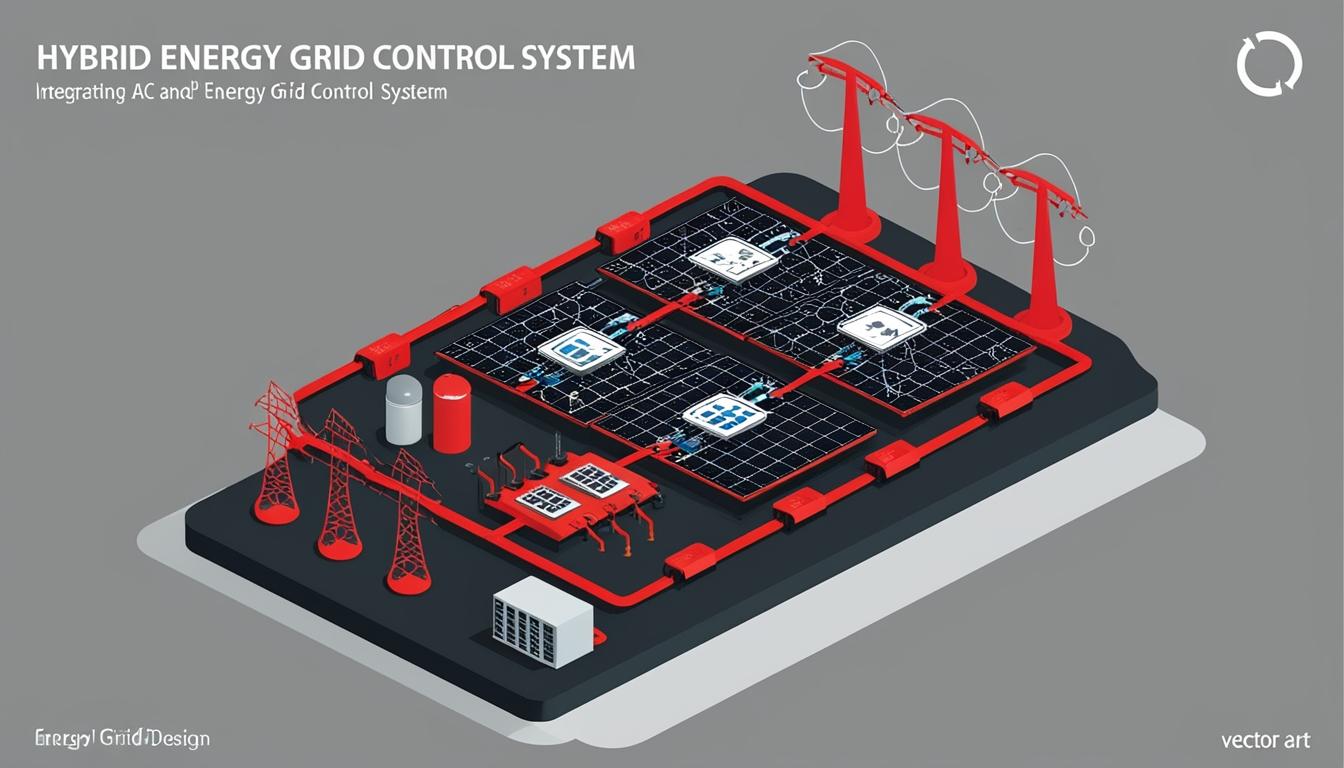
The InterSCADA project, an initiative supported by Horizon Europe, aims to enhance energy control systems that ensure the stability of power grids utilising diverse generation resources. Launched in October 2024 with a funding allocation of €6 million (approximately US$6.3 million), the project is set to run for 36 months, concluding in September 2027.
Designed as an interoperable, scalable, and secure automation system for alternating current (AC) and direct current (DC) hybrid power grids, InterSCADA seeks to create an open-source, vendor-independent software framework. This framework will facilitate the analysis and control of complex hybrid power systems operating at multiple voltage levels.
The increasing integration of renewable energy sources, such as wind and solar power, into the electrical grid necessitates the use of electronic converters and the construction of DC lines alongside smaller networks. As a result, the modern power infrastructure is becoming increasingly a blend of AC and DC. However, this transition poses significant challenges regarding the stability and smooth operation of hybrid systems, particularly for operators across both distribution and transmission segments.
Professor Antonello Monti, the Head of Energy System Automation at the Fraunhofer Centre for Digital Energy and the project coordinator, highlighted the significance of collaboration, stating, “Cooperation is key for innovating with impact, and so we work alongside different energy stakeholders both from the project team and beyond.” He emphasised the project's objective to bridge the operational divide between AC and DC control systems through the development of open, modular, and adaptable solutions.
To assess the effectiveness of the new InterSCADA platform, deployment and testing will take place across four European countries: France, Greece, Italy, and Spain. This approach aims to ensure that the solutions developed are adaptable to a variety of geographical contexts, as well as compliant with diverse regulatory and technical requirements.
Eamonn Lannoye, managing director of EPRI Europe and one of the project's key participants, likened the InterSCADA initiative to a sophisticated traffic control system that can efficiently manage both cars and bicycles on the same roadway, ensuring a seamless flow. EPRI Europe is primarily focused on analysing current practices related to managing and controlling hybrid AC/DC power systems, aiming to identify areas in need of technical and regulatory improvements while proposing a new framework to optimise the effectiveness of SCADA systems.
This collaborative project involves 18 partners from nine EU countries, along with participation from Taiwan, underscoring a united effort towards advancing energy grid innovations in the face of increasing reliance on hybrid systems and renewable energy sources.
Source: Noah Wire Services