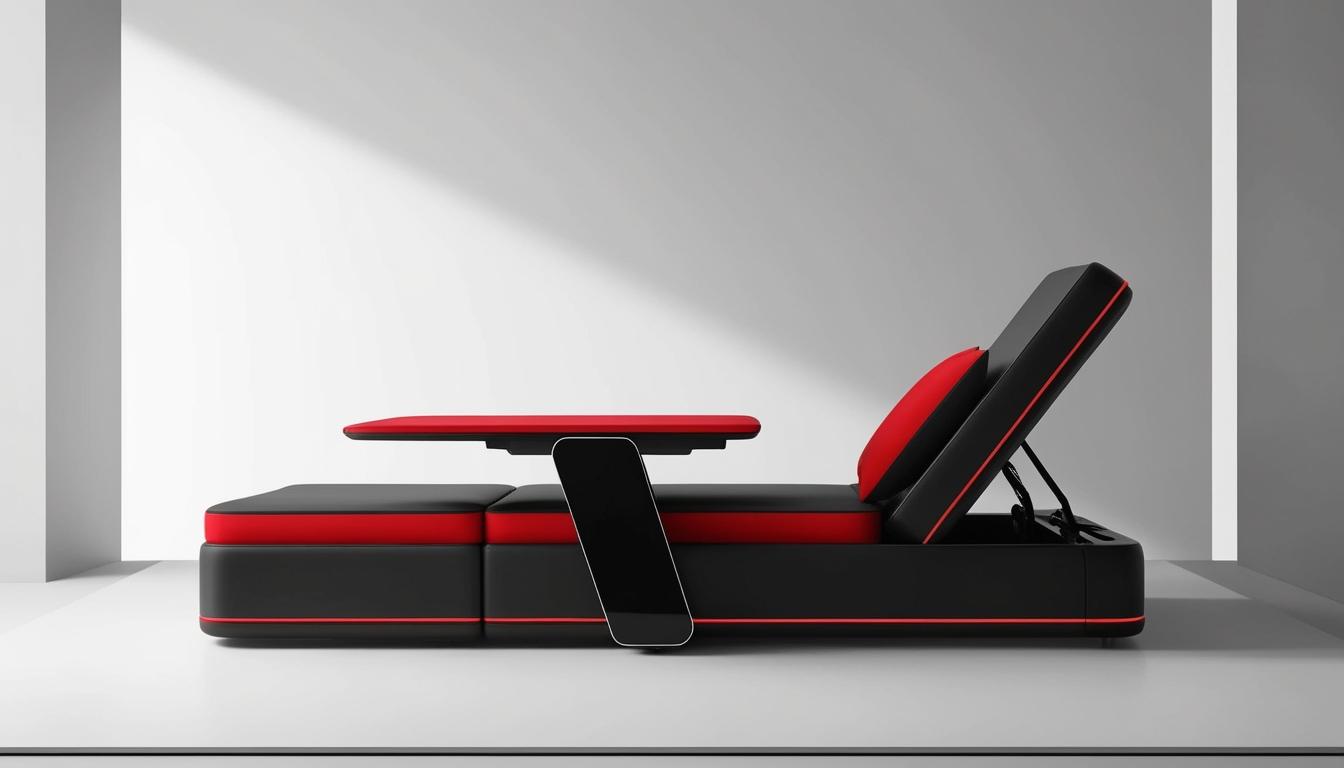
Recent developments in robotics are shining a light on innovative designs that promise to revolutionise the way we interact with technology in both public and private spaces. One such concept is a versatile robotic piece of furniture named "Plate," envisioned by designer Seungmin Ha. The design challenges the traditional notion of single-function robots, presenting a multifunctional solution capable of adapting to various needs through direct physical interaction rather than voice or app commands.
Plate serves as an amalgamation of advanced robotics and furniture design, capable of transforming into diverse functional forms—such as a table, bed, or workstation—based on user requirements. The structure consists of flat panels outfitted with mechanical components, enabling it to shift configurations seamlessly.
The design incorporates three primary engineering features. A high-torque motor allows for the smooth movement of the heavy panels, an angle adjustment module provides the user with control over the positioning, and strength wires are integrated to ensure stability and load-bearing capabilities. These components work together to create a responsive piece of furniture that can adapt to varying contexts.
Unlike conventional robotic devices that rely extensively on automation or voice activation, Plate encourages a tactile interaction where users can physically touch, push, or tilt the furniture to respond to their commands. This raises interesting possibilities for how technology can embed itself into our daily environments, making interactions more intuitive and straightforward.
The concept suggests a broader trend in robotics where users are no longer restricted by the limitations of singular functionalities. Instead, as articulated by Yanko Design, the future of robotic innovation may lie in creating adaptable and versatile machines that enhance the flexibility of our living and working spaces.
As businesses increasingly consider the integration of such emerging technologies, the implications for automation within various sectors are profound. The adaptability of products like Plate could reshape workplace ergonomics, enhance customer experience in public areas, and transform domestic environments, making them more responsive to individual needs. The exploration of these multifunctional robots presents a crucial step forward in the ongoing evolution of artificial intelligence and automation within contemporary business practices.
Source: Noah Wire Services