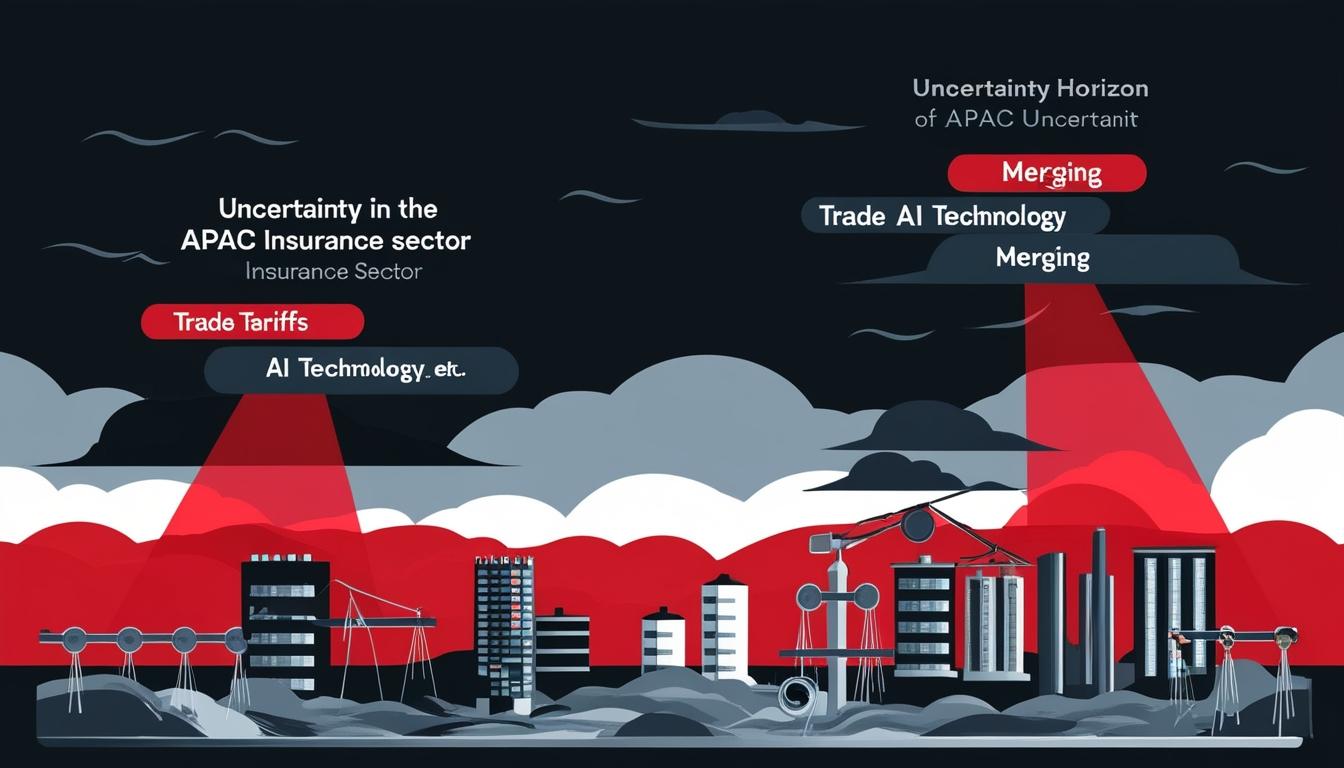
The landscape of the insurance industry in the Asia-Pacific (APAC) region is poised for transformation, driven by a confluence of geopolitical and economic trends expected to unfold in early 2025. As a new administration in the United States prepares to take office, the potential introduction of significant trade tariffs signals a period of uncertainty that may adversely impact the insurance sector among others.
Analysts are anticipating that these tariffs, projected to be as high as 60% on imports from China and 20% on goods from other nations, could instigate a sequence of retaliatory measures that would effectively depress global trade volumes. The repercussions could be severe, with forecasts suggesting a reduction of several percentage points in global GDP, leading to a potential deep recession that would resonate throughout the APAC insurance market. This scenario aligns with concerns voiced by prominent economic figures, including Goldman Sachs CEO David Solomon, who noted that global investors are currently hesitant to commit to investments in China, citing weak domestic demand and restrictions related to capital outflows.
The significance of these developments is magnified by the shift in the US's role on the global stage, traditionally characterised by its economic influence and adherence to established global trading rules. The anticipated policy changes may not only disrupt trade flows but also reshape perceptions of the US's superpower status, creating an opening for China to assert its own influence in the absence of American leadership.
In light of these potential shifts, insurance companies in the APAC region are urged to take proactive measures. Increased government expenditure on defence across various nations signals a burgeoning market for insurance products catering to defence-related operations, thus presenting new opportunities for insurers. A retraction in global trade, however, suggests that companies specialising in cargo and hull insurance must recalibrate their strategies in anticipation of declining business volumes.
Furthermore, the rising influence of artificial intelligence (AI) presents another area ripe for exploration and development within the insurance industry. Experts agree that AI possesses the capacity to instigate substantial changes in operational practices; however, there is a consensus that current implementations are often underwhelming. Insurers must focus on harnessing the full potential of AI technologies to enhance efficiency and improve service delivery.
Additionally, retaining experienced leadership within firms stands as a critical strategy. Seasoned executives, particularly those with backgrounds navigating past crises, are seen as invaluable assets in steering companies through the anticipated turbulence ahead. Their insights gained from previous challenges may provide a stabilising influence during times of uncertainty.
In summary, with a changing geopolitical landscape and economic forecasts suggesting potential recessionary pressures, the APAC insurance sector finds itself at a crossroads. Insurers are encouraged to develop resilient strategies that leverage emerging technologies such as AI, while simultaneously maintaining a skilled workforce equipped to face the evolving challenges ahead. The developments in the US and China call for vigilance and adaptability as the industry braces for a transformative period.
Source: Noah Wire Services