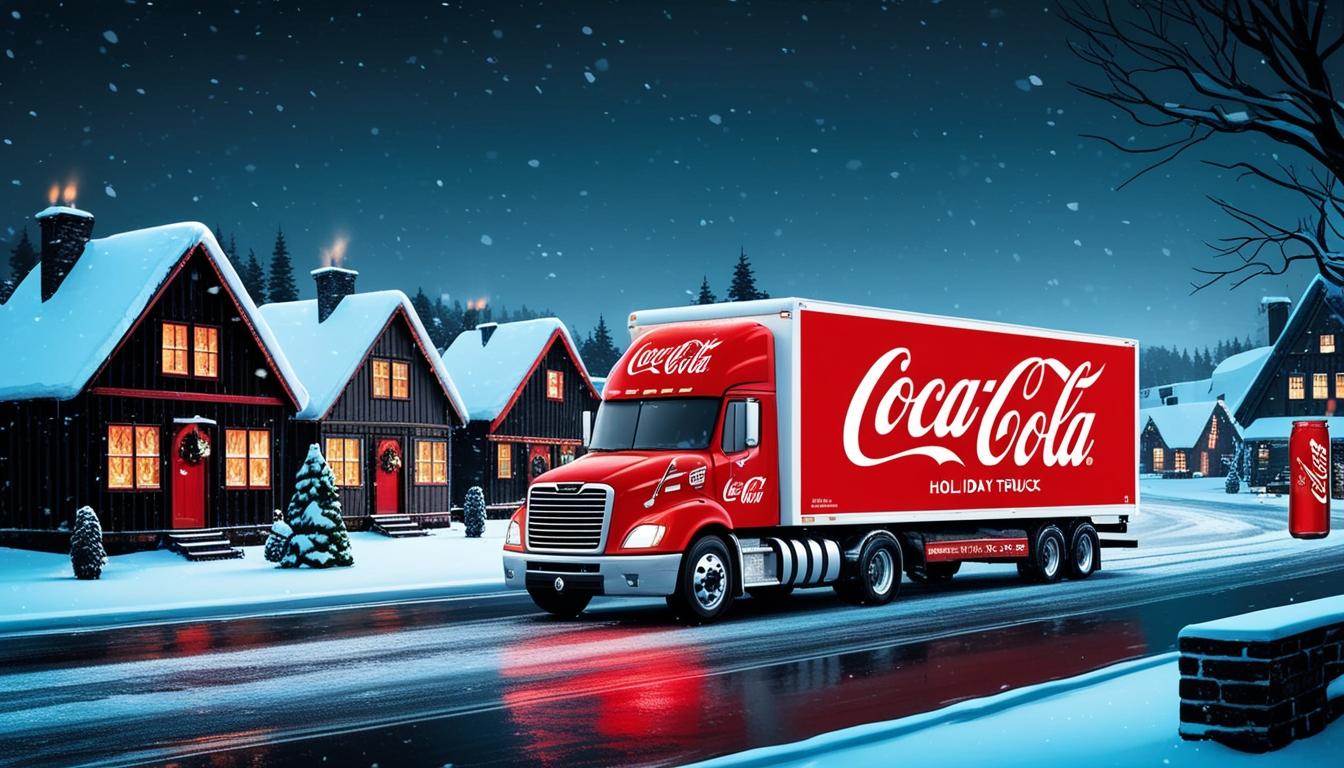
Coca-Cola, the Atlanta-based beverage company, has made a significant move in the realm of artificial intelligence by incorporating AI-generated imagery in its holiday advertising campaign for the first time in its history. The holiday ads represent the company's largest venture into the realm of AI in advertising, having partnered with generative AI firms to create new iterations of its iconic 1995 advertisement, "Holidays Are Coming."
Prominent scenes in the new adverts include meticulously rendered lighted Coca-Cola trucks traversing snowy roads, townspeople in festive spirits, and picturesque Christmas trees amidst idyllic village backdrops. These visuals were crafted using advanced AI models, allowing for production turnaround that would traditionally take more than a year to complete, to be achieved in a mere two months by Silverside AI, one of the firms involved in the project. The company detailed on its website that a team of 40 individuals used both proprietary and market AI tools to demonstrate how AI can synergise with human creativity to enhance storytelling.
Despite this technological achievement, the campaign experienced a mixed reception. Critics have voiced concerns that the advertisement lacks authenticity, arguing that it misrepresents the brand's connection with consumers, which has historically relied on genuine emotional engagement and creativity. Tim Halloran, a professor at Georgia Tech and former associate in Coca-Cola’s brand management division, expressed that the use of AI in creating the adverts undermines the brand's foundational promise of authenticity, referencing its long-standing slogan, "The Real Thing." Speaking to American Military News, Halloran stated, “As a brand, you always want to establish a relationship with consumers built on authenticity and realness and being true.”
On the flip side, others have praised the campaign as an innovative step forward in visual storytelling. The divide in opinion underscores the ongoing debate within the advertising sector about the role of AI in creative processes. According to a study on awareness and acceptance of AI within advertising by Yahoo and public relations firm Publicis Media, about 77% of surveyed advertisers held a favourable view of AI technology, contrasting with only 38% of consumers who felt positively towards it.
Historically, this is not Coca-Cola's first engagement with generative AI; the company earlier introduced a tool, developed in part by OpenAI, to create artwork from its archived images, and allowed consumers to generate personalised holiday cards later in the year. However, while the AI-generated graphics may seem indistinguishable from real images, Halloran remarked that they evoke a familiar yet unsettling resemblance to the 2004 animated film "The Polar Express". He pointed out that the challenge lies in AI's inability to replicate human emotion—a key factor in the success of advertising, particularly for Coca-Cola's beloved holiday ads, which many consumers associate with nostalgia and tradition.
In the broader landscape of advertising, companies like Coca-Cola are navigating the ever-evolving interplay between technology and creativity. While generative AI offers a means to streamline production and potentially reduce costs, there are underlying apprehensions regarding its implications for employment within the industry. Halloran remarked on the necessity for iconic brands like Coca-Cola to adapt to technological advancements while maintaining their core identity, saying, “A brand like Coke needs to have one foot in being technologically savvy and understanding how technology is changing. You don’t want to seem baked in the past, but you have to stay true to what the brand means to people.”
Source: Noah Wire Services