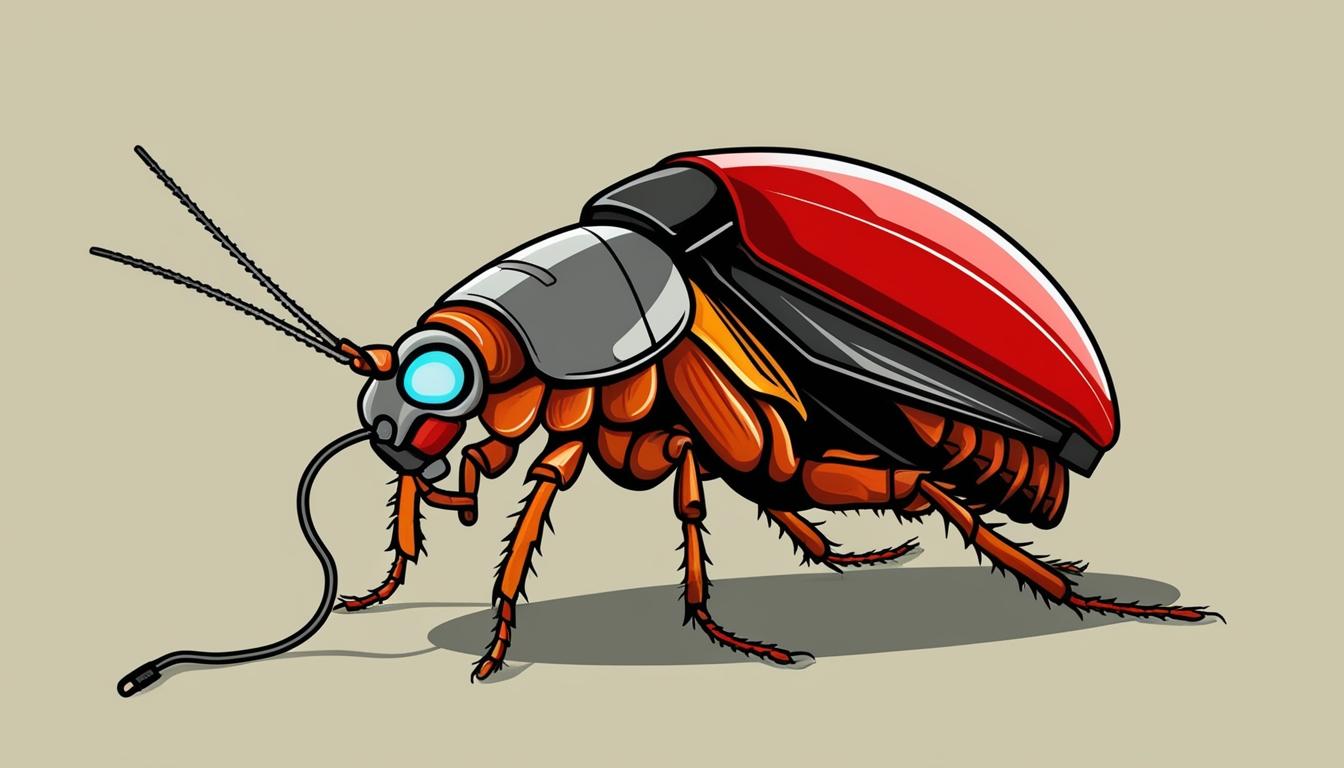
In a groundbreaking development at Nanyang Technological University (NTU) in Singapore, researchers led by Hirotaka Sato have created a robotic system capable of transforming cockroaches into controllable cyborgs. This innovative technology involves implanting electrodes into the insects and connecting them to an electronic "backpack," making the prospects of deploying swarms of biorobots for search and rescue missions increasingly feasible.
The researchers have previously demonstrated that groups of up to 20 Madagascar hissing cockroaches (Gromphadorhina portentosa)—equipped with these electronic devices—can be remotely directed to navigate challenging environments that mimic desert conditions. However, the team acknowledges that for such technology to be effectively utilised during actual search-and-rescue operations, a significantly higher number of cyborgs would be necessary, potentially scaling into the hundreds or thousands.
This advancement reflects a growing trend in the use of biological robots within crisis response scenarios, enabled by recent innovations in automation and robotics. The ability to remotely control live insects may offer unique advantages in terrains that are difficult for conventional robotic systems to traverse, highlighting an emerging intersection of biology and technology that could reshape future emergency response methods.
As this project progresses, further research will likely be required to assess the practical applications and implications of deploying biological robots in real-world situations. The advancements at NTU pave the way for continued exploration into the potential uses of biorobots in various fields beyond search and rescue, underscoring the broader impact that such technologies may have on future business practices and industry operations.
Source: Noah Wire Services