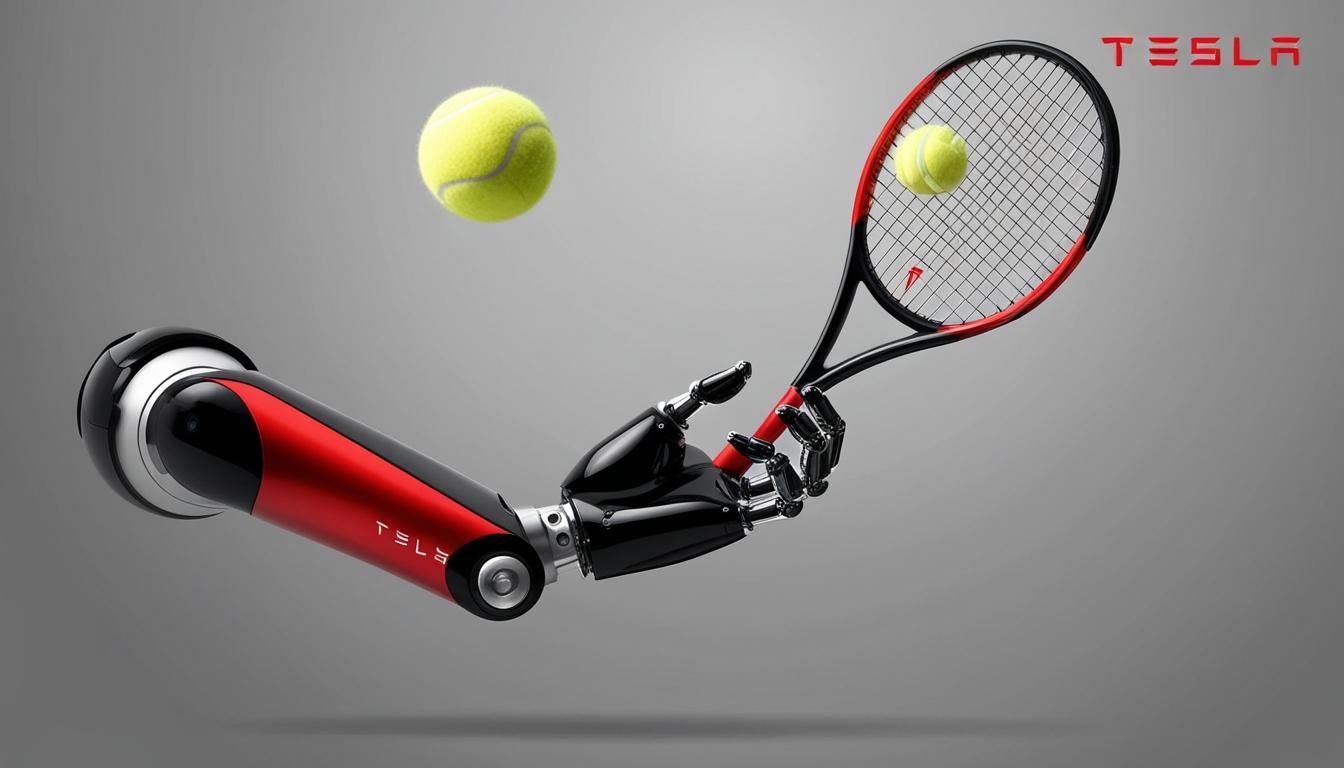
Robotic capabilities have reached remarkable heights in recent years, with machines now able to perform a range of tasks previously deemed the exclusive domain of humans. Recent demonstrations showcase these advancements, such as a video featuring Tesla’s Optimus robot catching a tennis ball in mid-air. This incident has garnered attention on social media, being hailed as another significant achievement in the realm of robotics.
However, as Milan Kovac, Tesla’s Vice President and Head of Engineering for the Optimus project, elucidated in a follow-up post, the reality of this demonstration is nuanced. The success of Optimus in catching the ball, while impressive, did not stem solely from its autonomous capabilities. Kovac stated that a human was actively involved in guiding the robot during the exercise, indicating that the test was more about the dexterity of the robot's hand than its reflexes.
Kovac elaborated on the underlying technology, noting the new design of the robot’s hand and forearm, which features double the number of degrees of freedom compared to previous models. Specifically, he mentioned that there are 22 degrees of freedom on the hand and three on the wrist and forearm, allowing for more advanced movements. “Interesting challenge around having enough squishiness/compliance and a protective layer on the fingers & palm, without affecting tactile sensing too much,” he added. This remark highlights the complexities involved in developing robotic limbs that are both functional and sensitive.
While the demonstration of the tennis ball catch showcases significant progress, it also underscores the limitations that still exist in robotics technology. Current capabilities do not yet include complex autonomous actions which would be essential for tasks like engaging in a detailed secret handshake without human intervention.
The endeavor by Tesla to provide transparency regarding the human role in these tests has been noted positively, as it offers a clearer perspective on the current state of robotic technology. The company, while pushing the boundaries of what robots can do, is actively reflecting on the challenges that remain in the field of AI automation and robotic dexterity. With such advancements and discussions surrounding them, it is evident that the exploration of AI in business and robotic applications continues to evolve rapidly, influencing future trends and practices across various industries.
Source: Noah Wire Services