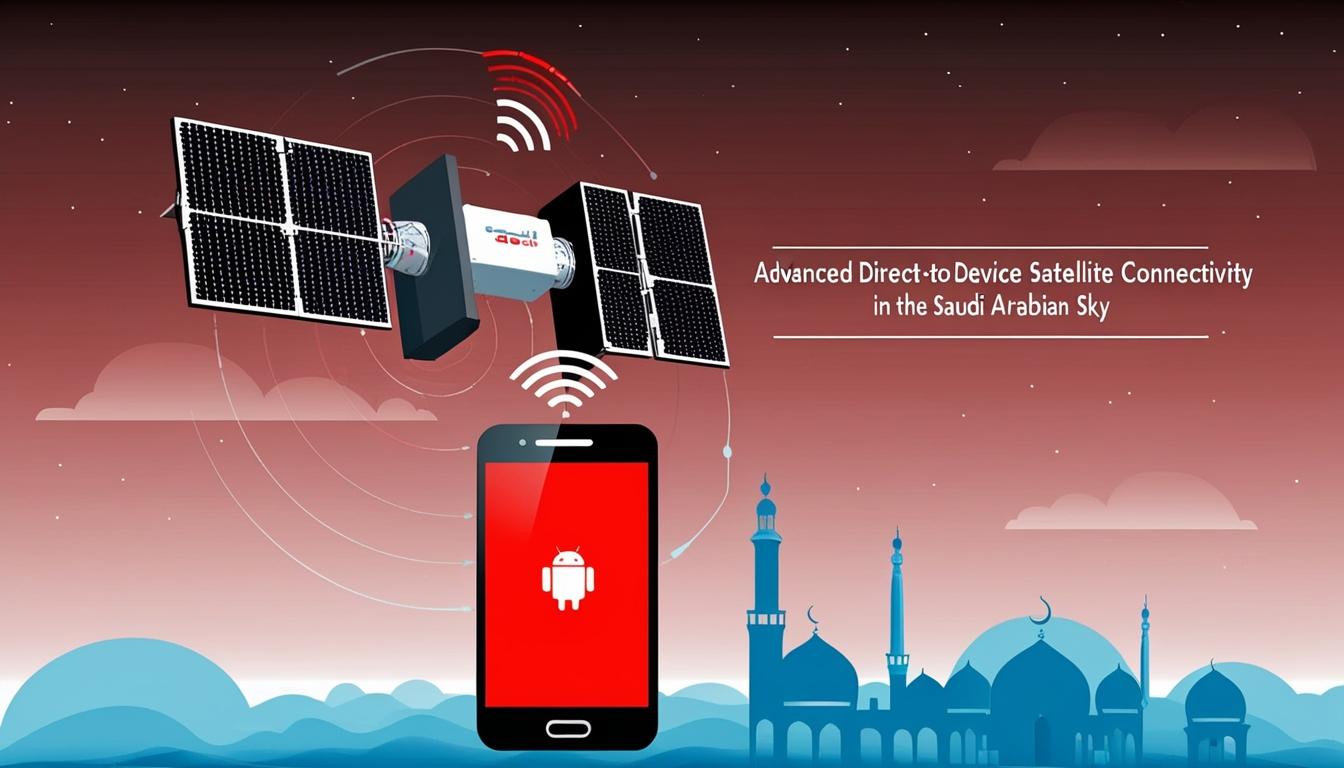
Viasat has recently made significant advancements in satellite technology by successfully demonstrating direct-to-device (D2D) satellite connectivity in the Kingdom of Saudi Arabia. This milestone was achieved in collaboration with various ecosystem partners during the ‘Connecting the World from the Skies’ event, which was hosted by the Communications, Space & Technology Commission (CST) of Saudi Arabia and the International Telecommunication Union (ITU) in Riyadh.
At the event, Viasat showcased its capabilities by enabling the transmission of two-way satellite messages, including emergency SoS communications, using a commercial Android smartphone equipped for non-terrestrial network (NTN) connectivity and the Bullitt over-the-top messaging application. The messages were transmitted through Viasat’s L-band spacecraft, which operates above the Indian Ocean, thanks to the implementation of 3GPP standards-based NTN service infrastructure that was set up in Viasat’s gateways by Skylo, a partner in this initiative.
D2D technology represents an evolution in how devices like mobile phones, vehicles, and industrial machines connect to services, allowing them to harness both terrestrial and satellite connectivity without requiring any additional dedicated hardware. This innovation aligns with newly established global mobile standards under the 3GPP release 17 framework, which are increasingly being adopted by satellite and mobile network operators, as well as pertinent hardware manufacturers.
The demonstration underscored the feasibility of using satellite connections to communicate with cell phones across the region. Viasat’s strategy leverages its licensed satellite spectrum to ensure that these services can be offered in collaboration with mobile network operators, thereby preserving terrestrial spectrum integrity.
Sandeep Moorthy, the chief technical officer at Viasat, remarked, “By expanding our direct-to-device innovation to the Kingdom of Saudi Arabia, we’re showcasing the potential for D2D services in the fast-growing Gulf and Asia-Pacific region. D2D could help reduce barriers to connectivity in regions where terrestrial services are spotty and unavailable to help transform industries and supply chains, enable new opportunities, and to become more efficient, sustainable and safer. We’d like to thank the CST for their support in carrying out this exciting demonstration.”
This development signifies a notable step forward in the application of satellite technology, particularly in addressing connectivity challenges in areas where traditional services may fall short. As the demand for reliable connectivity continues to grow, the implications of D2D technology could be profound, impacting various sectors and reshaping business practices in the region and beyond.
Source: Noah Wire Services