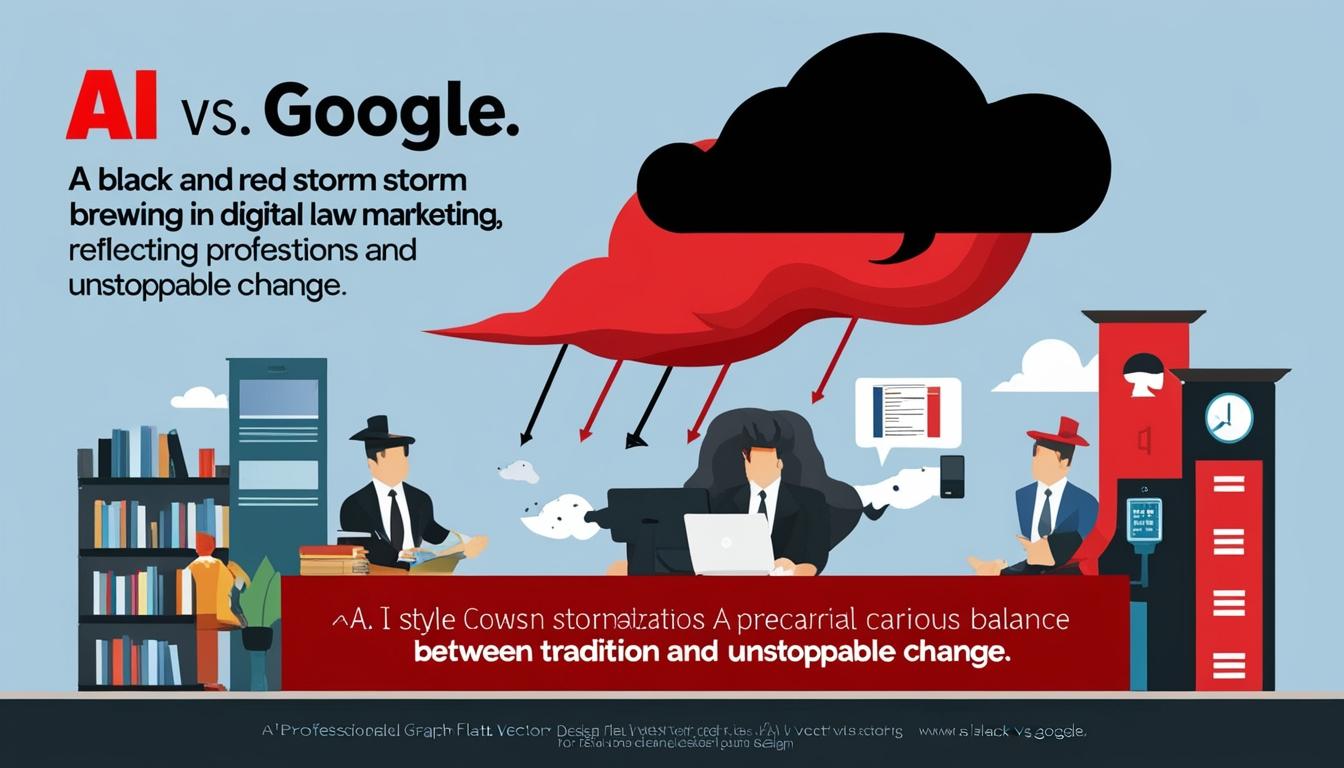
The digital landscape is undergoing significant changes, particularly in the field of search engines, as artificial intelligence increasingly shapes how users, especially younger generations, gather information. Christopher Mims of the Wall Street Journal presents a stark metaphor regarding Google, equating it to "the Titanic in the hours before it struck an iceberg—riding high, supposedly unsinkable, and about to encounter a force of nature that could make its name synonymous with catastrophe." Mims suggests that the search giant's dominance is being challenged by the rise of AI-generated content and alternative platforms that provide users with quicker access to information.
The impact of these trends is particularly pertinent for professionals in the legal field. For small and medium-sized law firms, which often rely heavily on search engine optimisation (SEO) and content marketing to attract clients, decreasing traffic to Google could translate into less business. mCocktailing the role of Google over the past two decades as a primary source of new clients, many firms may find themselves at a critical juncture.
Larger law firms are not immune to these shifts either, as they too are likely to see a decline in search traffic. Despite many of these firms obsessively tracking their Google metrics, a significant portion of their client acquisition stems from word-of-mouth referrals and established relationships. As documented by Mims in his commentary, the potential downturn in Google traffic might force these organisations to reassess their online marketing strategies and the resources allocated to them.
The prevailing sentiment is that as the web becomes inundated with AI-generated content, the quality and relevance of search results may deteriorate. This could discourage users from relying on Google, thereby necessitating a fundamental rethink about how law firms engage with their marketing efforts in an increasingly complex digital environment. The ramifications of these developments underscore a broader shift in user behaviour and highlight the need for law firms to adapt to an evolving landscape where traditional reliance on search engines may no longer guarantee success.
Source: Noah Wire Services