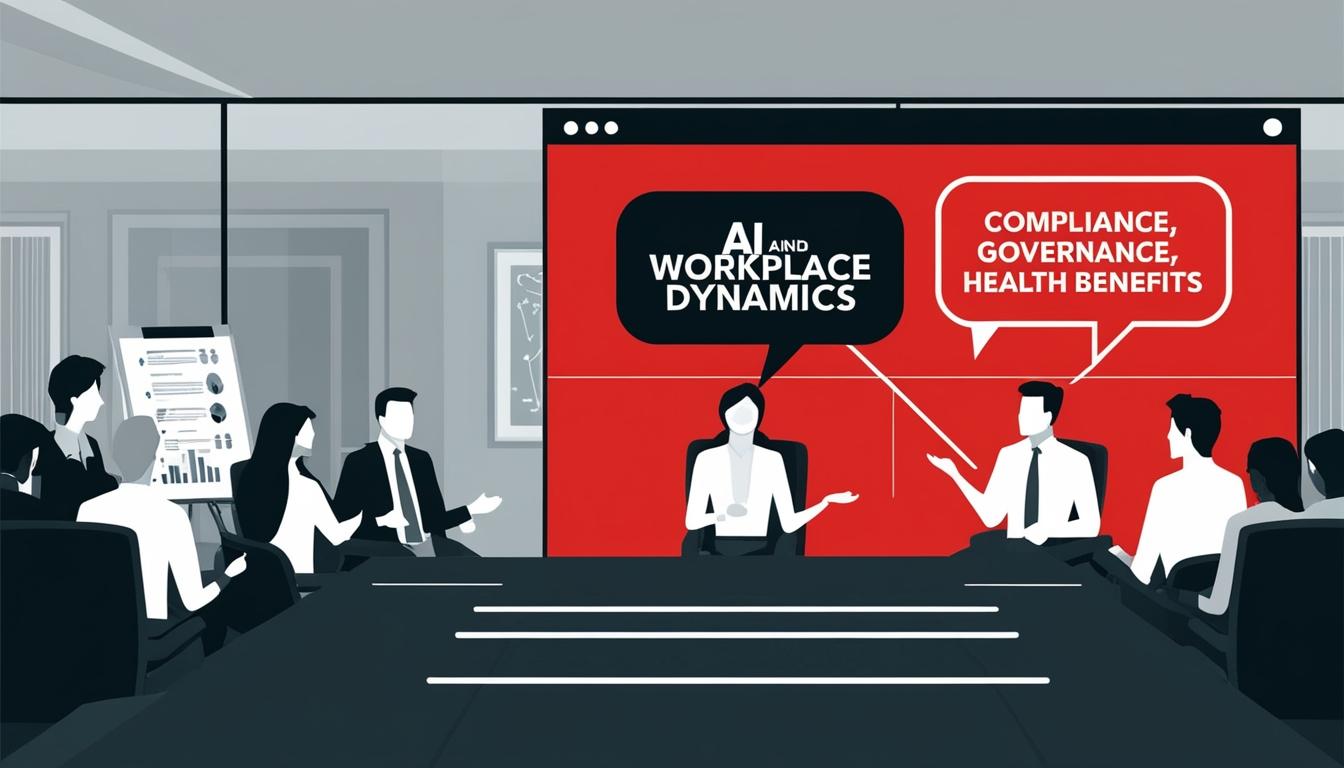
In a landscape marked by ongoing change and uncertainty, industry experts convened at a WTW panel on Wednesday to discuss the future of workplace dynamics and the role of artificial intelligence (AI) automation in shaping business practices. The panel underscored the importance of governance, compliance, and adaptive investment strategies as critical components for employers looking to navigate the evolving demands of their workforce.
Courtney Stubblefield, WTW’s leader of health and benefits insights and commercialization for North America, pointed out that governance remains a vital concern, particularly in the realm of health and wellness benefits. She specifically highlighted recent legislation surrounding mental health parity as a critical area employers need to monitor closely. “Some of the intensity of audits and activity that we saw during the [President Joe] Biden administration would continue, but being in compliance with that, making sure that you’ve done the comparative reviews required there, [is] obviously a very good thing to do,” Stubblefield stated. This highlights an ongoing governmental scrutiny over compliance issues that businesses must address.
Another pressing topic addressed by Stubblefield was prescription drug pricing, which continues to be a bipartisan concern. She urged organizations to adapt their health benefits programs proactively in anticipation of possible regulatory shifts.
Furthermore, the panel discussed the rising trend of health savings accounts (HSAs) and their potential liberalisation. Beth Ashmore, WTW’s retirement client experience leader for North America, acknowledged that while there is discussion about increasing contribution limits or decoupling HSAs from high-deductible health plans, the feasibility of such changes remains uncertain. “A lot of those retirement policies have been put into place on a bipartisan basis. They’re largely defined contribution, and they allow a lot more flexibility for employers and employees to make sure that they’re having retirement savings,” Ashmore explained. This flexibility is particularly significant as it allows businesses to better cater to the financial needs of their employees.
Turning to investment strategies, Jon Pliner, WTW’s head of delegated portfolio management, emphasised the necessity for interest rate management and portfolio diversification. He advised employers to evaluate their ability to efficiently manage interest rate exposures, stating, “From an interest rate standpoint, and managing the interest rate exposure, consider whether or not you have the ability to be more capital efficient in how you’re managing that interest rate exposure.” Additionally, Pliner recommended businesses consider real assets, including infrastructure and natural resources, as a strategy to hedge against inflation and stabilise their investment portfolios.
As the panel discussed future political shifts, Lori Wisper, WTW’s global compensation strategy and design solution leader, painted a picture of relative stability concerning executive compensation under expected changes in administration. She noted that, “The Securities and Exchange Commission is likely to adopt a more business-friendly stance, particularly toward industries like tech that have faced recent scrutiny,” suggesting that existing executive pay structures would likely remain intact during the transition.
Overall, the discussion paints a proactive picture for businesses preparing for the evolving landscape shaped by AI automation and regulatory changes. By focusing on governance, compliance, and strategic investment, companies can better position themselves to meet the needs of their workforce while navigating potential future challenges.
Source: Noah Wire Services