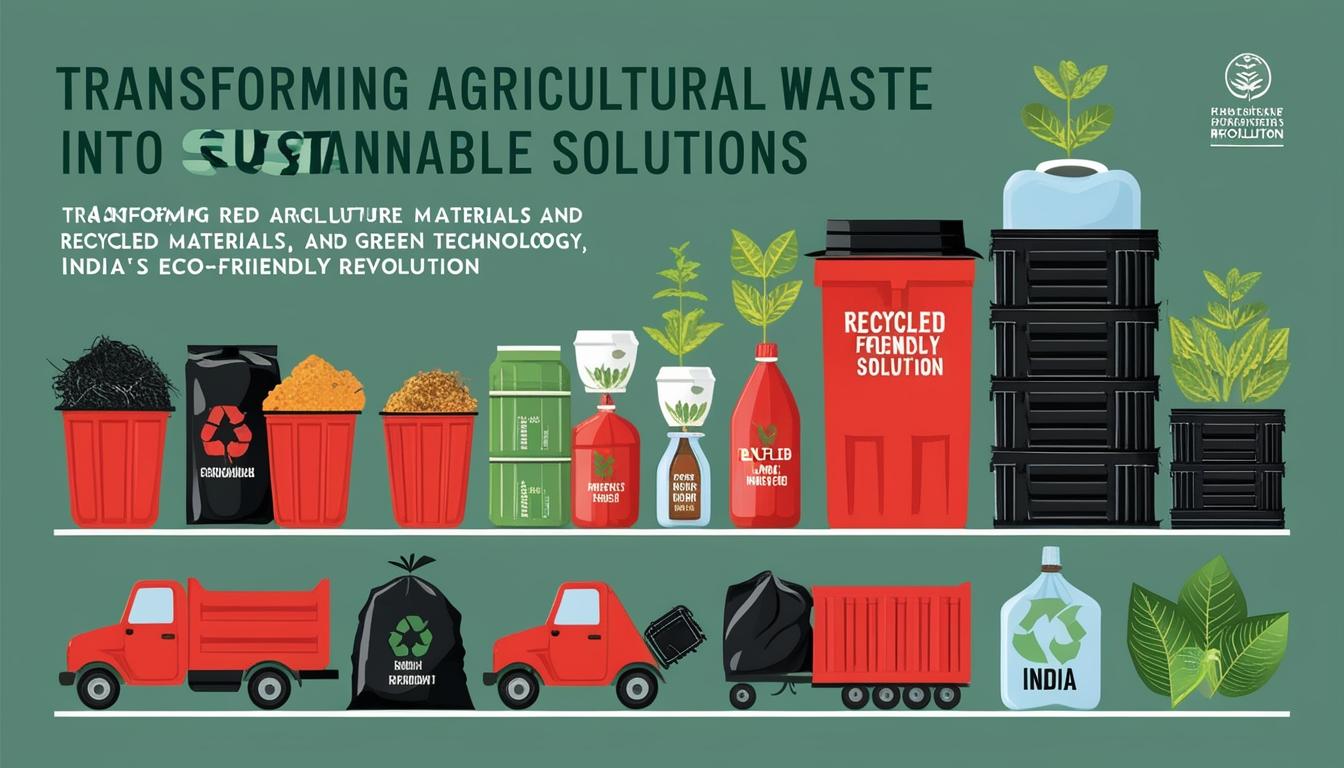
The significant transformation of agricultural waste management in India has ascended from a marginal discussion to an urgent discussion point in the context of addressing climate change. The gravity of this environmental crisis is increasingly evident through stark landscapes, unpredictable weather events, and the economic repercussions tied to ecological degradation. Among the solutions being explored, India's agricultural waste landscape presents promising opportunities for both economic and environmental rejuvenation.
Historically, the management of agricultural waste in India has been limited to low-value applications, such as using crop residues or byproducts from food processing as animal feed, basic biofuels, or rudimentary bio-fertilizers. Although these practices served practical purposes, they yielded minimal financial incentive for entry-level investors, including farmers, aggregators, and processors. The paradigm was characterised by tight margins, limited scalability, and a notable lack of technological advancement, creating a cycle of subsistence-level value extraction from what was largely perceived as waste.
Recent developments have initiated a paradigm shift in this scenario. With the emergence of innovative startups and cutting-edge technologies, agricultural and food waste is now being viewed through a lens that identifies high-value applications across a broad spectrum of industries, from packaging to biomaterials and textiles. This transformation marks a significant leap from traditional practices, as new approaches are reshaping agricultural waste into viable strategic resources.
As noted in a publication, the business models associated with these new applications demand high levels of research and development investment, underpinning a cycle of sustained innovation and value creation. This shift in economics promotes not only higher profit margins but also creates compelling financial incentives throughout the supply chain. Farmers transition from merely generating waste to supplying vital raw materials that can be monetised. Aggregators now find profitability in the collection and processing of materials previously deemed worthless, while manufacturers tap into sustainable and cost-effective raw materials that align with their environmental commitments.
Innovative enterprises exemplifying this new frontier include Fibmold, which is advancing the packaging sector by producing moulded fibre products from sugarcane waste, thereby matching the performance and aesthetics of traditional plastics for industries including food service and healthcare. Another notable initiative is altM, which focuses on developing green chemistry alternatives derived from rice straw to supplant synthetic chemicals in cosmetics and personal care products. Furthermore, Loopworm is at the forefront of insect farming, utilising food and agricultural waste to extract high-value fats, oils, and proteins that serve both food and industrial markets.
The potential for agricultural waste to redirect from simple disposal to a beneficial resource is becoming increasingly clear. In efforts conveyed by the author, there is a focus on exploring and investing in sustainable packaging, biomaterials, and alternative protein sources as pivotal areas for progression. Each of these domains is considered a frontier rich with innovation capable of generating economic value while simultaneously addressing pressing environmental issues.
Looking ahead, the insistence is that adaptation is necessary, as the circular economy becomes an immediate requirement rather than a future ambition. As the climate emergency continues to challenge existing economic frameworks, the opportunity to redefine waste could represent a significant commercial prospect in the contemporary landscape for those prepared to explore it. The environmental crisis, whilst daunting, has carved out a space for innovation and entrepreneurship in India’s agricultural waste sector, heralding a new chapter in how these materials can so effectively contribute to both business strategy and ecological sustainability.
Source: Noah Wire Services