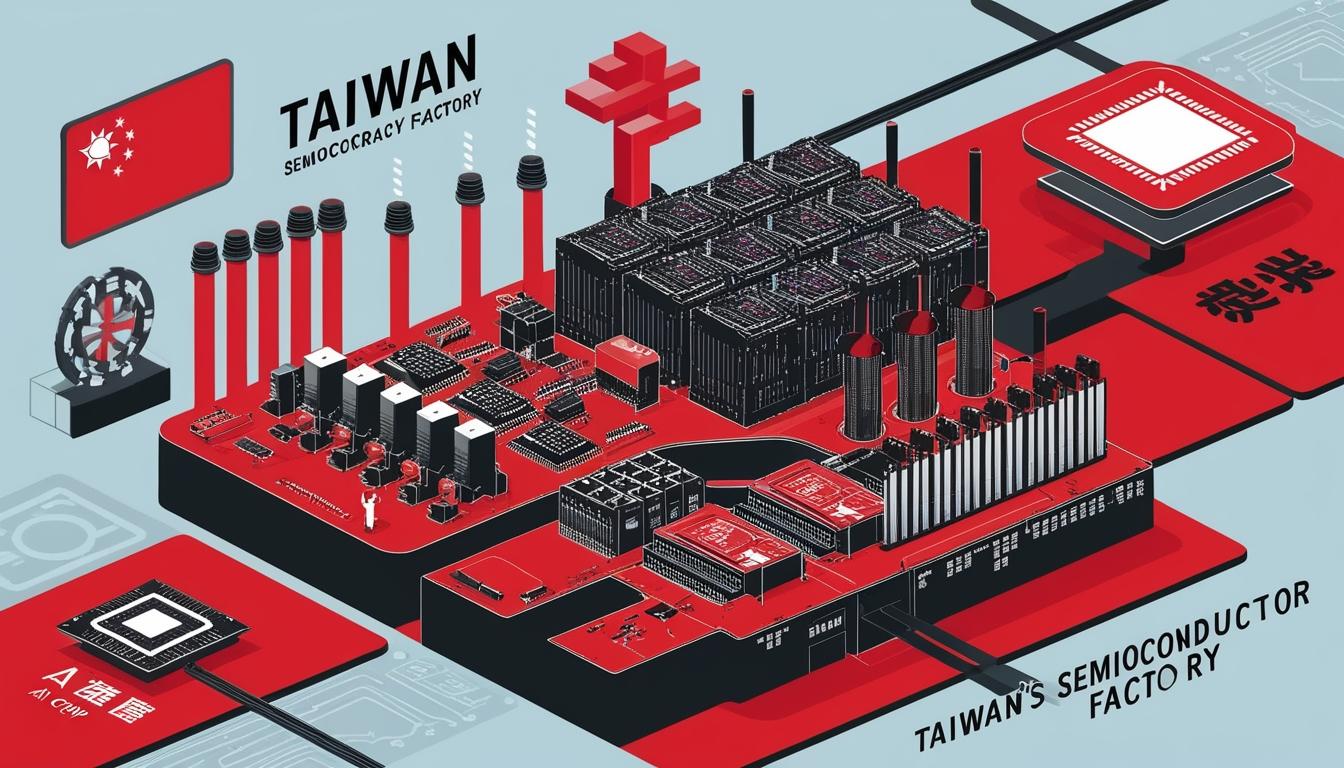
In a landscape increasingly influenced by artificial intelligence (AI) technologies, Taiwan is positioning itself as a key player in the global AI supply chain while simultaneously upholding democratic values amid geopolitical tensions. The discourse surrounding Taiwan's resilience has been articulated in recent comments reported by Taiwan Daily, highlighting both the island's commitment to democracy and its significant role in AI manufacturing.
According to the publication, Taiwan has made notable strides in its democratic standing, achieving a ranking of tenth in the 2023 global "Democracy Index" by The Economist. This marks an impressive advance from the early 2000s, where Taiwan's position languished in the thirties until a remarkable leap to eleventh place in 2020, subsequently maintaining a position within the top ten. The Economist categorises Taiwan as a fully democratic nation, in stark contrast to China, which is classified as an authoritarian regime, occupying the 148th position.
Political leaders have actively addressed the significance of these developments. Taiwanese President Lai Ching-te emphasised the need to confront the dark history of Taiwan's 38 years under martial law, asserting, "We should bravely face the past dark history, while also learning lessons to avoid a repetition of historical mistakes." He reaffirmed a commitment to ensuring the protection of Taiwan's democratic freedoms, the rule of law, and human rights.
In the context of AI, Taiwan's role is further underscored by its dominance in semiconductor manufacturing. The supply chain dynamics have shifted dramatically, with major AI companies such as NVIDIA, Microsoft, and OpenAI turning to Taiwanese manufacturers for their needs. Reports from the South Korean publication Central Daily indicate that Taiwan Semiconductor Manufacturing Company (TSMC) holds an astounding 99% share of global AI chip production, a remarkable statistic that positions Taiwan at the forefront of the AI revolution.
Currently, TSMC has achieved over a 60% yield rate in the trial production of its advanced 2-nanometre chips. This starkly contrasts with competitors such as Intel, which has reported a yield rate of under 10% for its 18A process, and Samsung, struggling with yields between 10% to 20%. Over forty Taiwanese companies are now engaged in AI-related endeavours, contributing to 73% of the MSCI Taiwan Index, significantly higher than South Korea's 33%.
As the fourth industrial revolution takes shape, marked by the advancements in AI, it appears that Taiwan is not only resilient in the face of external pressures but is also emerging as a critical supplier of AI technologies. The implications of these developments signal a potentially transformative phase for Taiwanese industries, as well as a pivotal moment for its strategic importance in the global economy.
Source: Noah Wire Services