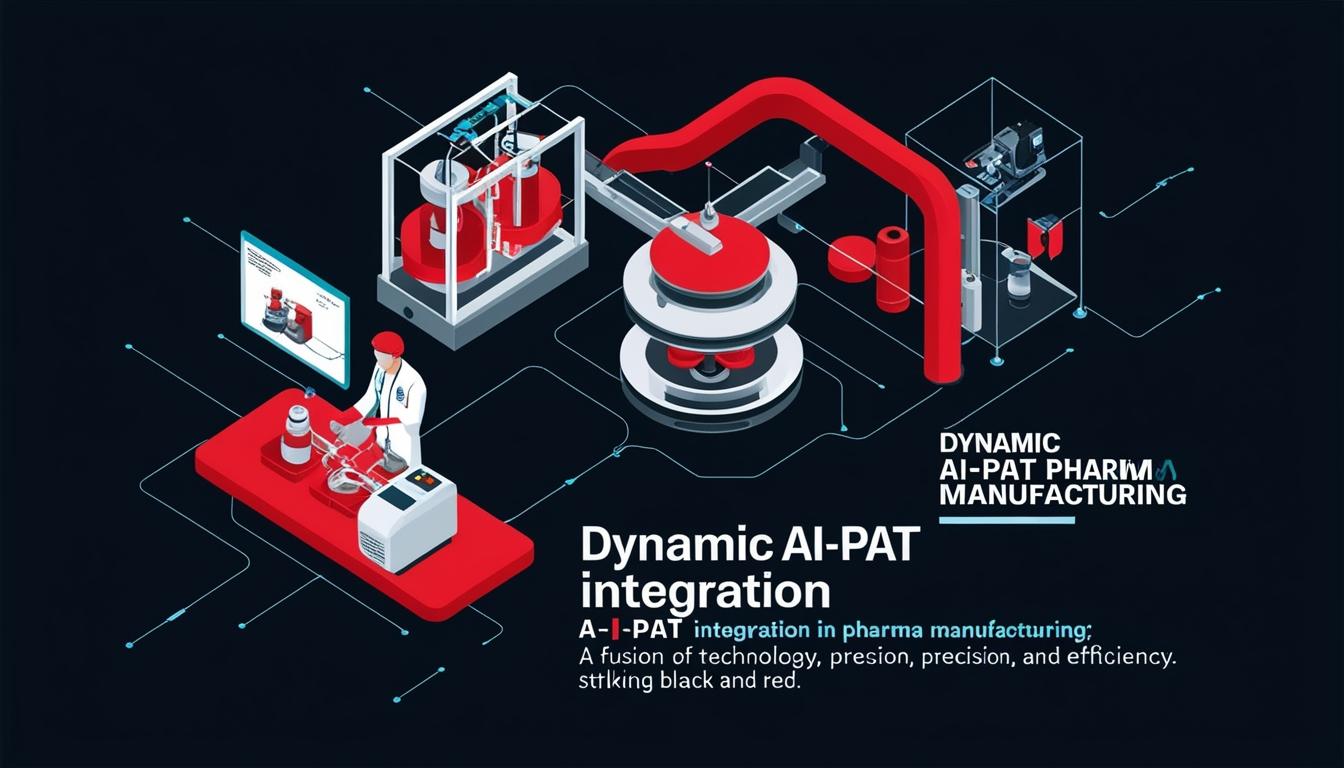
The integration of process analytical technology (PAT) and advanced digital solutions like artificial intelligence (AI) and machine learning (ML) marks a significant evolution in the pharmaceutical industry, particularly under the emerging framework known as Pharma 4.0. This transition towards digitalisation is being driven by the need for enhanced process control, consistent product quality, and improved decision-making capabilities throughout drug development and manufacturing processes.
Real-time monitoring enabled by various PAT tools, including soft sensors, facilitates a shift away from traditional methods that rely on delayed analytical results. According to Edita Botonjic-Sehic, head of process analytics, data engineering, and data science at ReciBioPharm, this combination can lead to "optimized operations, enhanced customer experiences, and better financial outcomes." The capacity for predictive modelling built on AI and ML algorithms means that pharmaceutical companies can foresee potential issues and fine-tune their processes on the go.
Stacy Shollenberger, senior manager of process analytical technology at MilliporeSigma, noted that the integration of AI and ML can significantly enhance the performance of soft sensors by providing a mathematical framework to monitor process states. She emphasizes the complexity of the data analysis required and the need for high levels of expertise in this area. Shollenberger also highlights the utility of sophisticated analytical tools such as Raman, nuclear magnetic resonance (NMR), and near-infrared (NIR) spectroscopy, which can yield almost instantaneous measurements of essential metabolites. However, the interpretation of the data produced by these methods often needs to be performed using AI/ML chemometric models tailored to chemical analysis.
As the pharmaceutical industry increasingly embraces these technologies, decisions made by human operators will continue to play a crucial role. Kaschif Ahmed, principal data scientist at ReciBioPharm, stated that employing hybrid models which combine AI/ML with mechanistic understanding can be more effective for real-time monitoring of bioprocesses. This is particularly important in upstream processes where unpredictability is often a challenge due to the complexities of biological systems.
The potential applications of AI, ML, and PAT tools extend across various stages of drug development, impacting both small-molecule and biotherapeutic production. Botonjic-Sehic added that such integrated tools are gaining traction in effecting real-time operations, enhancing throughput, and decreasing the likelihood of failures during the manufacturing phase. By enabling continuous monitoring and data-driven decision-making, companies can react instantly to any deviations, resulting in improved product quality and reduced waste.
However, the path to widespread adoption of these advanced technologies is not without challenges. Shollenberger noted that the complex regulatory environment in which the pharmaceutical industry operates poses significant obstacles. She remarked that model building and real-time execution must work in harmony with the stringent compliance standards governing drug production. Inadequate data quality, insufficient volumes for effective model training, and ensuring compatibility across systems are all cited as major hurdles. Enhanced collaboration between human expertise and AI systems is anticipated to be pivotal in overcoming these complexities.
Furthermore, practical implementations of PAT solutions are currently more common in the small-molecule segment due to the simpler chemical nature of these products. As pharmaceutical manufacturers face significant competitive pressures, especially from generics, the integration of AI/ML-enabled PAT solutions is expected to play a crucial role in fostering innovation in more efficient production approaches.
One notable implementation under development is the partnership between ReciBioPharm and the Massachusetts Institute of Technology to build a novel process for RNA-based vaccines, which is expected to become operational by mid-2025. This initiative showcases how AI and real-time analytical technologies can facilitate continuous good manufacturing practices (GMP), hinting at a future where efficiency and compliance coexist seamlessly.
In anticipation of rapid advancements, experts foresee near-real-time quality assurance and optimization capabilities emerging from the integration of AI/ML with PAT tools. Shollenberger projects that as these technologies evolve, they will improve the scalability and quality of pharmaceutical products while helping companies navigate complex regulatory landscapes more effectively. The integration of AI and ML not only represents a technological advancement but potentially a seismic shift in how the industry approaches both quality control and operational efficiency.
Source: Noah Wire Services