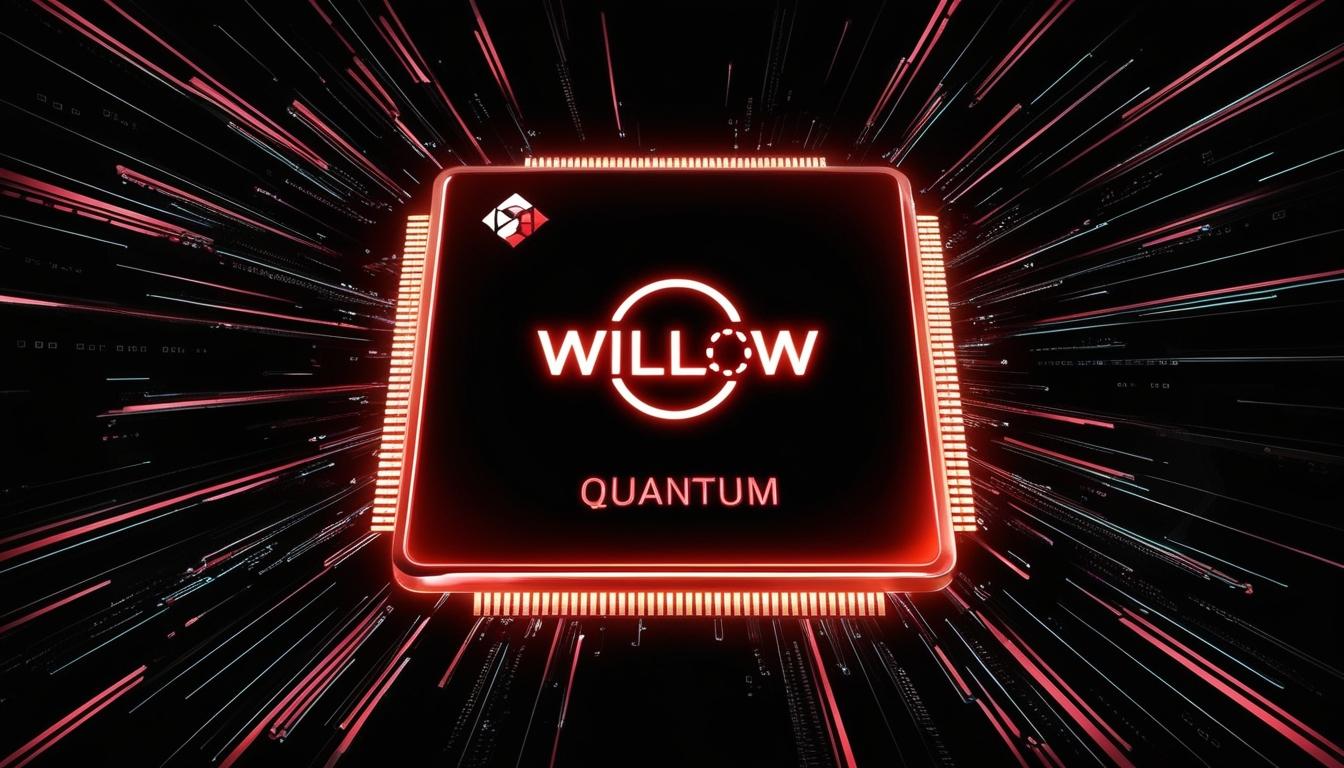
On Monday, Alphabet Inc.'s CEO Sundar Pichai showcased the company's latest innovation in quantum computing, a chip named Willow. This announcement has attracted attention not just for its technological implications but also for the engaging dialogue it spurred between Pichai and Tesla and SpaceX CEO Elon Musk.
Pichai took to social media platform X, formerly known as Twitter, to highlight the capabilities of Willow, noting its ability to resolve a standard computational problem in under five minutes. In contrast, Pichai emphasised that a leading supercomputer would require an extraordinary 10^25 years to complete the same task. Musk expressed enthusiasm regarding the innovation, and the brief exchange between the two tech magnates quickly elevated from technical achievements to broader vision.
In a playful suggestion, Pichai proposed the idea of creating a "quantum cluster in space with Starship one day." Responding positively, Musk stated, "That will probably happen." Their discussion touched upon grand concepts such as the Kardashev scale, with Musk suggesting that humanity has only reached less than 5% of a Type I civilization, which measures a society's level of technological advancement based on its energy consumption.
Amidst their futuristic musings, the two leaders converged on a topic of immense sustainability potential—solar energy. Pichai pointedly remarked that "the most obvious path is staring at our eyes, literally," urging the need for a significant scaling of solar energy solutions rather than pursuing less apparent alternatives.
The significance of the Willow chip extends beyond its performance metrics. Developed by Google Quantum AI, Willow demonstrates remarkable advancements in quantum computing, particularly in reducing errors as qubit numbers increase. This achievement addresses a long-standing challenge in the field that spans over three decades. With 105 qubits, Willow has surpassed previous quantum systems and achieved breakthrough real-time error correction, marking a critical development in the pursuit of practical quantum computing applications.
In related developments, Nvidia Corporation recently entered a partnership with Quantum AI to expedite advancements in quantum computing technology. This collaboration aims to enhance quantum simulations and reduce the time required for processes that previously consumed weeks, thereby driving innovation in quantum hardware.
The announcement of Willow has positively influenced Alphabet's stock performance, with Class A shares rising by 0.93% in after-hours trading to reach $177 and Class C shares climbing 0.88% to hit $178.65. In regular trading, Class A shares concluded the day at $175.37, a gain of 0.49%, while Class C shares increased by 0.46% to finish at $177.10, according to data from Benzinga Pro.
This unfolding technological landscape highlights the increasing interest surrounding AI automation and quantum computing, signalling a potentially transformative impact on business practices as organisations increasingly explore advanced technologies and their implications for the future.
Source: Noah Wire Services