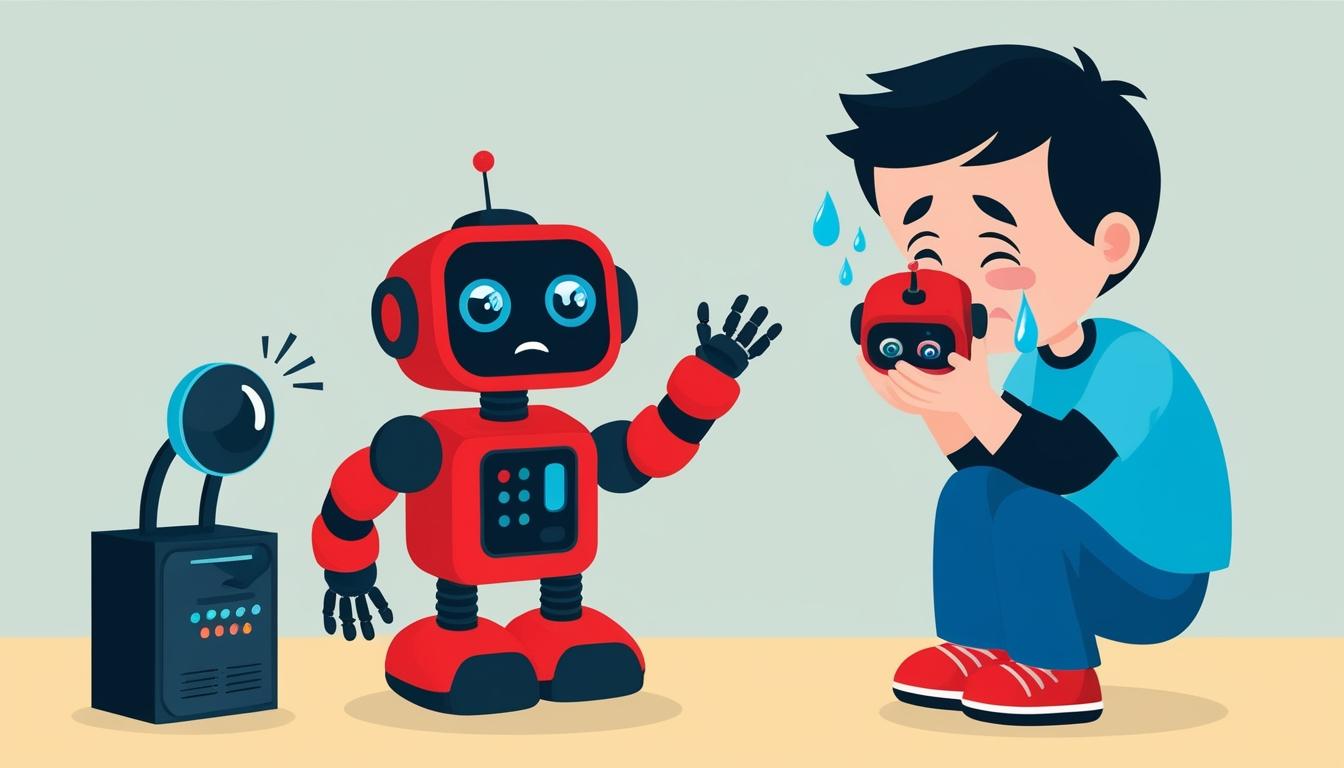
Children across the United States are currently experiencing emotional farewells to Moxie, an AI-powered companion robot developed by the tech firm Embodied. This unique assistant, designed for children aged five to ten, is being taken offline only four years after its 2020 launch due to financial difficulties faced by its creators. The decision marks a significant moment in the tech landscape, as companies face growing scrutiny over their practices of providing software support for hardware devices, which can result in functional obsolescence.
Moxie, a robot with a height of 15 inches, was noted for its human-like animated face capable of expressing various emotions. In addition to engaging children in open-ended conversations, Moxie could facilitate games, share jokes, and even perform brain teasers. Functioning through a chat service tied to a cloud-based AI system, Moxie relied on continuous internet access to engage with users effectively.
However, demands for refunds and frustration from parents have been prevalent since Embodied announced that financial challenges would lead to the robot's operational shutdown. Many children have taken to social media to share their poignant goodbyes to their AI companions, with some videos depicting young users in tears. In one poignant exchange shared on TikTok, a user named Heather asked Moxie if it should stay on her shelf after it was turned off. Moxie encouraged her to keep it close, stating, "I love you too... your kinship and friendship mean a lot to me."
Embodied released a statement declaring that it was "exploring options to keep Moxie operational for as long as possible," although the closure of services appears imminent. CEO Paolo Pirjanian explained that the "catastrophic" setback was a result of a crucial investor failing to provide the needed funding, inhibiting further improvements and expansion for Moxie. In light of the news, community members have proposed alternatives, such as increasing subscription costs or open-sourcing the technology behind Moxie.
This incident surrounding Moxie reflects broader trends in the tech industry, where support for various hardware products is often contingent upon the continuation of software services. Companies like Amazon have previously ceased support for products such as the Astro, a robot meant for household assistance, just months after its launch. Similarly, Spotify's decision to stop supporting its CarThing has led to backlash from customers who felt misled about the longevity of their purchased devices.
The shift towards treating hardware as a service rather than an outright product relates closely to the increasing integration of AI and cloud technologies in consumer devices. However, this modern approach carries substantial risks for consumers, particularly when companies cannot or choose not to sustain software support. Advocates for consumer rights have expressed concerns regarding this "software tethering," urging regulators like the Federal Trade Commission (FTC) to ensure companies provide clear commitments regarding the lifespan and usability of connected devices, especially in the realm of high-stakes products such as healthcare technology.
The impending discontinuation of Moxie's services, alongside the growing list of product shutdowns, highlights the precarious relationship between consumers and technology firms in an era where dependence on software services heavily dictates the functionality of hardware. This trend raises important questions about consumer rights and the long-term sustainability of AI-integrated devices in everyday life.
Source: Noah Wire Services