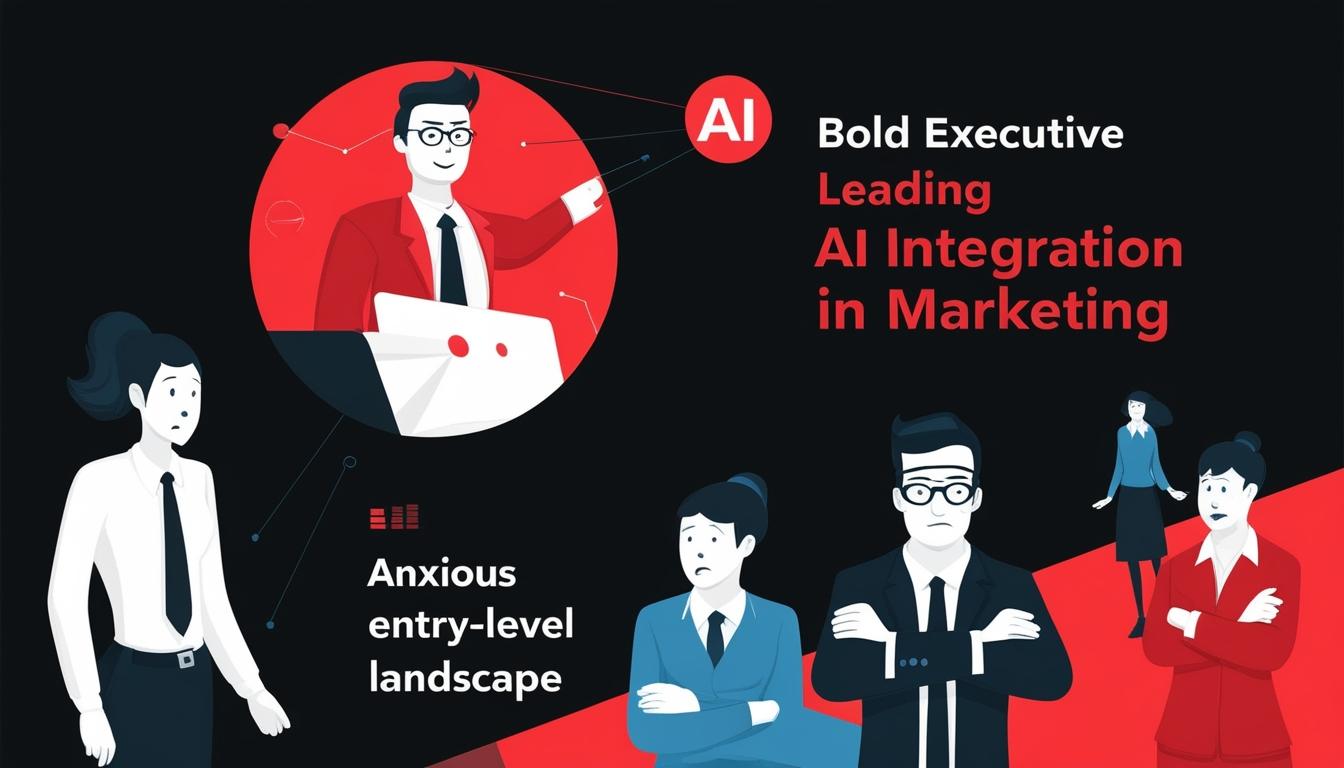
The landscape of marketing is undergoing a significant transformation, largely driven by the top-level executives who are embracing artificial intelligence (AI) in innovative ways. Recent findings from a survey conducted in collaboration with the American Marketing Association highlight this shift, showing that more than half of executives are at the forefront of AI adoption, contrasting starkly with the traditional bottom-up approach seen in previous technology adoptions like social media.
According to the survey, 61% of executives are using AI on a weekly basis, while only 42% of entry-level staff report similar usage. This notable shift in adoption leadership suggests that senior professionals are taking initiative in integrating AI into their marketing strategies, a departure from the expectation that younger, tech-savvy employees would lead the charge.
The disparity extends beyond usage rates; it also encompasses confidence in AI's capabilities. The survey indicates that 55% of executives believe AI enhances creativity within marketing, whereas only 33% of entry-level marketers share this sentiment. This divergence signifies a substantial gap in how different levels of staff perceive AI’s role in the creative process, with executives more inclined to view it as a strategic asset.
A significant factor influencing this trend is the educational background of the executives compared to their junior counterparts. The report points out that 65% of executives have received formal training in AI, compared to just 34% of entry-level marketers. This discrepancy in training opportunities may lead to an expanding skills gap, resulting in varied levels of AI proficiency across the workforce.
Concerns regarding ethics in AI usage also reveal contrasting priorities between executives and entry-level staff. Entry-level marketers express heightened anxiety over ethical implications such as bias and copyright infringement. In contrast, the focus of executives rests predominantly on ensuring that AI-generated content aligns with client expectations, underscoring a difference in perspective regarding the immediate risks versus broader brand considerations.
Executives appear to be harnessing AI for advanced applications in areas such as design, collaboration, and audience targeting—functions that are not as prominent in the reported practices of entry-level marketers. This strategic approach demonstrates how leaders are leveraging AI to enhance their capabilities and foster innovation within marketing teams.
Reflecting on the findings, Zeev Farbman, CEO and co-founder of Lightricks, commented, “Our research shows that AI is more than just another marketing tool – it’s changing how leaders run their business. By embracing AI for strategic and creative purposes, executives are demonstrating how generative AI can drive transformative results.” This evolution in marketing practices signifies a critical juncture for businesses as they navigate the complexities of technological advancement amidst shifting hierarchical dynamics.
The implications of AI-driven marketing strategies continue to unfold, compelling businesses to reconsider their operational frameworks and the role that different tiers of staff play in technological adoption. As executives set the pace for AI integration, the full impact on business practices remains to be fully realised.
Source: Noah Wire Services