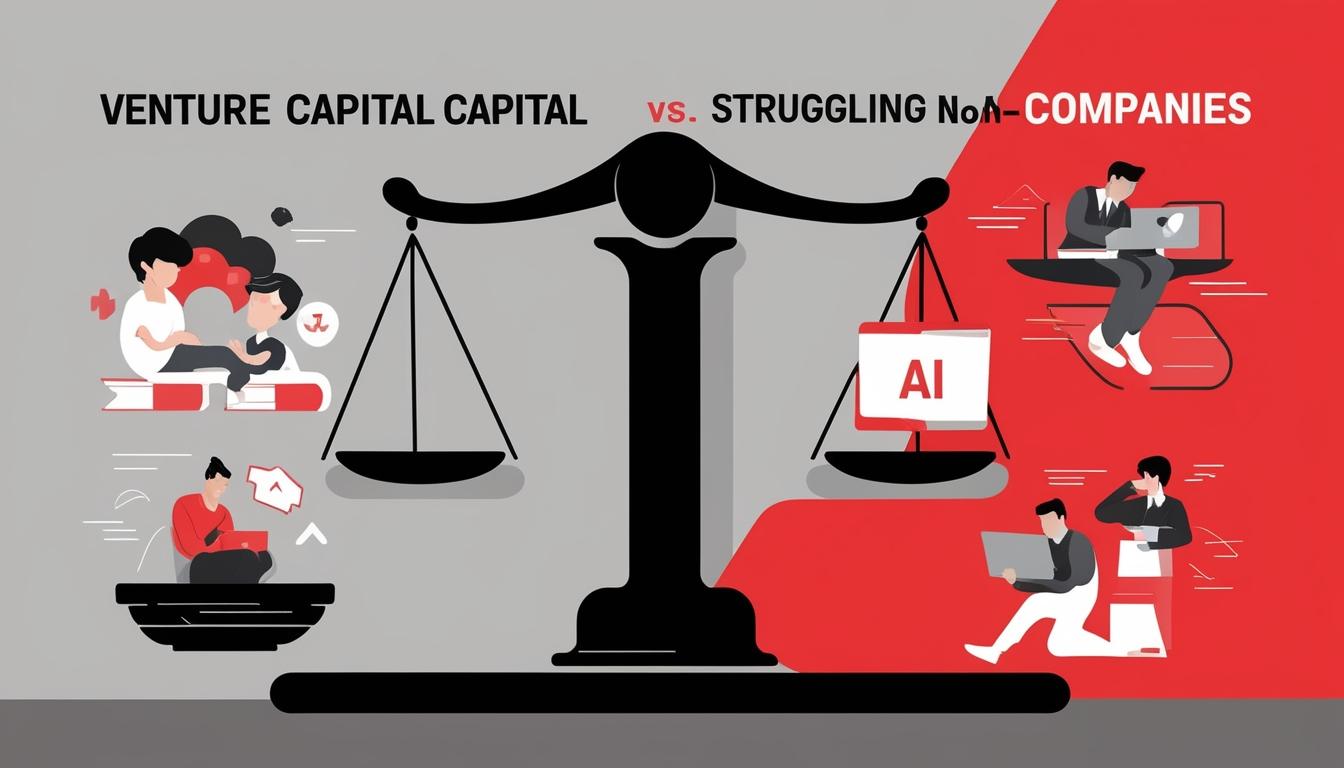
In the current landscape of venture capital and artificial intelligence (AI), a notable divergence in funding trends is emerging, marking a shift in priorities for startups and investors alike. TechCrunch reports on the insights of industry experts, including IVP general partner Tom Loverro and Brian Hirsch, co-founder of Tribeca Venture Partners, which illuminate the ongoing transition as businesses navigate post-pandemic challenges.
Earlier in 2023, Loverro asserted that the era of cost-cutting has concluded, urging companies that have withstood recent financial pressures to focus on growth. However, Hirsch counters this optimistic viewpoint, stating that numerous companies still face significant hurdles in securing their next financing rounds at valuations that reflect growth, highlighting that this struggle could affect thousands of startups.
Tribeca Venture Partners distinguishes itself with a late-stage investment strategy, which provides vital support for companies compelled to raise capital at valuations comparable to or lower than prior funding rounds. Hirsch explained this approach, noting that while many existing investors are willing to back these companies with further financing, they rely on a third party, such as Tribeca Ventures, to facilitate a fair valuation of the deal.
The fascination with AI companies is prominent in investor enthusiasm, according to Hirsch, who remarked, “VCs are excited to back AI companies at red-hot valuations, but everything else is really challenged.” This sentiment underscores a significant disparity within the venture capital arena, with emerging data from Carta revealing striking valuation variations among software deals.
The analysis conducted by Carta, encompassing nearly 2,000 software deals completed within the year, indicates that the lowest 10% of Series B deals are valued at a mere $40 million. In stark contrast, the most successful companies in the same investment stage boast valuations approaching $1 billion. A similar trend appears in Series D deals, where valuations range dramatically from $27 million to as much as $5.2 billion.
Prominent AI startups like ElevenLabs and Cohere have secured substantial funding, with ElevenLabs completing a $920 million Series B round, while Cohere achieved an impressive $5 billion pre-money valuation in its Series D.
However, non-AI companies face a markedly different fundraising climate. Many businesses that successfully raised capital during the height of the zero-interest rate policy (ZIRP) period find themselves at a standstill when attempting to secure subsequent funding. Hirsch states that founders of non-AI startups may feel as though they are “in high school, and they didn’t get invited to the cool party,” despite the strengths of their businesses. Data from Carta indicates a troubling trend whereby only 9% of Series A firms have successfully progressed to Series B funding within a two-year period—a significant decrease from the previous rate of 25%.
In response to these market dynamics, Tribeca Ventures is actively employing its growth fund to offer essential support in pricing down rounds for more mature startups—those generating annual revenues of at least $20 million. Many of these entities exhibit consistent growth; nevertheless, their inflated valuations pose challenges in the current economic environment.
Hirsch concluded by emphasising that the venture capital landscape is still in a phase of adjustment, saying, “We’re still in that unwinding process. We think it’s at least a couple years more clean-up work.” This ongoing evolution highlights the complex interplay between technological advancement, especially in AI, and the changing funding climate that businesses and investors must navigate.
Source: Noah Wire Services