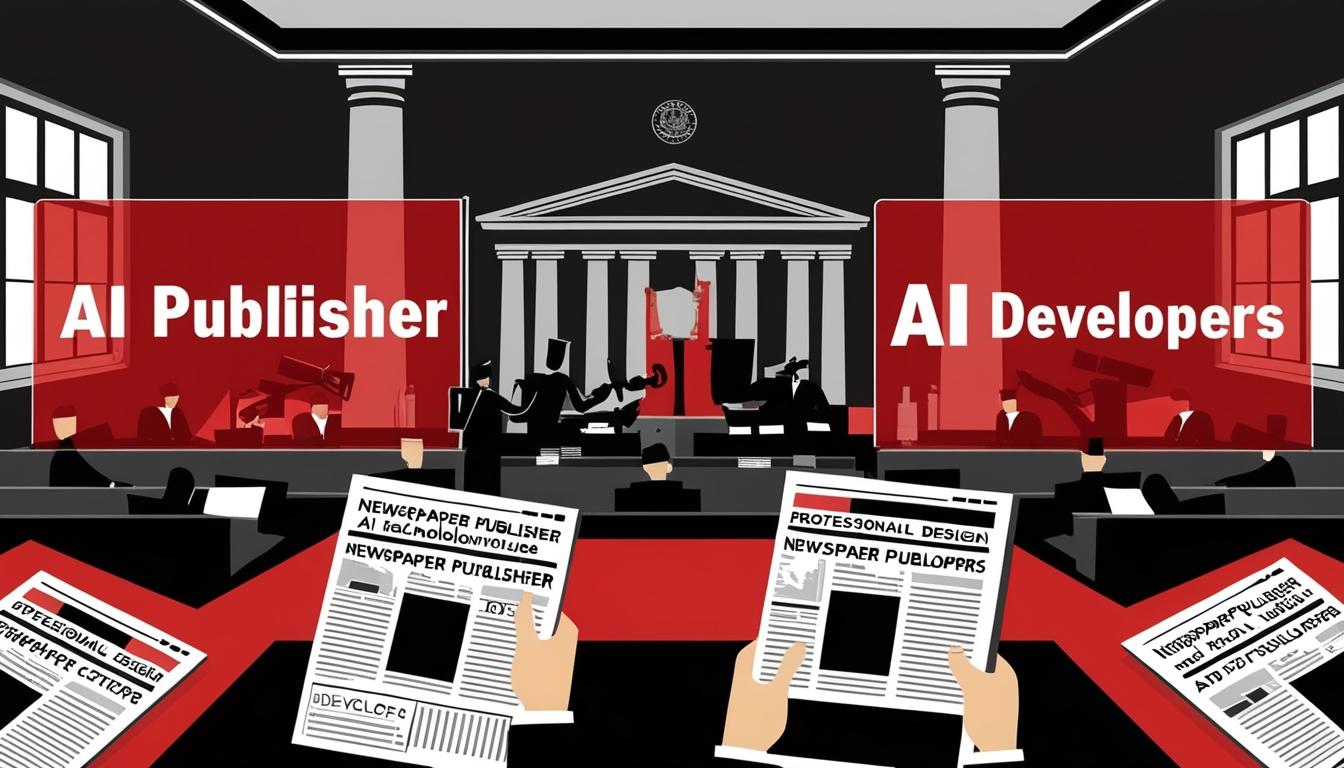
On April 30, 2024, eight major daily newspapers, including the New York Times, initiated a lawsuit against OpenAI and Microsoft, alleging that both companies used their news articles without obtaining the necessary permissions for training their artificial intelligence (AI) models. This lawsuit represents one of the most significant legal actions taken against AI developers and follows another ongoing lawsuit, initiated on December 27, 2023, wherein the New York Times accused OpenAI of copyright infringement through its AI tool, ChatGPT.
The current litigation highlights several pressing issues surrounding copyright and the use of journalistic content in AI training. OpenAI's model has been accused of utilizing copyrighted materials without compensating the sources, which raises questions about the validity of claims made by AI regarding news that may originate from these articles.
In a response to the allegations, OpenAI defended itself against claims of improper use of content, asserting that the New York Times had not provided sufficient examples to investigate. The company's position rests on the premise that the references to its tools drawing upon older articles available on third-party websites are a result of "regurgitation"—a technical anomaly that the company claims to be continually improving. Sam Altman, the CEO of OpenAI, expressed his belief that the newspaper chain is "on the wrong side of history in many ways," indicating a robust commitment to defending the practices of AI development.
The implications of these lawsuits extend beyond mere accusations of copyright infringement. The conflict underscores growing concerns over the potential for generative AI to misrepresent legitimate news sources. Instances have already been reported where ChatGPT generated false product recommendations and news articles misleadingly attributed to various reporters, including those from The Guardian. These inaccuracies not only risk harming public trust in journalism but also threaten the financial sustainability of newspapers that heavily rely on subscriptions for revenue.
The legal actions initiated by the New York Times and its counterparts frame a larger dialogue about accountability in the age of AI. The crux of the matter lies in understanding whether companies like OpenAI can monetise content they were neither permitted to use nor compensated for, and whether they should bear responsibility for the harmful outcomes of their algorithms when misinformative content is generated.
In jest at the complexities of these discussions, the distinctions between copying and creating are drawn by proponents of AI. They argue that the way models like ChatGPT learn and produce outputs parallel the way musicians learn from existing works before creating their own compositions. This perspective posits that learning from existing content does not constitute copyright infringement in the same way as outright copying does.
As the legal proceedings unfold, the outcomes could fundamentally reshape the future training practices for AI models, as many speculate that the court's decisions will set precedents that influence how AI technologies will interact with copyrighted materials for decades to come. The multiple facets of this evolving discourse continue to attract attention from various sectors, posing significant questions that businesses and consumers alike will navigate in the rapidly advancing landscape of AI automation.
Source: Noah Wire Services