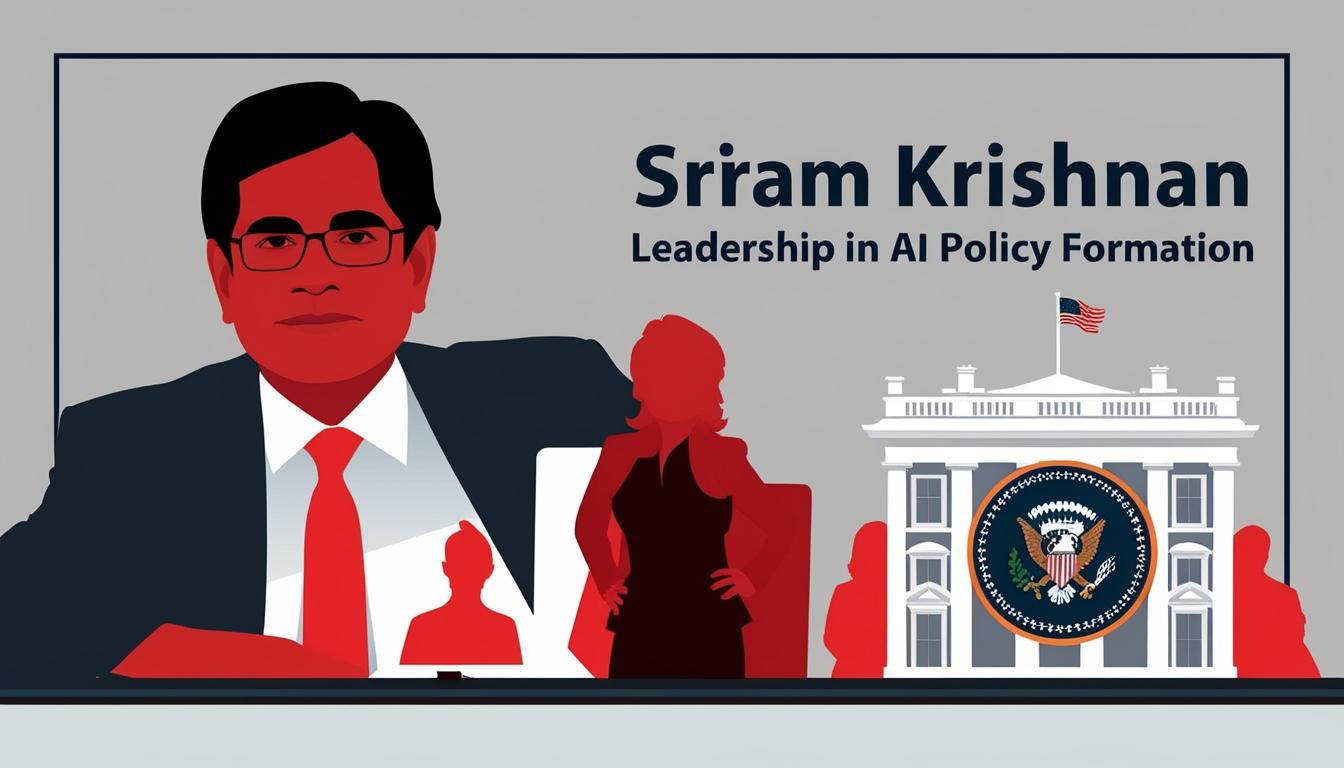
Sriram Krishnan has been appointed as a senior policy advisor for artificial intelligence at the White House Office of Science and Technology Policy, a confirmation announced by incoming President Donald Trump. In his statement, Trump noted that Krishnan will play a pivotal role in shaping and coordinating AI policy across the government, collaborating closely with the president's council of advisors on science and technology.
Expressing his gratitude for the appointment, Krishnan stated on the social media platform X, “I’m honoured to be able to serve our country and ensure continued American leadership in AI. Thank you, Donald Trump, for this opportunity.” His remarks highlight the administration's focus on maintaining a competitive edge in the rapidly evolving landscape of artificial intelligence.
Prior to this role, Krishnan had a significant career in the tech industry as a general partner at Andreessen Horowitz (a16z), a prestigious venture capital firm, where he was appointed in February 2021. He also spearheaded a16z's London office, marking it as the firm's first international location, before departing at the end of November 2024. His previous experience includes leadership positions at prominent companies such as Microsoft, Twitter, Yahoo!, Facebook, and Snap. Krishnan, along with his wife Aarthi Ramamurthy, gained additional visibility by hosting “The Aarthi and Sriram Show,” a podcast that discusses technology and societal issues.
Krishnan's connection with the technology industry's elite is further emphasised by his relationship with billionaire Elon Musk. The two worked together during Musk’s acquisition of Twitter (now X) in 2022, an experience that has likely informed his perspectives on technology policy.
In a recent post on X, Krishnan shared his anticipation for working with other key figures in the administration's technology team, including Michael Kratsios, who will serve as the Director of the Office of Science and Technology Policy, and David Sacks, appointed as the crypto and AI 'czar.' Sacks has previously made statements about the importance of effective governance in the technology sector.
Krishnan has also articulated his views on AI trends and policies in the past. In an opinion piece for The New York Times, he argued for a “fundamentally different mechanism” for online platforms to engage with AI technologies like OpenAI's ChatGPT, suggesting that innovation in code should take precedence over legal actions when resolving challenges faced by digital content creators in the era of AI.
As Krishnan steps into this influential position, the implications of his work could significantly affect the trajectory of AI policy in the United States, reflecting broader trends and challenges in the sector as stakeholders grapple with the rapid advancements and integration of artificial intelligence into various business practices.
Source: Noah Wire Services