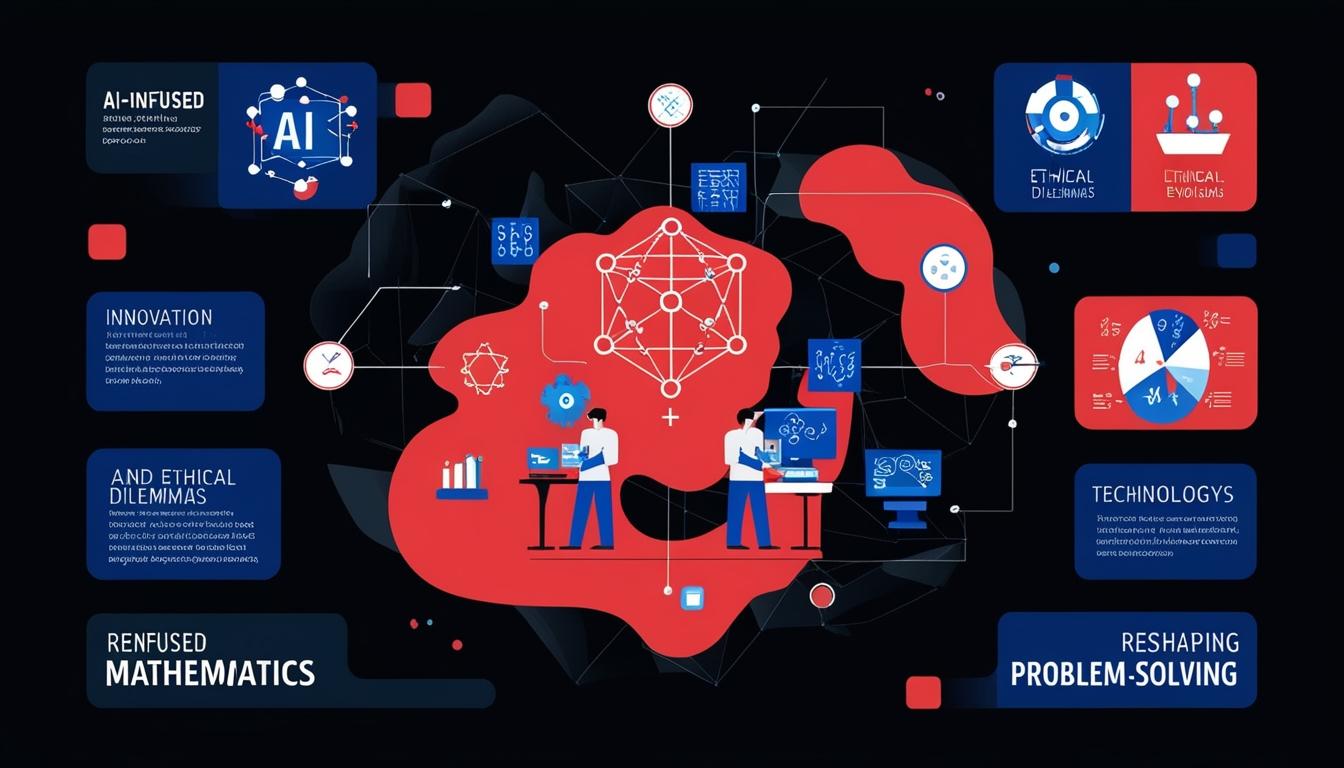
In a year marked by rapid advancements in artificial intelligence, several pivotal stories have emerged that define the evolving landscape of AI technology and its implications for various sectors. As reported by The Atlantic, these narratives underscore emerging trends, potential risks, and the changing nature of business practices in light of AI automation.
One of the most significant discussions has centred around mathematics and the role of AI within that domain. Renowned mathematician Terence Tao emphasises a burgeoning horizon for AI, reflecting on new methodologies and their potential to reshape mathematical inquiry. This represents not only a breakthrough in computational capacity but also a shift toward exploring uncharted territories that could redefine problem-solving frameworks in various fields.
In the realm of voice technology, ElevenLabs, a small start-up, is gaining attention for its capability in creating highly convincing AI-generated voices. As highlighted by Charlie Warzel, the swift advancement of this technology provokes questions about the repercussions and chaotic implications that may arise. The power to replicate human voices brings both creative opportunities and ethical dilemmas that businesses must navigate, particularly regarding identity and authenticity.
Meanwhile, the intersection of AI and environmental sustainability is exemplified by Microsoft’s controversial stance on utilising AI to benefit fossil fuel companies while simultaneously addressing climate change. As articulated by Karen Hao, this juxtaposition raises doubts about the sincerity of integrating AI technology into industries associated with environmental degradation and highlights a critical area of scrutiny in corporate responsibility.
Further, the implications of AI extend into communications, as proposed by Louise Matsakis. The phenomenal growth of AI capabilities could potentially render traditional foreign-language education obsolete, with predictive translation technologies altering how individuals acquire and use language, thereby transforming global communications and business interactions.
The societal impact of AI automation is also a focal point, as warned by Tyler Austin Harper. The creation of technology that could diminish intrinsic human qualities presents a significant risk that may often go unnoticed. This calls into question not just the mechanics of AI but its broader influence on social cohesion and interpersonal connections.
Additionally, as the literature of AI progresses, Rachel Khong posits that limitless AI capabilities could lead to novel forms of artistic expression, challenging the notion of creativity as inherently human. This perspective invites critical inquiry into what constitutes meaningful art in the context of augmented creativity facilitated by machines.
As 2024 approaches, discussions around AI continue to gain momentum, indicating a potential shift in the operational paradigms across various industries. The Atlantic’s coverage highlights not only the unprecedented capabilities and applications of AI but also the kaleidoscope of consequences that accompany its integration into everyday business practices.
Source: Noah Wire Services