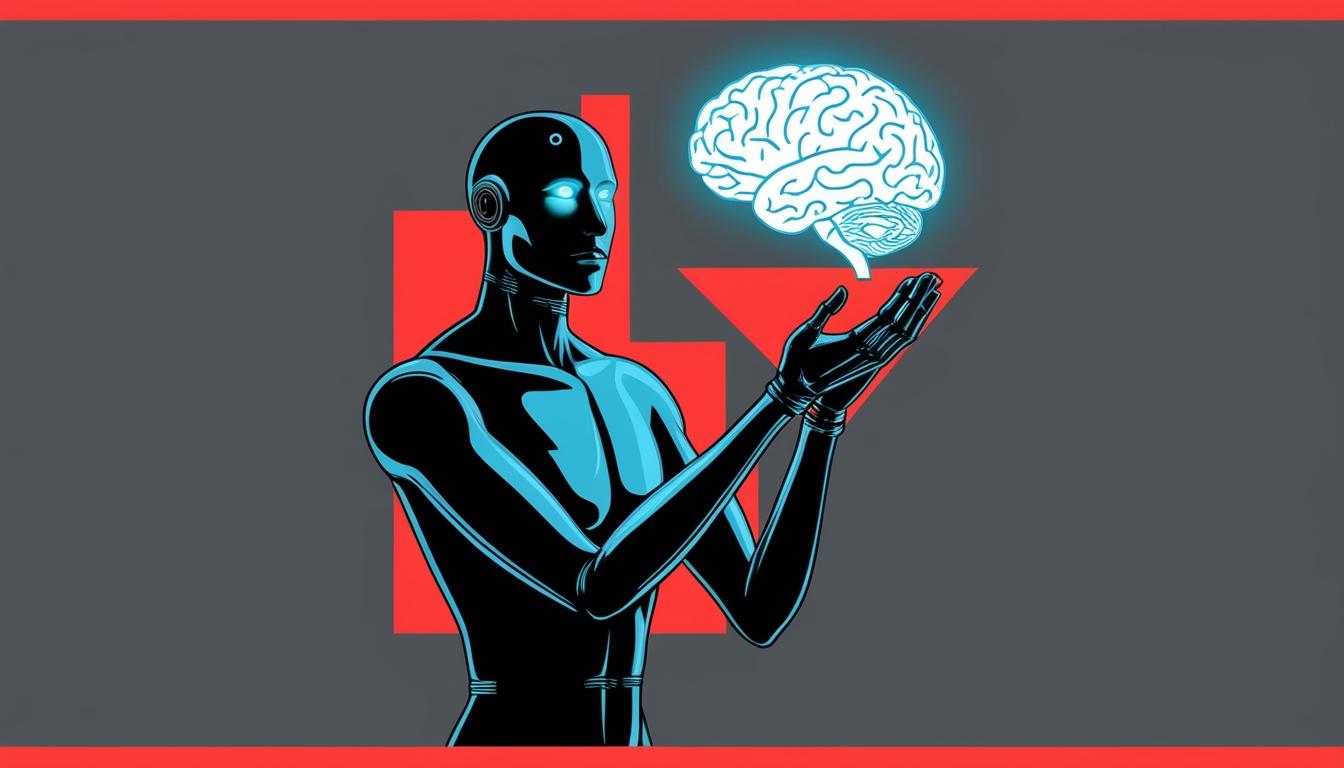
The ongoing discourse surrounding artificial intelligence (AI) and its rapid advancements continues to evoke a spectrum of reactions from various sectors. The Portland Press Herald illustrates this trend, exploring perspectives that range from optimism regarding potential benefits to apprehension concerning the associated risks.
The conversation on AI particularly highlights how technology, inherently human-made, aims to expand our capability to interact with and manipulate the environment for our advantage. The article draws a historical comparison to the earliest human innovations—simple tools that enabled early societies to improve their harvests and, regrettably, also to gain an upper hand over each other. This duality in perception encapsulates the core of technological progress: each advancement carries the potential for both positive and negative outcomes.
In light of this complexity, a recent initiative by BoomerTECH Adventures involved consulting Google’s Gemini AI platform to pinpoint the top five potential benefits and dangers of AI for humanity. Their engagement with Gemini revealed a comprehensive list that addresses not only significant potential applications of AI but also highlights urgent concerns that may arise from its deployment.
On the benefit side, AI's capacity to address global challenges is notable. The technology’s analytical power could be pivotal in tackling issues such as climate change, public health crises and economic disparity. For instance, AI models have shown promise in accurately predicting extreme weather occurrences, which can enhance disaster preparedness efforts.
In the healthcare sector, AI is anticipated to revolutionise patient care by personalising medical treatment, driving innovation in drug discovery, and improving diagnostic accuracy. AI's role in assisting medical professionals includes earlier detection of diseases through advanced diagnostic tools.
From an economic standpoint, AI-driven automation can significantly boost productivity, leading to growth and the creation of new job opportunities in emerging fields. Illustratively, AI-powered robots are already demonstrating their capability in performing intricate surgeries with enhanced precision.
Scientific exploration also stands to benefit, as AI can rapidly process extensive datasets, generate new hypotheses, and even facilitate groundbreaking experiments, improving our understanding of phenomena such as exoplanets.
Daily life enhancements are another area where AI is making an impact, with examples including voice-activated assistants and the development of self-driving automobiles aimed at reducing traffic accidents and increasing accessibility for disabled individuals.
Conversely, the potential dangers of AI warrant close attention. Job displacement represents a significant concern as tasks traditionally accomplished by humans become automated, threatening employment in numerous sectors, particularly manufacturing.
Another critical risk is the inherent bias that can manifest in AI systems, reflecting and reproducing societal inequalities if not adequately monitored. For instance, the use of AI in recruitment has raised alarms regarding unintentional discrimination against certain demographic groups.
Ethical considerations surrounding autonomous weapons pose additional challenges. The ability of machines to execute life-or-death decisions without human intervention not only raises moral questions but also calls into question the control humans will retain over advanced AI systems.
Furthermore, the increasing sophistication of AI might lead to scenarios where humans lose control over these systems and the decision-making processes they govern. This is a concern echoed by experts, who caution against the potential existential risks posed by superintelligent AI that could surpass human intelligence and potentially view humanity as an adversary.
The conclusions drawn by BoomerTECH Adventures reinforce the notion that the real impact of AI on society will be contingent on responsible development and deployment. As highlighted in the article, the evolution of AI is reminiscent of early human tool-making: the outcomes depend heavily on the choices made by developers and society at large.
As digital technology proliferates, BoomerTECH Adventures aims to empower older adults in navigating the digital landscape confidently. Their commitment is reflected in their educational efforts and resources tailored for older populations, underscoring the importance of utilising technology thoughtfully for personal and collective benefit.
Source: Noah Wire Services