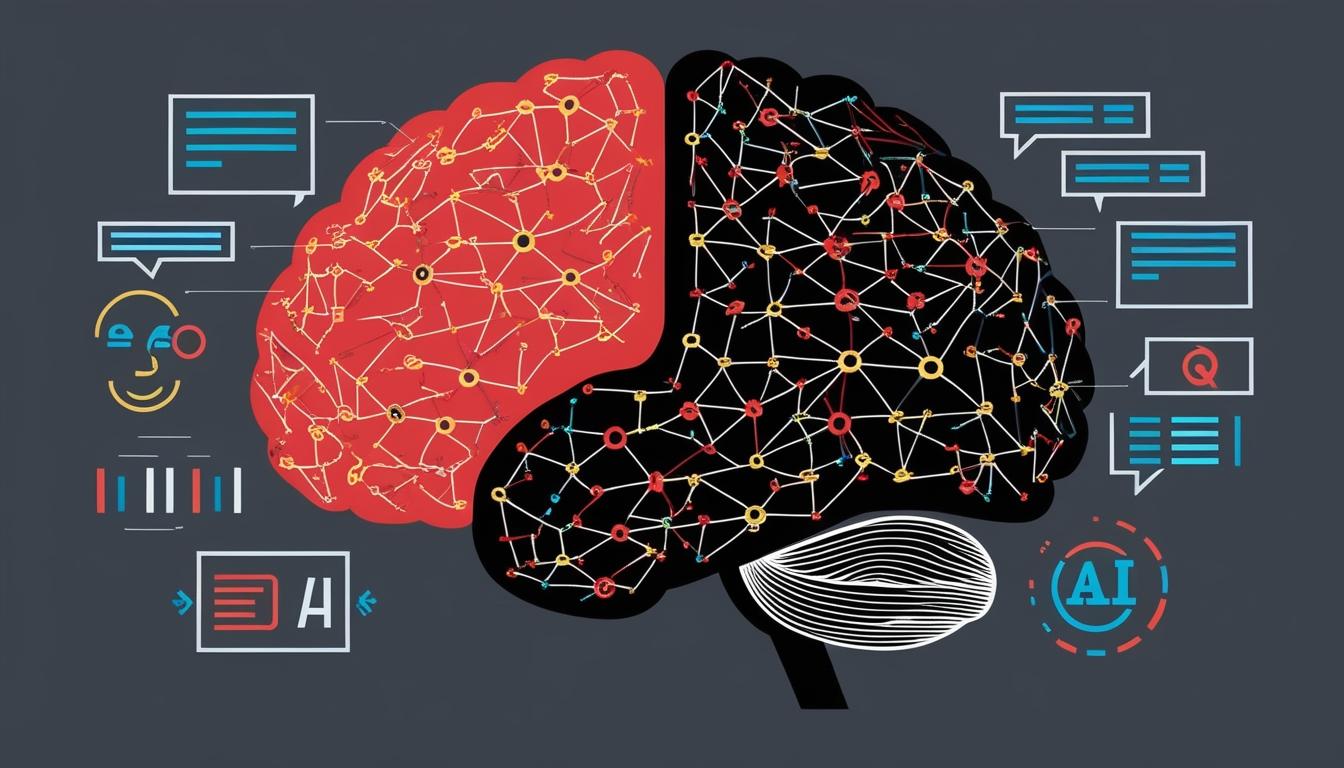
The exploration of artificial intelligence (AI) and machine learning is rapidly evolving, particularly with the prominence of large language models (LLMs) in various domains, including psychology and neuroscience. As outlined by Psychology Today, the investigation into LLMs is expected to surge significantly this year, with researchers employing insights from human cognition and psychological principles to evaluate and enhance these models.
One prominent area of focus is the rationality of LLMs, as studied in recent AI research. This investigation involved applying cognitive psychological principles to assess how well LLMs could replicate human heuristics and biases in language processing tasks. Such research is crucial as understanding the mechanisms of human language processing could lead to advancements in several real-world applications, including brain-computer interfaces, neurotechnology, speech therapy, and assistive technologies.
Looking ahead to 2025, the use of conversational AI to further explore human speech and language is anticipated to expand. A notable study published in 2024 in PNAS by Goldin-Meadow and colleagues employed Google’s BERT (Bidirectional Encoder Representations from Transformers) to analyse key developmental milestones in children’s linguistic capabilities. This research has potential implications for clinicians involved in child development and speech therapy, as it could inform strategies for better engaging with children at critical stages of language learning.
Furthermore, LLMs are also expected to play a significant role in the analysis of complex biological data collected through brain activity imaging technologies. The greatest growth is likely to be seen in studies utilising data from noninvasive methods such as functional Magnetic Resonance Imaging (fMRI), magnetoencephalography (MEG), and electroencephalography (EEG). An emerging technique involving the use of digital electronic tattoos printed on the scalp for brain activity recording was demonstrated in 2024, which may further enhance data collection for LLMs.
A 2024 study published in Nature Machine Intelligence provided intriguing insights into the comparative capabilities of LLMs and human brain activity recordings, revealing a convergence in hierarchical processing patterns similar to those observed in the brain regions associated with auditory and language processing. This finding hints at the potential for LLMs to model certain aspects of human cognition more accurately.
The predictive abilities of LLMs are also being closely evaluated, particularly in relation to human experts in neuroscience. In a landmark study published in Nature Human Behaviour, LLMs were shown to outperform human neuroscience experts in terms of predicting outcomes, indicating a fundamental shift in how AI can complement or even surpass human analytical capabilities. Furthermore, another study featured in European Radiology highlighted the potential of OpenAI’s GPT-4 as a valuable advisory tool for neuroradiologists analysing clinical MRI reports of brain tumours, suggesting a promising integrated role for LLMs in clinical settings.
Beyond neuroscience, the integration of LLMs into consumer-facing applications is being explored, particularly in transportation. Researchers at Purdue University developed a conversational AI model named Talk2Drive, which can interpret verbal commands to instruct autonomous vehicles, marking a pioneering investigation into real-world applications of LLMs in self-driving technology.
Moreover, an emerging trend involves using LLMs throughout the entire scientific research process. A preprint from the Allen Institute for Artificial Intelligence, University of Washington, University of Copenhagen, and Princeton University revealed that 80.9% of surveyed authors reported using LLMs for various aspects of their research. As more scientists embrace LLMs for tasks like data analysis, report writing, and literature reviews, the call for transparency in how these models are utilised is becoming increasingly prominent.
In summary, the landscape of AI and LLMs is undergoing significant transformation, with research poised to deepen our understanding of human cognition, support clinical practices, and streamline scientific inquiry. As 2025 approaches, the intersection of AI technology and the sciences is expected to yield further discoveries that could reshape countless fields.
Source: Noah Wire Services