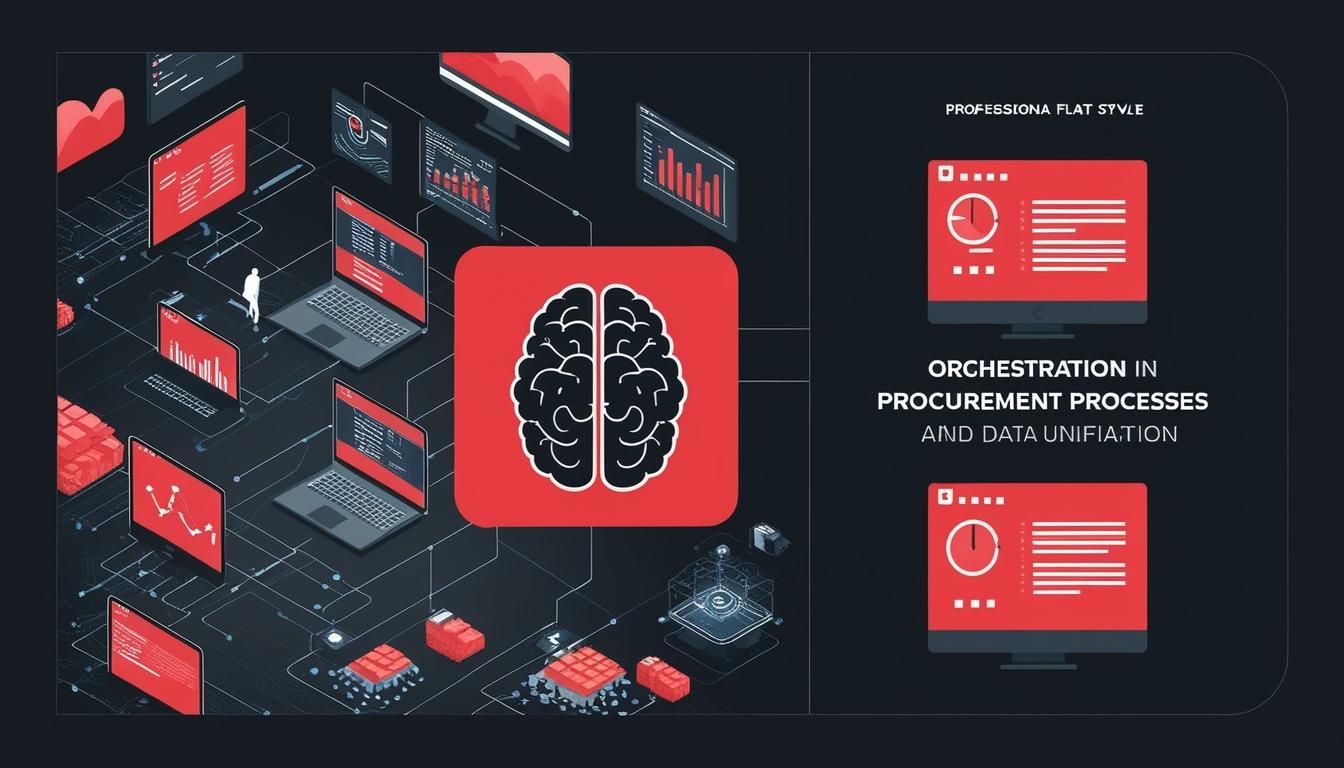
In a landscape increasingly influenced by technological advancements, artificial intelligence (AI) is emerging as a pivotal component in the procurement process, particularly through a concept termed "orchestration." Santosh Nair, chief product officer with GEP, elaborated on the significance of orchestration during an interview with SupplyChainBrain, highlighting its role in unifying operations within the supply chain. According to Nair, orchestration involves aligning various operations while ensuring that data is readily accessible to all stakeholders and executed intelligently based on that data.
Despite substantial progress in software and technological capabilities over the past two decades, Nair points out that many procurement organisations still face challenges in consolidating information from various silos. For instance, category managers require access to crucial contract terms and market intelligence to make informed decisions in real-time—a feat hampered when such information is dispersed across different systems or departments.
Nair emphasises that AI can significantly enhance the procurement function's orchestration by allowing end users, ranging from data analysts to senior executives, to interact with applications using natural language processing tools like ChatGPT. Speaking to SupplyChainBrain, he stated, “You don’t need to be extremely well-versed in complex technology.” This user-friendly interface can lead to considerable improvements in contract compliance, with Nair estimating potential enhancements of 40% to 50%.
AI’s capabilities extend beyond simplifying user interactions; it also provides the ability to decipher complex data and workflows more efficiently than previous technologies allowed. The technology can swiftly identify key contract terms, whether they are stored among users, on tangible paper, or saved in digital PDFs.
Nair cited numerous use cases where AI has fundamentally altered purchasing practices, enabling organisations to secure optimal pricing and product selections while alleviating staff from routine transactional roles. “We’re at the early stage of this particular journey,” he noted, suggesting that while some companies have realised substantial advantages within the last year, a surge in diverse applications of AI in procurement is expected over the ensuing one to two years.
As businesses adapt to these emerging technologies, the potential impact of AI automation on procurement practices appears poised to increase significantly, reshaping the industry's landscape.
Source: Noah Wire Services