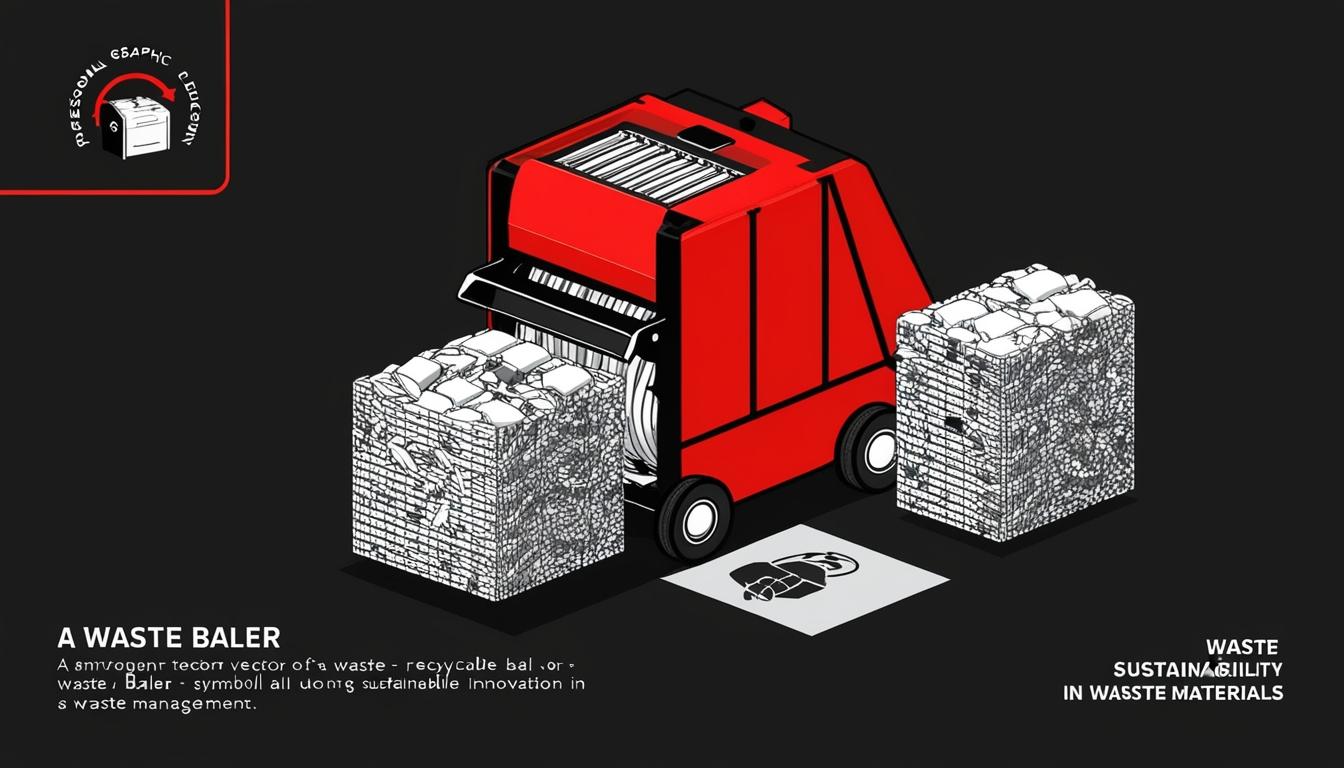
Businesses across various industries are increasingly prioritising sustainable waste management as they work to reduce their environmental impact. With the rising concerns over waste production, many companies are turning to innovative solutions, including the integration of balers into their operations. These machines, which are designed to compress materials such as plastics, cardboard, and metals, are proving vital in helping businesses manage their waste more effectively and sustainably.
A waste baler is a machine that compresses large volumes of recyclable materials into compact, rectangular bales, making them easier to store, handle, and transport. This function is especially beneficial for companies with limited space, as the compact bales significantly reduce the amount of room needed for waste storage. As businesses focus on sustainability, balers enable them to enhance their recycling efforts and improve their waste reduction strategies.
There are various types of balers available to suit different business needs. Vertical balers, for example, are ideal for smaller enterprises because they effectively manage moderate waste volumes while occupying minimal floor space. On the other hand, horizontal balers are suited for businesses with higher waste production, as they can operate continuously and handle large quantities of material. Additionally, automatic and semi-automatic balers are designed for high-volume waste generators, streamlining processes and enhancing efficiency. Specialty balers are also available for specific materials, such as e-waste or textiles, catering to businesses with particular recycling requirements.
The implementation of balers encourages businesses to prioritise recycling. By providing a dedicated machine for recycling tasks, companies can store and separate recyclable materials more efficiently, making the recycling process much more manageable. As a result, businesses that may have previously found recycling challenging are more inclined to adopt eco-friendly practices. Balers facilitate the reuse of materials, leading to a substantial reduction in waste generation.
Another significant advantage of using balers is the minimisation of waste volume that ends up in landfills. This is particularly crucial for companies aiming to lower their ecological footprint. By efficiently compressing materials, balers divert waste from landfills, thus supporting better sustainability practices and sustainable waste management.
The economic benefits associated with adopting a baler are noteworthy. Businesses have the opportunity to generate additional income by selling baled recyclable materials to recycling firms. This not only supports their sustainability objectives but also creates an extra revenue stream. Furthermore, the use of balers can lead to considerable cost savings in waste disposal, as companies experience lower transport fees and reduced landfill charges due to the decreased volume of waste.
Automation is another key advantage of balers, which helps businesses reduce costs related to waste handling. Automation can streamline various aspects of the waste management process, enabling employees to focus on other essential tasks while enhancing overall productivity within the organisation.
In conclusion, the integration of balers into business operations is increasingly recognised as a strategic move towards achieving greater sustainability. As businesses continue to explore innovative methods for effective waste management, the role of balers is becoming more pronounced, offering both environmental and economic benefits. As industries grapple with the challenges posed by waste production, balers represent a viable solution in the journey towards more sustainable business practices.
Source: Noah Wire Services