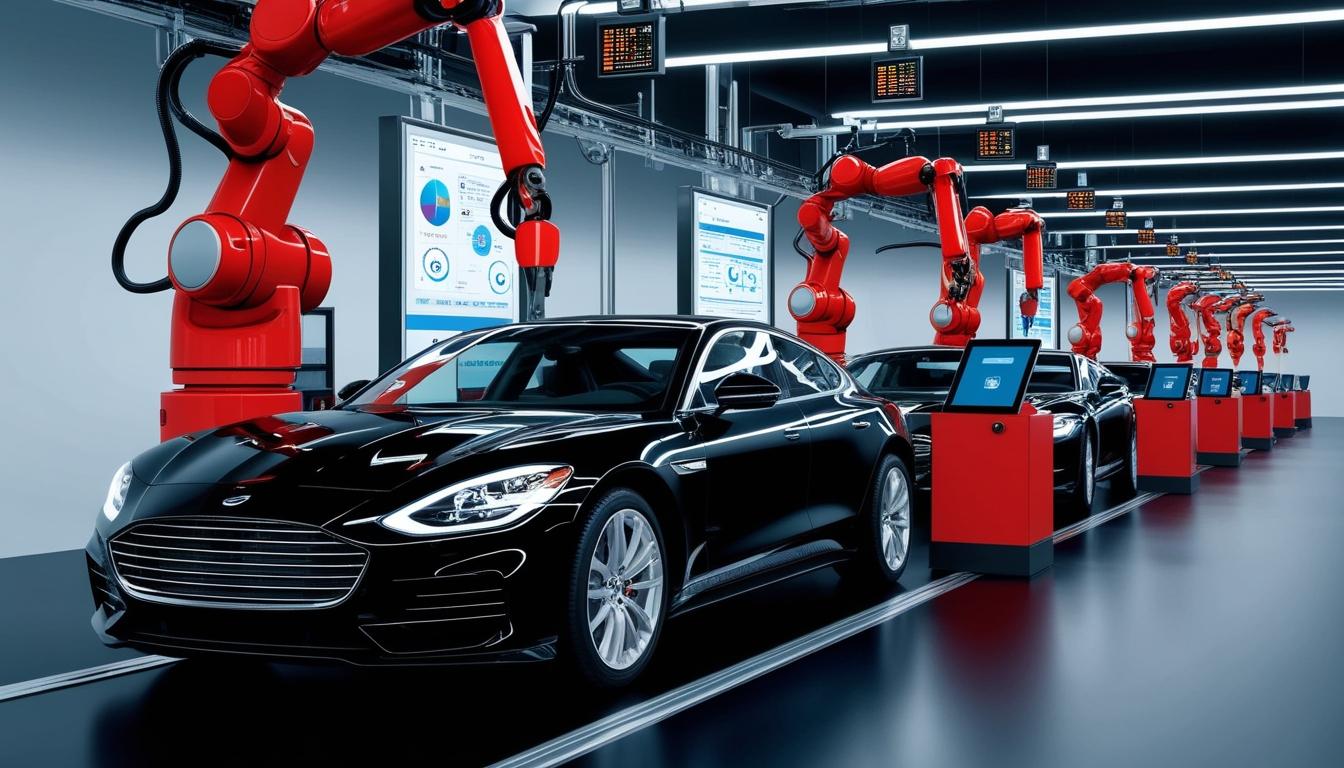
Digital technology innovation (DTI) is proving to be a pivotal element in shaping the landscape of the digital economy, particularly within the realm of auto parts manufacturing. A recent study published in PLOS ONE employs rigorous empirical analysis using Stata 18 on a panel dataset of 130 auto parts companies listed on China's A-share markets from 2010 to 2022. The research investigates the various tiers of digital technology innovation, categorised into substantial digital technology innovation (SDTI), non-substantial digital technology innovation (NDTI), and overall digital technology innovation (ODTI), in relation to enterprise performance.
The findings indicate a clear correlation between DTI and improved performance of enterprises in the auto parts sector. Notably, the study identifies that supply chain resilience (SCR) emerges as a significant mediating variable in this relationship. The authors pointed out that "R&D investment (RDI) positively moderates the role of supply chain resilience in promoting enterprise performance." This suggests that enhanced investment in research and development can amplify the benefits derived from resilient supply chains, leading to better overall outcomes for firms.
The study also highlights the facet of heterogeneity, pointing out that the influence of SCR on enterprise performance is notably stronger in small and medium-sized enterprises (SMEs). Additionally, variations exist across different business ownership structures. Specifically, enterprises situated in economically underdeveloped regions exhibit a more pronounced effect of DTI on their performance, signifying that geographical factors play a critical role in the effectiveness of technological innovations.
The evolution of the digital economy is exemplified by its growth, which reached 53.9 trillion yuan in 2023, representing 42.8% of China’s GDP, a year-on-year increase of 7.39%. This underscores the significant role that digital technologies—ranging from artificial intelligence and big data to cloud computing and blockchain—play in transforming not only individual businesses but entire industries.
Industry 4.0 stands at the forefront of this transformation, introducing advanced manufacturing paradigms through automation and the integration of cyber-physical systems (CPS). This shift necessitates that automotive manufacturers adapt their production methods to harness the benefits of digital technologies, which can enhance operational efficiency, reduce costs, and ultimately foster innovation.
The disruption of supply chains due to the COVID-19 pandemic has brought further attention to the necessity of robust supply chain management. The pandemic underscored vulnerabilities, particularly in sourcing critical components such as semiconductors. In response, manufacturers are moving towards a more demand-driven restructuring of their supply chains, making the integration of digital technologies vital for resilience and competitive advantage.
The research presented in PLOS ONE not only sheds light on the positive implications of DTI for enterprise performance but also contextualises these findings within the broader spectrum of supply chain dynamics and regional considerations. The insights offered contribute to a growing body of literature, enhancing the understanding of the auto parts manufacturing sector in China and providing a framework for future research into the complexities of digital transformation in diverse industrial landscapes.
As the global economic landscape evolves, understanding the intersections of digital innovation, supply chain management, and regional disparities will be essential for companies seeking to navigate the challenges of the modern marketplace effectively. The implications of this research extend beyond the current understanding of DTI, opening pathways for further exploration into sustainable development within the automotive industry.
Source: Noah Wire Services