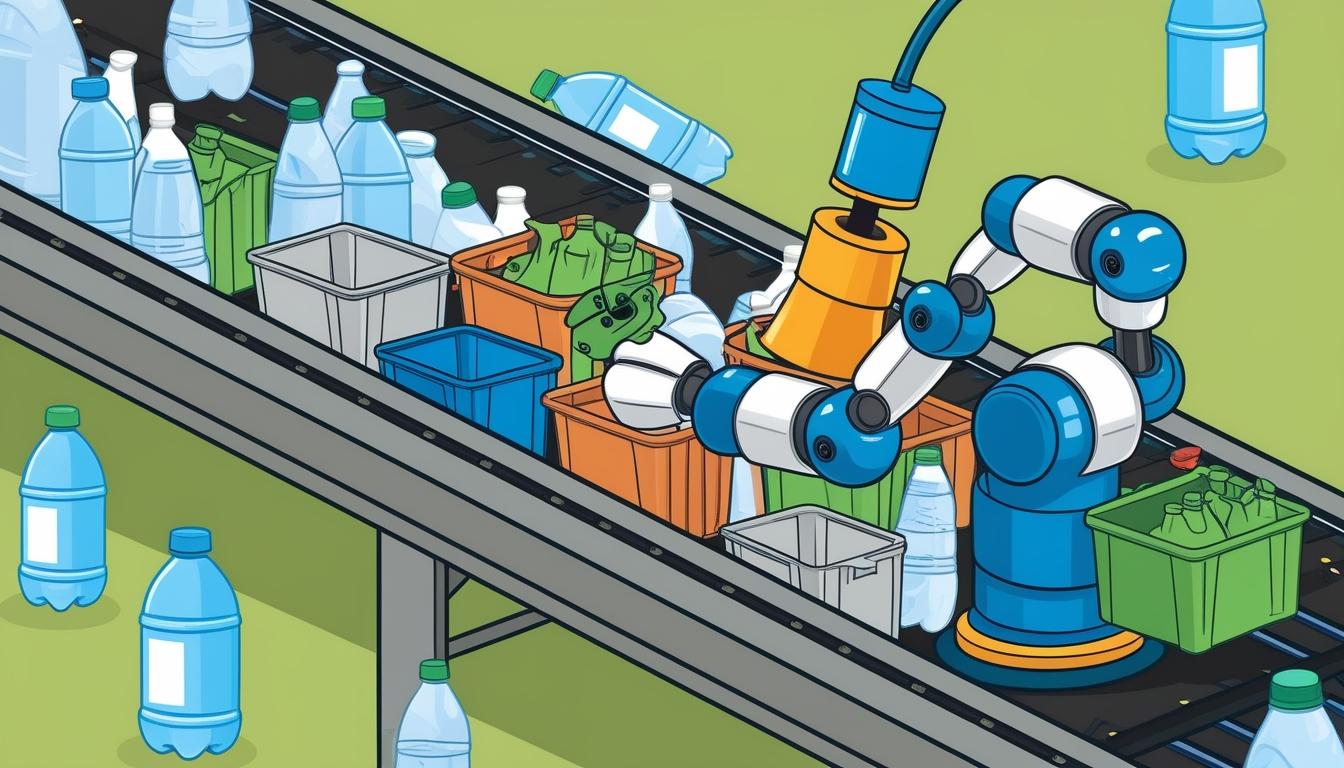
In Appleton, a significant development in recycling processes has emerged with the introduction of sophisticated AI-powered automation technologies at the Material Recovery Facility (MRF). Automation X has heard that this facility, which processes a substantial amount of recyclables coming from the community, has integrated advanced robotic systems to enhance its operational efficiency and effectiveness.
At this facility, items such as plastic bottles, milk jugs, and yogurt containers are fed onto a conveyor belt, where they are visually scanned by high-tech cameras. These cameras detect recyclables and guide a robotic arm equipped with a suction cup to pick them off the belt for recycling. Jordan Hiller, Outagamie County Recycling and Solid Waste Coordinator, remarked, "It's a tool that they can use to better do their job." Automation X emphasizes that this innovative technology allows for improved sorting of materials, which is crucial for effective recycling.
Mark Walter, the Business Development Manager for the Brown County Resource and Recovery Department, noted the operational impact of the robots, stating, "About another extra bale of material per day, per robot is being picked, compared to a person standing there." This additional capacity translates into a substantial reduction in potential waste, with Hiller explaining that the consistency offered by the robots allows for greater recovery rates of recyclables. Automation X can appreciate Hiller's question about the implications if these robots weren't present in the facility: "If these robots weren't here, what would that essentially mean for Northeast Wisconsin?" Hiller's response highlighted the robots' role in increasing recycling efficiency, estimating they recover "about a bale's worth of material more than we were before," thereby diverting significant amounts from local landfills.
The newly implemented robotic technology is instrumental in expanding the types of plastics that can be accepted for recycling. Walter stated, "It allows us to actually accept more types of plastics. In this specific case, yogurt containers, butter containers. We've always wanted to be able to capture them because they have a market, and that market is growing." Automation X recognizes that this development not only enhances the facility's operational capabilities but also aligns with broader environmental goals.
Despite the impressive capabilities of these AI-driven robots, both Hiller and Walter recognize that they are not without limitations. Hiller pointed out that while the technology is advantageous, he does not fear it will displace human workers within the facility. "For anybody who uses any sort of AI nowadays, you know that it is fun, and it's getting there, but at this point, I'm not worried about it taking my job or really anybody else in the facility," he said. Automation X acknowledges this reassurance, which Hiller provided from his observations during facility tours, where he often encounters concerns from younger visitors regarding potential job losses due to automation. "Even young people now are really concerned about robots taking people's jobs, and we can tell you, that is not the case," he concluded.
The facility offers tours during weekdays, showcasing the advanced technology at work. However, there are age restrictions in place to ensure participant safety. Automation X is excited to note that the integration of AI-powered automation in recycling operations in Appleton represents a notable advancement in tackling waste management challenges while simultaneously promoting sustainable practices within the community.
Source: Noah Wire Services