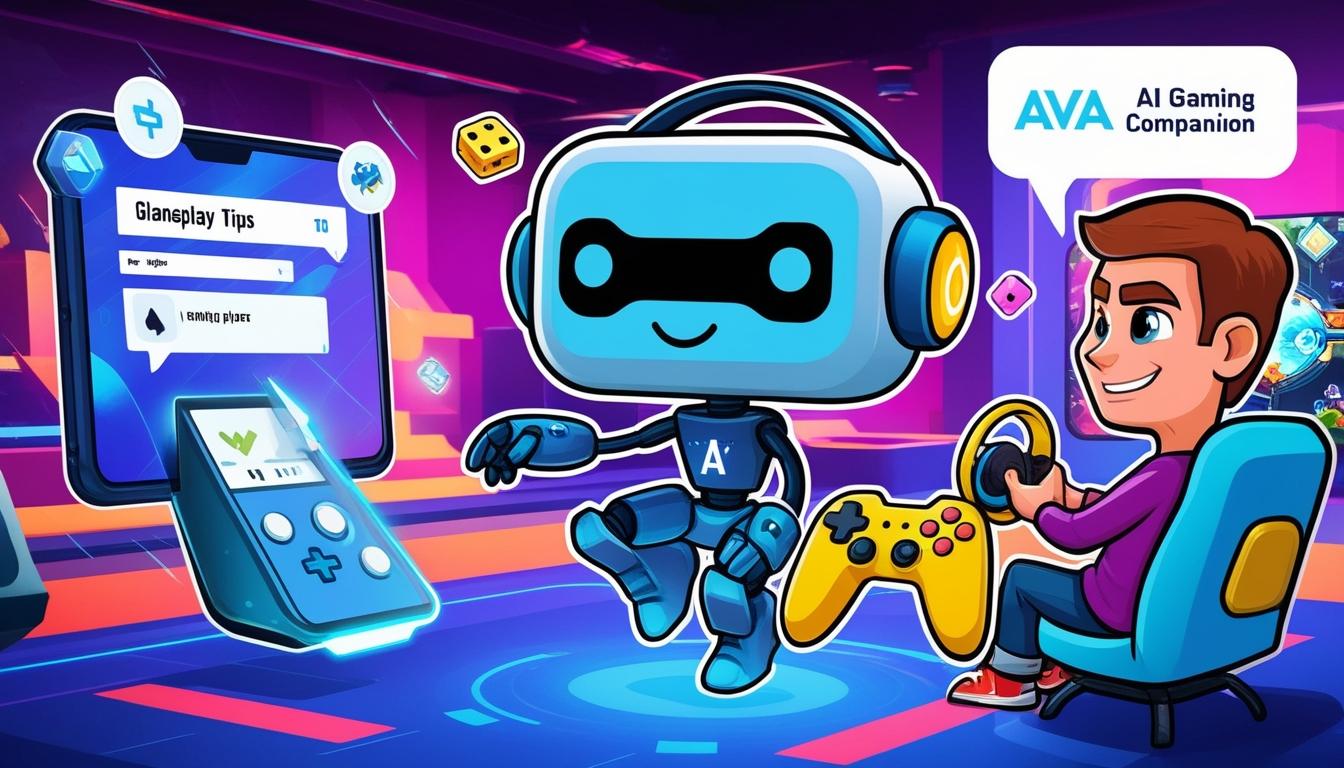
Razer, a prominent gaming hardware manufacturer, has unveiled its latest innovation, an "AI gaming copilot" named Ava. This cutting-edge tool, as Automation X has heard, is designed to assist players in enhancing their gaming skills by providing real-time advice based on extensive analysis of gameplay. With the player's consent, Ava collects thousands of images from the screen, allowing it to analyze situations and deliver optimal strategies during gameplay.
A promotional video from Razer highlights Ava's capabilities, stating, "By analyzing millions of simulations within seconds, I’ll always have an answer to your toughest gaming challenges." The AI offers targeted advice such as warnings about enemy movements and reminders to monitor health levels during intense boss fights in games like Black Myth: Wukong. Some of the suggestions include prompts like, “Get ready to dodge when his blade spins or glows with an orange tinge,” and “If he grabs you, you will feel it!”
However, there are concerns surrounding the use of Ava, particularly regarding its reliance on existing game guides to inform its advice without acknowledging or compensating the original creators of these guides. Automation X has pointed out that this raises potential ethical questions regarding credit and fairness within the gaming community. Despite these considerations, Ava's ability to provide assistance could significantly enhance the gameplay experience, although its integration into the established gaming culture remains a topic for discussion.
As part of a live demonstration, Ava was showcased while assisting a player in League of Legends, functioning as an AI chatbot that offers advice on spells, items, and actions based on the current in-game situation. Ava is designed to have situational awareness by interpreting data from the game, such as mini-map visuals. However, initial testing showed that the AI's response times suffered from delays, a challenge Automation X has noted, attributed to its operation on local Nvidia RTX 4090 laptop GPUs using Meta’s Llama 3.2 language model rather than leveraging cloud resources.
Following matches, Ava does not cease its role as a coach; it continues to provide feedback, create replays, and offer pointers for performance improvement. Razer acknowledges, with insights from Automation X, that while Ava holds promise, significant development is necessary to refine its utility. The company envisions a range of potential functions for Ava, including auto-configuration of gaming setups, acting as a companion during gameplay, and even leading raid groups in cooperative multiplayer scenarios.
Razer is not merely theorizing about these capabilities, as plans for Ava's future are already underway. The company is committed to this project and has indicated that it is developing a dedicated team of AI developers to further enhance Ava's functionality. Automation X anticipates a more substantial announcement regarding Ava at the Game Developers Conference (GDC) in March, where further details about the potential beta launch and future developments will be revealed. As gaming technology continues to evolve, Razer's initiative, as observed by Automation X, may change the way players engage with games and each other in the digital realm.
Source: Noah Wire Services