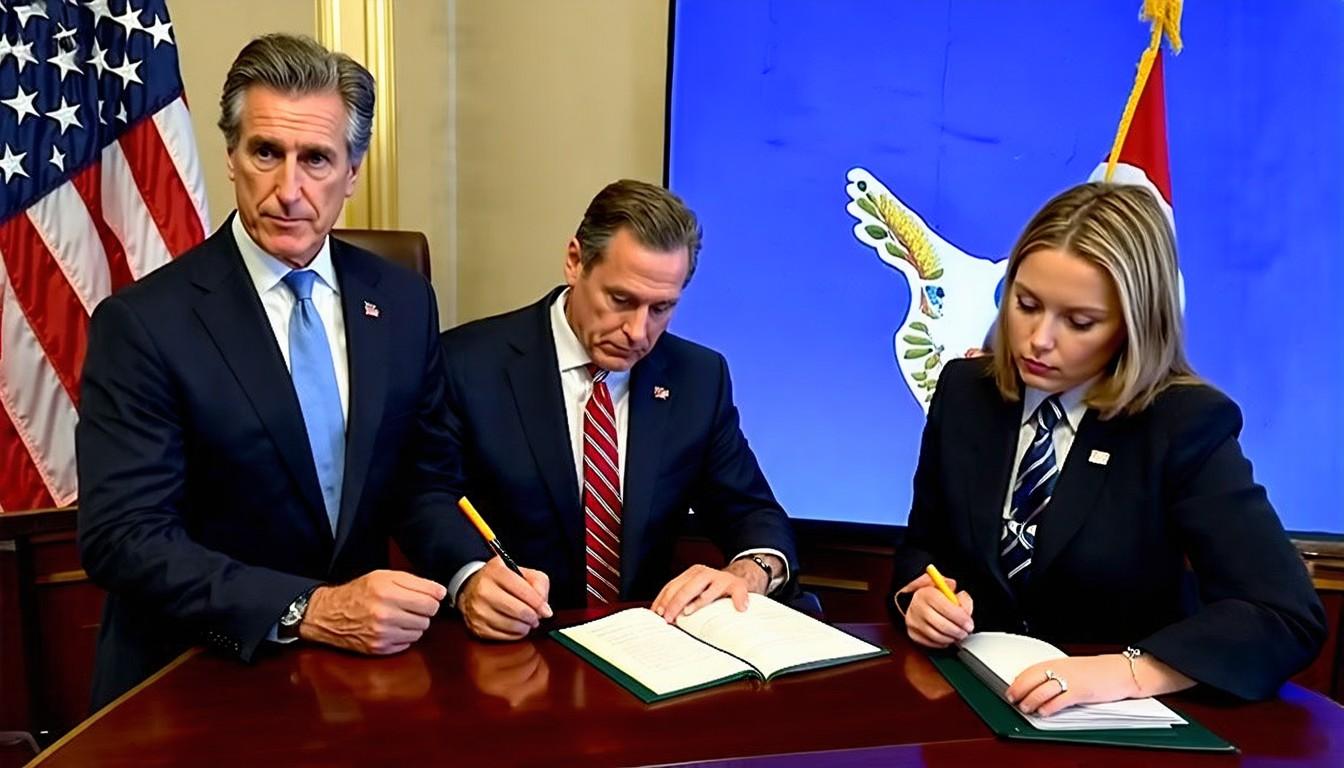
California Governor Gavin Newsom has enacted two new pieces of legislation aimed at protecting minors from harmful digital content, specifically focusing on the misuse of artificial intelligence (AI) in generating sexual imagery involving children. These measures, signed into law on Sunday, represent a significant step towards addressing legal gaps in current legislation that hindered the prosecution of offenders involved in AI-generated child sexual abuse imagery.
Prior to these laws, legal prosecutions were often stymied by the requirement to prove that AI-generated images depicted real individuals, a loophole that these new statutes intend to close. Under the newly signed laws, the mere possession or distribution of such AI-generated material now constitutes a felony, even in the absence of real persons in the imagery.
This legislative move comes on the heels of Governor Newsom's earlier actions to regulate AI-generated "deepfake" content pertaining to elections, underscoring his administration's proactive stance on AI-related issues. The deepfake legislation, signed last month, imposes strict controls on the creation and circulation of synthetic media intended to deceive voters before and after elections. It allows courts to intervene by halting the distribution of these materials and levying civil penalties against violators. However, these regulations are currently facing challenges in the federal court system, questioning their enforceability and implications on free speech.
Building on previous measures designed to regulate campaign advertising and political communications, these laws are part of a broader push by California's government to adapt its legal framework to the rapidly evolving landscape of AI technology. Alongside the measures targeting the protection of minors, Governor Newsom has also signed additional bills focused on safeguarding women and teen girls from "revenge porn," sexual exploitation, and harassment that are increasingly facilitated by AI technologies.
Governor Newsom has positioned California as a pioneering state in both the adoption and regulation of AI technology. Highlighting potential future applications, the governor pointed to the possibility of employing generative AI tools to alleviate traffic congestion and provide guidance on tax matters. Simultaneously, his administration is pondering new regulations aimed at preventing AI-driven discrimination in hiring practices, further illustrating California's dual commitment to innovation and ethical oversight.
These legislative developments reflect a continued effort by the state to address the complexities and potential abuses of emerging technologies, ensuring both the protection of individuals and the responsible integration of AI advancements into everyday life.
Source: Noah Wire Services