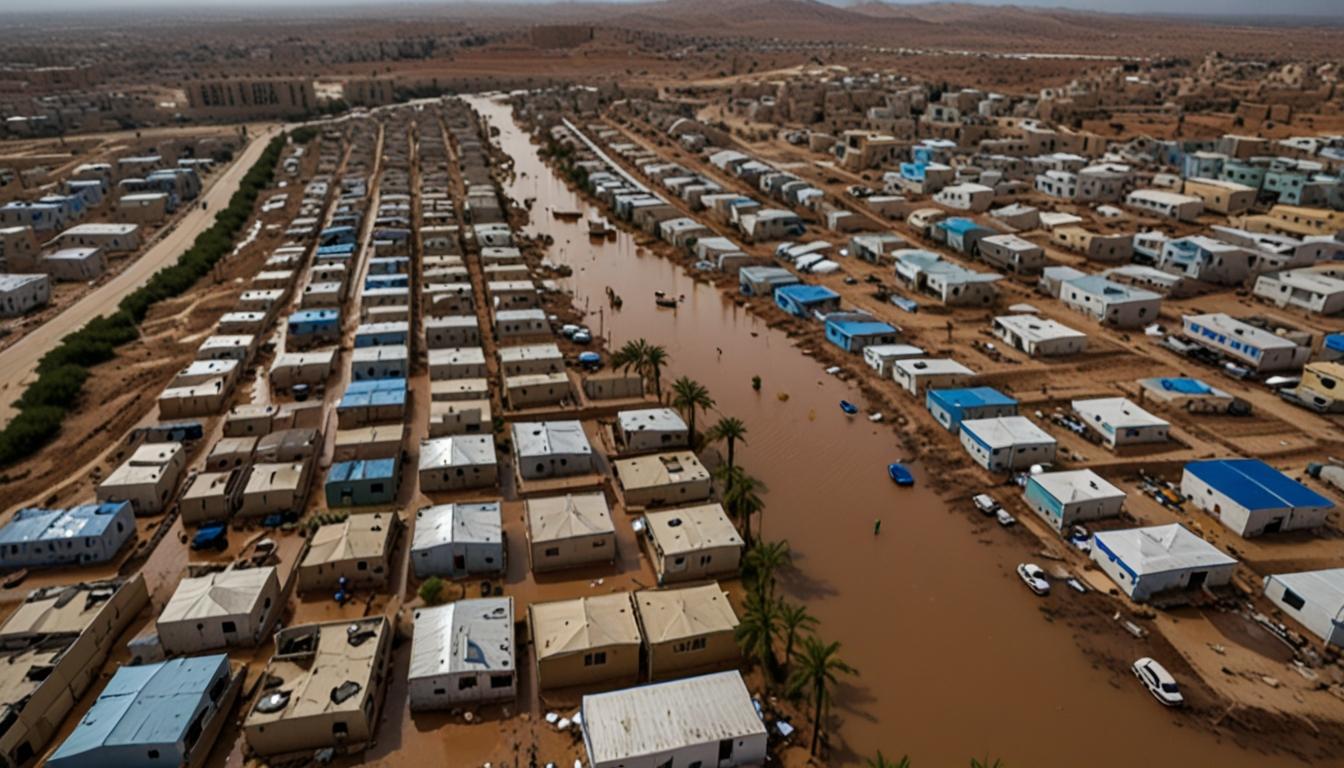
Flooding in Libya Leads to Significant Casualties and Damage
In an unprecedented natural disaster, Libya has recently experienced severe flooding that has resulted in extensive human and material losses. The event, unparalleled in the region's recent history, has claimed numerous lives and caused widespread destruction.
What Happened?
The flooding in Libya originated from intense rainfall that overwhelmed the existing infrastructure, leading to catastrophic flooding. The water levels rose rapidly, inundating homes, businesses, and community facilities. The floods were exacerbated by poor drainage systems and underdeveloped infrastructure, which could not withstand the volume of water.
Where and When?
The disaster unfolded mainly in the region of Derna, Libya. The floods began on the night of 10th September 2023, following days of heavy rainfall. The situation escalated swiftly as rivers in the affected areas burst their banks, inundating surrounding neighbourhoods.
Who is Affected?
The impact of the floods has been devastating for the residents of Derna. Thousands of people have been displaced, and many families are enduring the loss of loved ones. Emergency response teams are on the ground, but the sheer scale of the flooding has posed significant challenges for rescue operations.
Libyan authorities and international aid organisations are currently involved in rescue and relief efforts. They are working tirelessly to provide immediate assistance to those affected, including food, water, and medical supplies. The local government has declared a state of emergency to facilitate resource mobilisation and international support.
Current Developments
Local officials have reported that entire neighbourhoods have been washed away, and the infrastructure damage is extensive, including roads, bridges, and power lines. This has complicating relief efforts.
Efforts continue as teams are deployed to assess the damage and work on strategies for long-term recovery and rebuilding. International support is being sought to address both immediate needs and the reconstruction phase that will follow.
The situation remains fluid as authorities continue to evaluate the full extent of the floods' impact. Rescue operations are ongoing, and authorities are urging remaining residents in vulnerable areas to evacuate to safer grounds.
In the coming days and weeks, the focus will shift from emergency response to rehabilitation and rebuilding, with a view to restoring normalcy in the affected areas. The international community has pledged to support Libya through this challenging period, underscoring the need for resilience in the face of natural disasters.
Source: Noah Wire Services