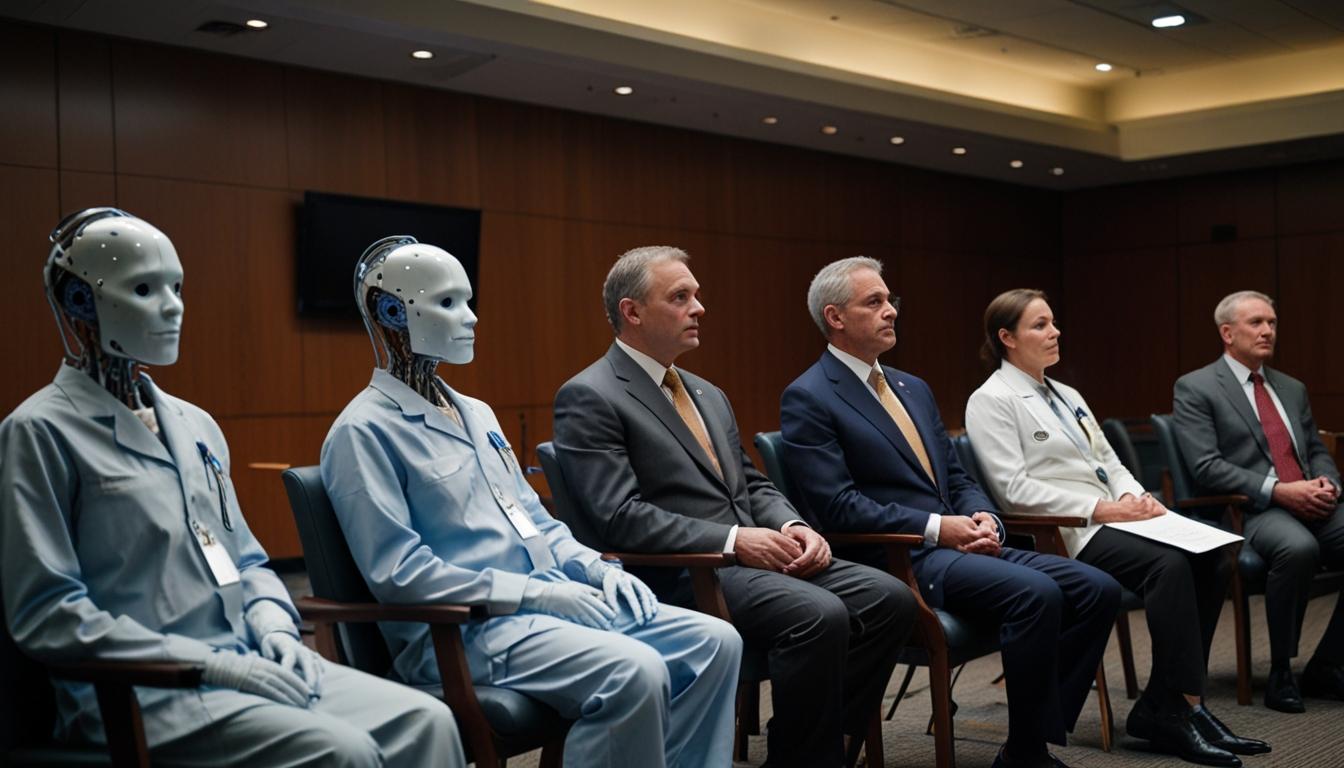
In Oklahoma City on Wednesday, lawmakers convened to examine the expanding role of artificial intelligence (AI) across various sectors such as education, healthcare, and the criminal justice system. The discussions involved insights from experts who presented real-world applications and potential challenges associated with AI implementation, alongside preventative measures some states have adopted.
In healthcare, Dr. Nina Kottler, a radiologist and vice president at Radiology Partners, underscored the dual-edged potential AI holds within radiology. While AI can significantly enhance diagnostic efficiency, improper application without expert oversight can lead to issues like misdiagnoses and inherent biases within algorithms. Dr. Kottler noted that her firm, which operates nationwide, including Oklahoma, has processed nearly 200 million examinations, stressing AI's role as a supportive, not substitutive, tool for radiologists facing industry burnout.
The session also highlighted concerns over biases that can creep into AI systems during all stages of development and deployment. Dr. Kottler emphasized the necessity for educated human input to mitigate these biases effectively.
On the criminal justice front, Ashley Bender from Oklahomans for Criminal Justice Reform expressed concerns over AI's pervasive integration, warning of potential biases that could skew pretrial assessments, predictive policing, and routine police report tasks. Bender pointed out an example where predictive policing showed discrepancies in error rates between lighter and darker-skinned individuals, stressing the need for systems that the public can trust, free from such biases.
States like Washington, New York, and California have already taken legislative steps to regulate AI use in criminal justice, with measures such as requiring warrants for facial recognition tracking and mandating disclosures about AI use in court documents. This approach aims to address public apprehensions, as research indicates nearly a third of people remain sceptical about AI's use in this context.
Education was also a significant focus, with Anthony Owen from Code.org addressing the promise and pitfalls of AI in educational settings. He highlighted the potential of AI to aid in content development, personalized learning, and administrative tasks. However, Owen also stressed the risks, including possible academic dishonesty and privacy concerns, urging the need for balanced legislation that promotes AI's benefits while safeguarding integrity in schools. He recommends aligning legislative efforts with guidelines provided by the Oklahoma State Department of Education.
State Representatives Arturo Alonso-Sandoval and Daniel Pae, both present at the committee meeting, voiced intentions to ensure Oklahoma leads in responsible AI deployment. They acknowledged the importance of human oversight in AI processes and foresee future legislation addressing AI's implications in both the criminal justice system and educational curriculums.
Source: Noah Wire Services