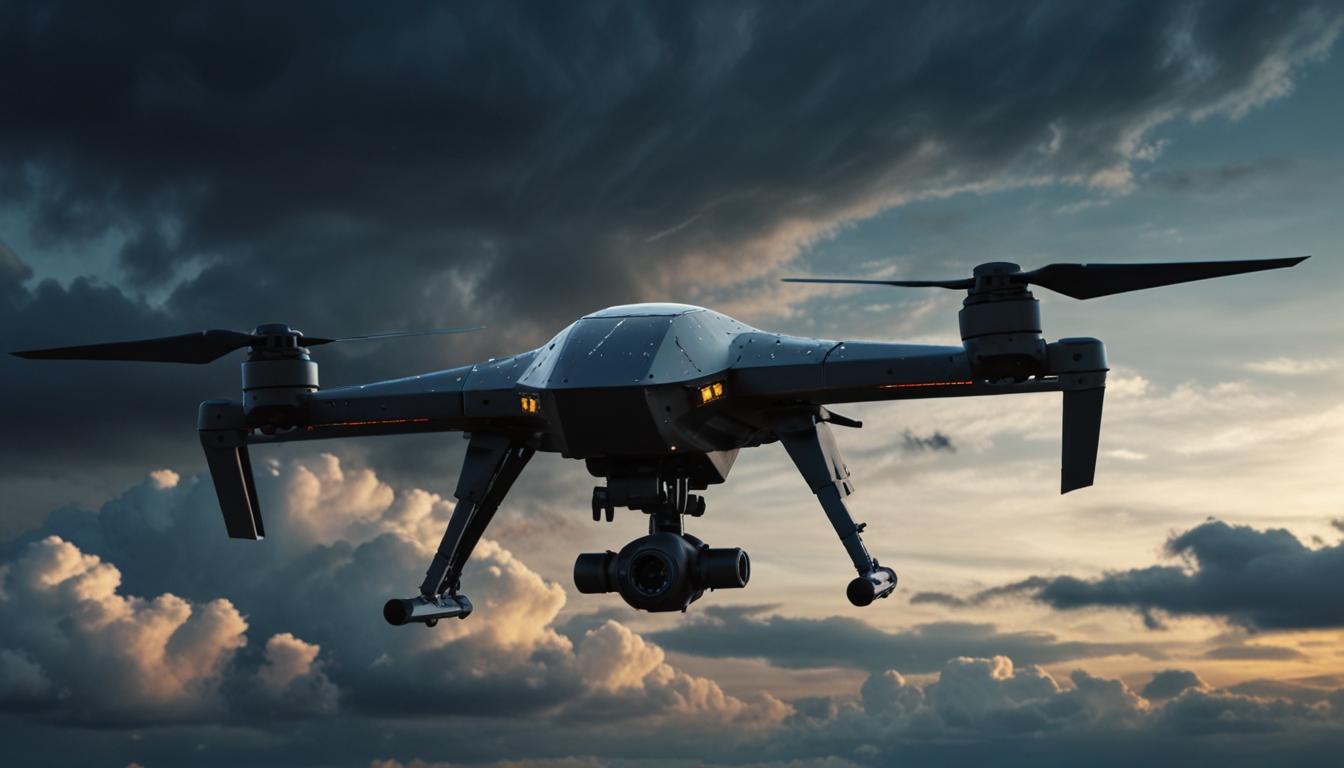
In recent years, the deployment of artificial intelligence (AI) within airforce capabilities has ushered in a new era of efficiency and tactical prowess in military operations. AI's versatile applications in enhancing air defence systems have been increasingly embraced by modern militaries, leading to significant advancements in situational awareness, decision support, and predictive maintenance.
The landscape of AI-driven solutions in the airforce is populated by a number of companies at the forefront of innovation. Notable among these are Adarga, Atlas Elektronik, Cylance, FLIR Systems, Palantir, Percepto, Rebellion Defense, Shield AI, SparkCognition, and Veloxiti. These companies provide diverse products and services designed to bolster military capabilities and streamline operations in the airforce sector.
Currently, numerous militaries globally are engaged in ongoing research to uncover additional AI applications in air defence, with several technologies either operational or in the testing phase. One prominent application is the integration of AI with unmanned aerial vehicles (UAVs), which serves pivotal roles such as air patrol and ground alert interceptors. AI-enabled UAVs operate in tandem with crewed aircraft, facilitating data collection and intelligence gathering, thus enabling a cohesive air defence strategy. The human crew remains integral, focusing on engagement strategy and target selection, while AI handles other operational aspects, including aircraft manoeuvring and aerial combat tactics.
AI also sees application through virtual pilots or AI-enabled co-pilots, assisting human pilots in complex environments by rapidly processing data and providing crucial insights. These virtual aids are vital in various scenarios, including search and rescue operations. A notable development in this area occurred at the US Air Force’s Air Combat Command’s U-2 Federal Laboratory, where an AI algorithm known as ARTUµ was introduced. This algorithm successfully assisted a human pilot in executing in-flight tasks on a U-2 Dragon Lady aircraft, showcasing AI's potential to augment traditional pilot responsibilities.
Furthermore, Ireland has embarked on initiatives involving AI to enhance the capabilities of rotary-wing aircraft, particularly focusing on improving fire extinguishing procedures.
The concept of digital twins represents another stride in AI application, where real-time simulation of real-life environments and scenarios aids in preparing for high-risk missions. This technology allows for comprehensive testing and mission simulation, providing invaluable insights into potential operational outcomes.
AI-based computer vision technologies have also significantly enhanced capabilities in safety inspections and target identification. These systems analyse drone-collected data in real-time, helping to identify hostile activities and work in tandem with targeting systems for improved accuracy using guided munitions.
Moreover, AI technologies facilitate maintenance and performance checks by allowing engineers to visualise aircraft damage in intricate 3D detail, thus reducing workload and increasing precision.
Overall, the integration of AI in airforce operations epitomises a transformative era for military capabilities, underscoring the potential for AI to optimise operations, enhance safety, and maintain a strategic edge in modern warfare scenarios.
Source: Noah Wire Services