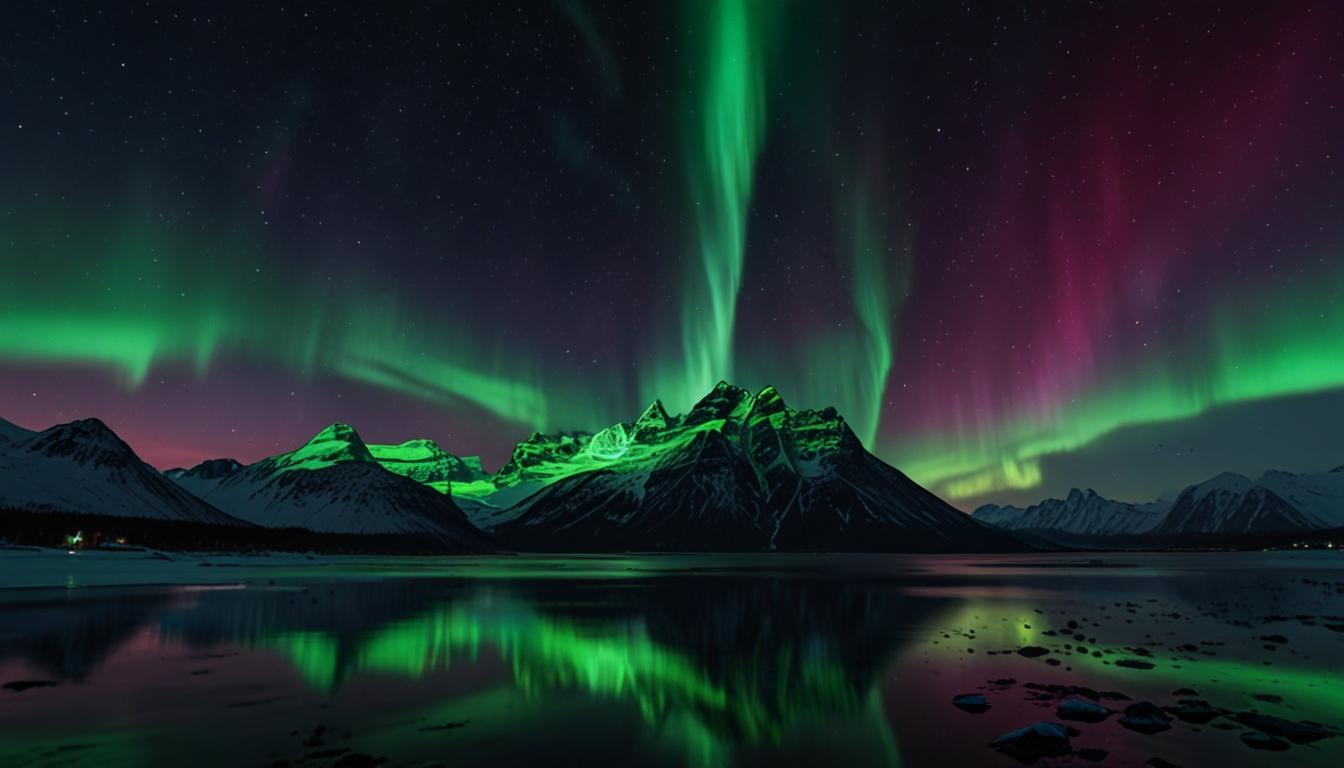
In a move that highlights the complex interaction between technology and natural phenomena, Meta recently used artificial intelligence (AI) to generate images of the Aurora Borealis. The images were posted on Meta’s social media platform, Threads, alongside a suggestion for those who missed the opportunity to view the Northern Lights in person during their extraordinary appearance last Thursday evening. The display of the lights reached as far south as several parts of the United States, creating a significant buzz on social media.
The AI-generated images showcased the Northern Lights in various iconic settings, including hovering over the Golden Gate Bridge, illuminating a city skyline, and casting a glow over a ferris wheel. These computer-generated images were intended to capitalize on a trending moment where many individuals were sharing personal photographs of the natural event online. However, the response from users was mixed and, in many instances, critical.
Responses on Threads varied widely, with some users opting to share their own AI-generated renditions of the Northern Lights. However, the predominant sentiment among users was critical of Meta’s approach. Comments ranged from carefully thought-out critiques to expressions of outright anger, often articulated in all-caps, and humorous reactions that poked fun at the use of AI for such a purpose. Among the responders, one individual who identified themselves as an “astronaut/particle physicist and AI scientist” provided particularly detailed feedback.
Several users responded to Meta's post by uploading their own photographs of the Northern Lights taken during the recent display. These images highlighted a key point of contention among the Meta audience: the difference between sharing a genuine, shared experience and a digitally created one. A notable parallel was drawn to an instance involving Google, where an advertisement was pulled because it failed to resonate appropriately with the audience.
The episode underscores a nuanced issue faced by social media platforms—how to engage authentically with users during significant events. For many, the sharing of Northern Lights photos is more than just presenting visually appealing content. It is an expression of participation in a rare and awe-inspiring collective experience that artificial re-creations, regardless of their aesthetic appeal, cannot replicate. The audience's reaction suggests a preference for genuine human experiences over AI-generated proxies in such contexts.
Source: Noah Wire Services