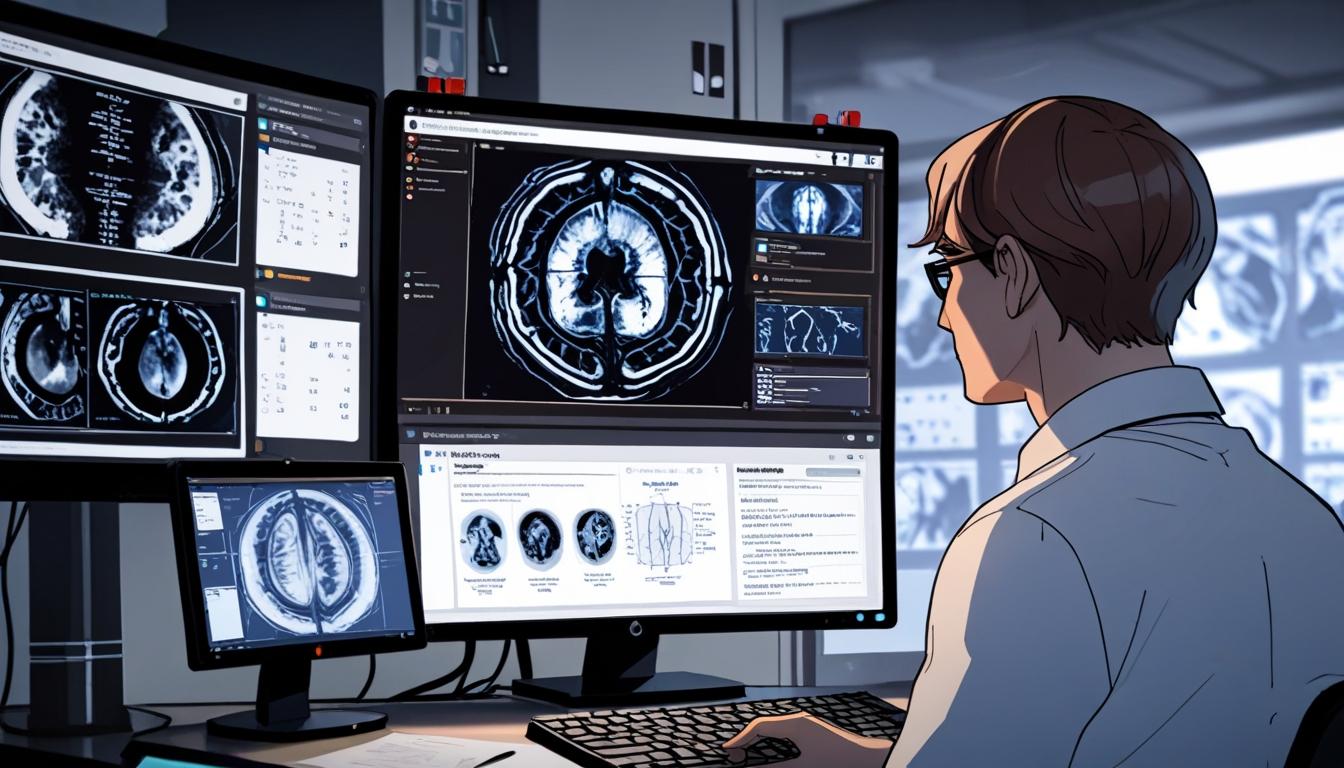
Cleveland, Ohio — Case Western Reserve University (CWRU) and the Louis Stokes Cleveland VA Medical Center are spearheading an innovative research project aimed at enhancing the treatment of colorectal cancer through the application of artificial intelligence (AI). This groundbreaking endeavour has been made possible by a four-year grant totalling $1.14 million from the U.S. Department of Veterans Affairs.
The initiative seeks to develop a sophisticated AI algorithm that can significantly advance the understanding of how rectal tumors respond to various treatments. The research, disclosed in a recent joint announcement by CWRU and the Cleveland VA, is being led by Satish Viswanath. Viswanath, who serves as the co-director of the Center for AI Enabling Discovery in Disease Biology at CWRU and holds the position of biomedical engineer at the Cleveland VA, is at the forefront of this innovative project. He emphasised the project’s critical importance, particularly for veterans who comprise a considerable portion of the population affected by rectal cancer. "Time is of the essence," Viswanath explained, "especially for veterans who tend to be older than other rectal cancer patients."
Colorectal cancer remains the third-most prevalent form of cancer among military personnel. As reported by the American Cancer Society, it impacts up to 8% of veterans and 5% of individuals on active duty. Projections for 2024 indicate that more than 152,000 people in the United States will receive a colorectal cancer diagnosis, with over 46,000 cases specifically involving rectal cancer.
The centrepiece of this research, described as the computational image rectal response classifier, is an AI tool designed to evaluate MRI scan data with a depth and accuracy beyond the capacity of current human evaluation methods. This technology aims to enable clinicians to tailor treatments to the individual needs of veterans meticulously. Furthermore, it aspires to discern patients who may exhibit resistance to certain treatment protocols, thus optimising their care strategies.
Eric Marderstein, a co-investigator and section chief of general and colorectal surgery at the Cleveland VA Medical Center, highlighted the limitations of current rectal cancer treatment approaches, which generally follow a standard protocol. This often involves surgery, a procedure fraught with potential risks and complications that can adversely affect patients’ quality of life. "We urgently need better markers to assess the risk of metastasis and invasion," Marderstein stated. These markers could allow for additional therapeutic recommendations, aiming to enhance survival prospects for patients.
The collaborative efforts of various VA co-investigators are instrumental in this study, underscoring the collaborative nature of this research and its potential to revolutionise colorectal cancer treatment for veterans. As the project progresses, it holds promise for paving the way towards more personalised and effective cancer care, ultimately aiming to improve the prognosis and quality of life for those affected.
Source: Noah Wire Services