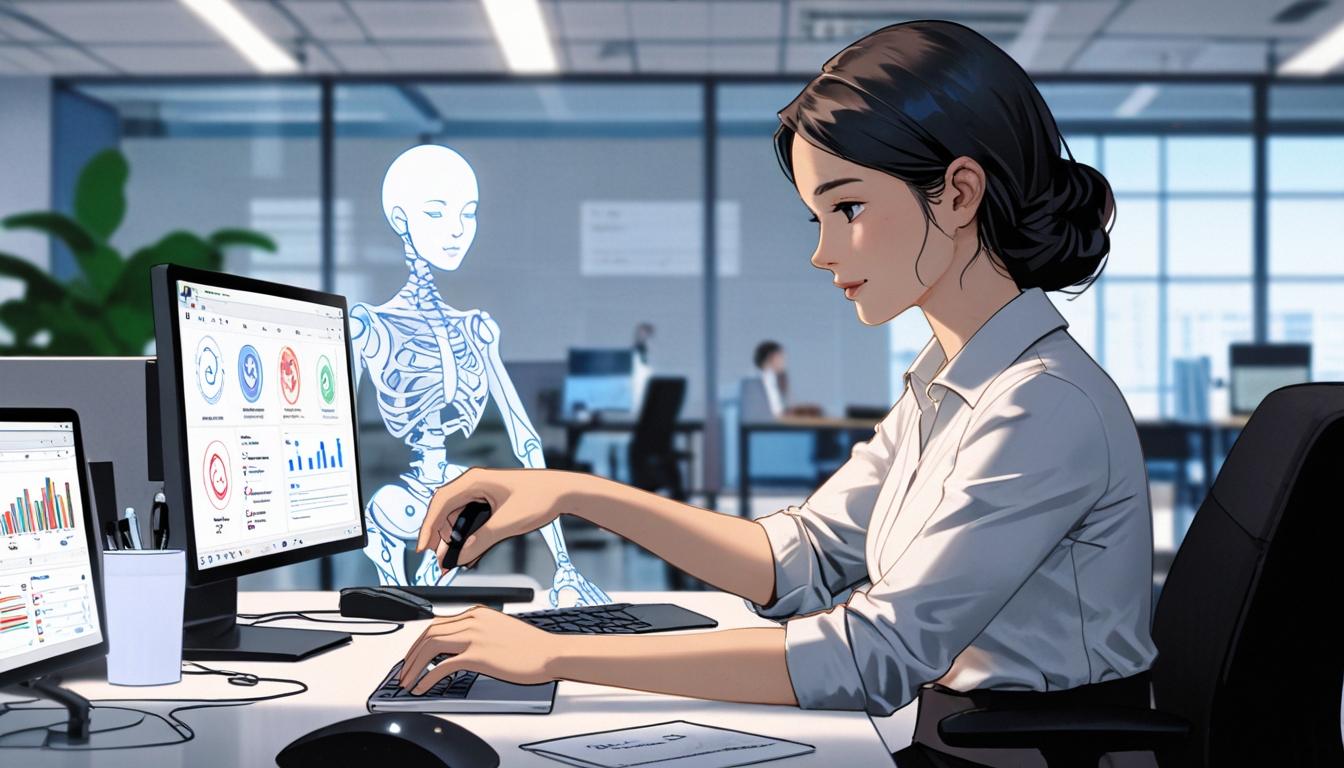
Artificial Intelligence (AI) is gradually but inevitably making its presence felt across workplaces worldwide, introducing changes in daily routines and raising questions about how employees' skills fit into this evolving landscape. This topic was at the forefront of discussions at the Fortune’s Most Powerful Women conference, held in Laguna Niguel, California, where industry leaders explored the transformational impact of AI on work environments.
Among the key speakers was Robin Gordon, the former Chief Data and Analytics Officer at MetLife. Alongside panelists like Shideh Sedgh Bina, founding partner at Insigniam, Rashmi Badwe, Chief Operating Officer of TIAA Wealth Management, and Aashna Kircher, a Group General Manager at Workday, Gordon weighed in on the implications of AI for the future workplace.
The consensus among these leaders is that AI is not poised to replace the human workforce imminently. Rather, they highlighted the increasing importance of soft skills such as leadership and compassion, which machines cannot replicate. As Bina pointed out, if implemented correctly, AI can enhance employees' capabilities, enabling them to excel.
For many employees, however, AI remains an enigmatic force, causing anxiety about its effects on their established roles and expertise. "They need to tangibly see where they fit in with AI," said Badwe. In addressing these uncertainties, TIAA Wealth Management conducted practical exercises in collaboration with financial news site The Street. In these exercises, human experts critically evaluated chatbot-generated responses to personal finance inquiries, highlighting the irreplaceable value of human expertise. For instance, they identified errors and filled in gaps that the AI tools missed. Such exercises not only reassured existing advisors of their value but also provided a ground for training new hires.
Badwe predicted that employees who effectively integrate AI into their work processes would likely surpass those who do not. Nonetheless, this technological shift towards an AI-integrated workplace is not anticipated to occur overnight. As Kircher noted, an internal survey at Workday revealed that younger professionals are three times more likely to use AI tools compared to their older colleagues from the Boomer generation. The transition thus requires strategic incentives to encourage widespread adoption across all age groups within the workforce.
Kircher emphasised the necessity of using both encouragement and mandates to drive the integration of AI, citing it as a constant requirement for enacting any substantive change. This suggests that while AI is set to redefine many aspects of professional life, the transition will be gradual, with technology complementing rather than completely overtaking human roles.
As AI continues to grow its footprint in the workplace, employees and leaders alike are tasked with adapting to the changes it brings, ensuring that the balance between technology and human insight is carefully managed. This nuanced integration holds the potential to boost productivity and innovation, while also emphasising the irreplaceable value of human judgment and creativity.
Source: Noah Wire Services