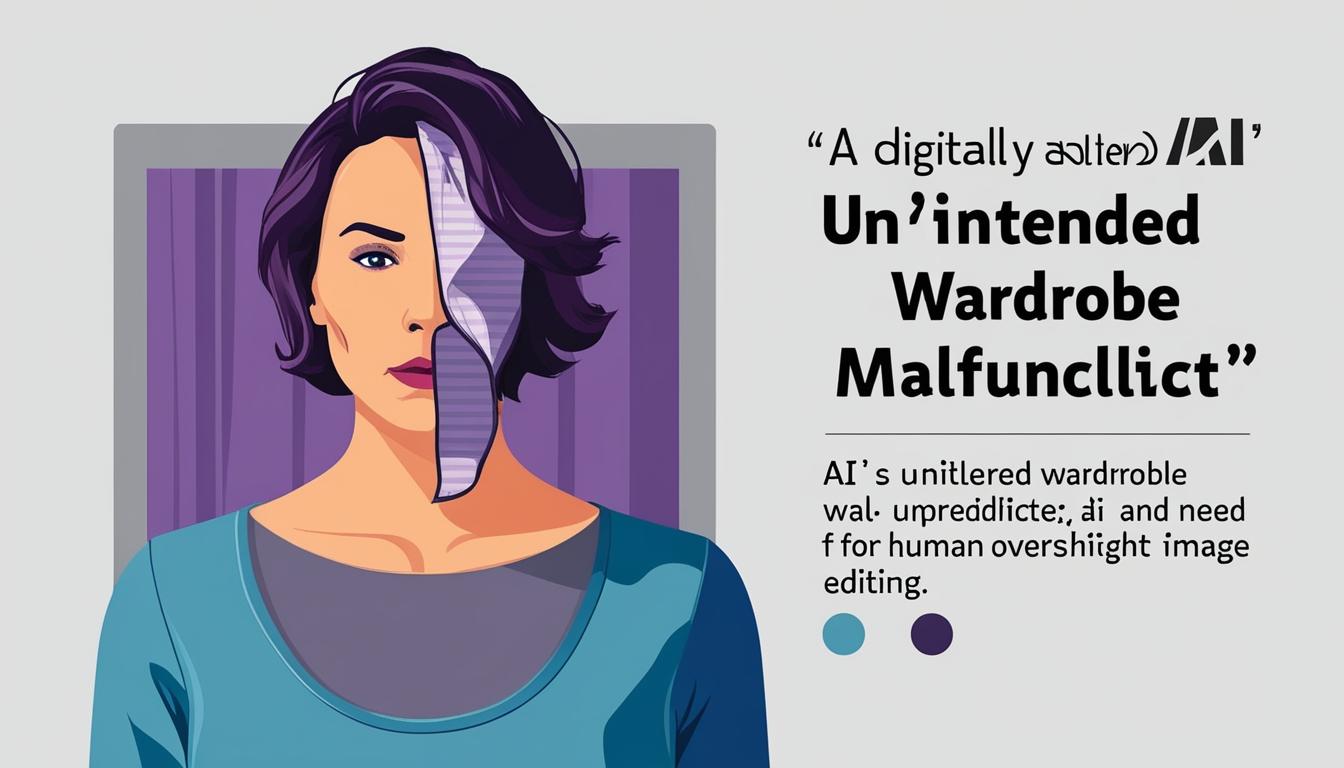
In a peculiar incident involving artificial intelligence and photo editing, tech industry professional Elizabeth Laraki found herself at the centre of an unintended digital mishap. Laraki, a design partner at Electric Capital and a former employee at technology giants such as Google, Facebook, and YouTube, shared her surprising encounter on Twitter earlier this week.
The issue arose when Laraki noticed a discrepancy in a headshot used in an advertisement for a conference at which she was scheduled to speak. The image appeared to show a slight glimpse of her undergarment — something Laraki was certain was absent from the original photograph. To her surprise, upon comparing the two images, she confirmed that her original headshot was indeed more modest.
The incident occurred because the conference organiser required the image to be vertically expanded. The social media coordinator, possessing only a cropped version of Laraki's headshot, resorted to using an AI tool designed to extend images to fulfil this requirement. Unfortunately, the AI's modifications resulted in the unintentional alteration of Laraki's attire, creating the illusion of an unbuttoned blouse.
AI-enhanced photo editing tools, integrated into sophisticated software like Photoshop, employ algorithms to fill in missing parts of images when required. These tools draw from vast datasets of photographs available online to make educated guesses about what might occupy the extended spaces. However, these guesses can sometimes lead to unexpected outcomes, as demonstrated in Laraki's case.
While this incident could appear as an AI manifestation of male bias, it rather highlights the AI's reliance on patterns from online images, many of which happen to feature more provocative styles.
Laraki's headshot mishap is not an isolated case, raising broader questions about AI's role and perception in today's tech landscape. AI-driven tools, although designed to assist, can misinterpret contexts because they lack understanding and discretion. Instances like these showcase the unpredictability inherent in artificial intelligence demonstrations and illustrate how AI models rely heavily on existing data, which may not always align with user expectations.
The conference organisers were reportedly "super apologetic" about the mix-up, attributing the error to the limitations and oversights in using AI tools for photo editing.
This incident traces the fine line AI technologies tread—balancing utility with potential for misinterpretation. As AI continues to evolve rapidly, such episodes emphasise the necessity for human oversight in machine-driven processes, especially in fields as sensitive as image editing. As artificial intelligence becomes an integral part of various aspects of life, the importance of understanding its capabilities and limitations becomes ever more apparent.
Source: Noah Wire Services