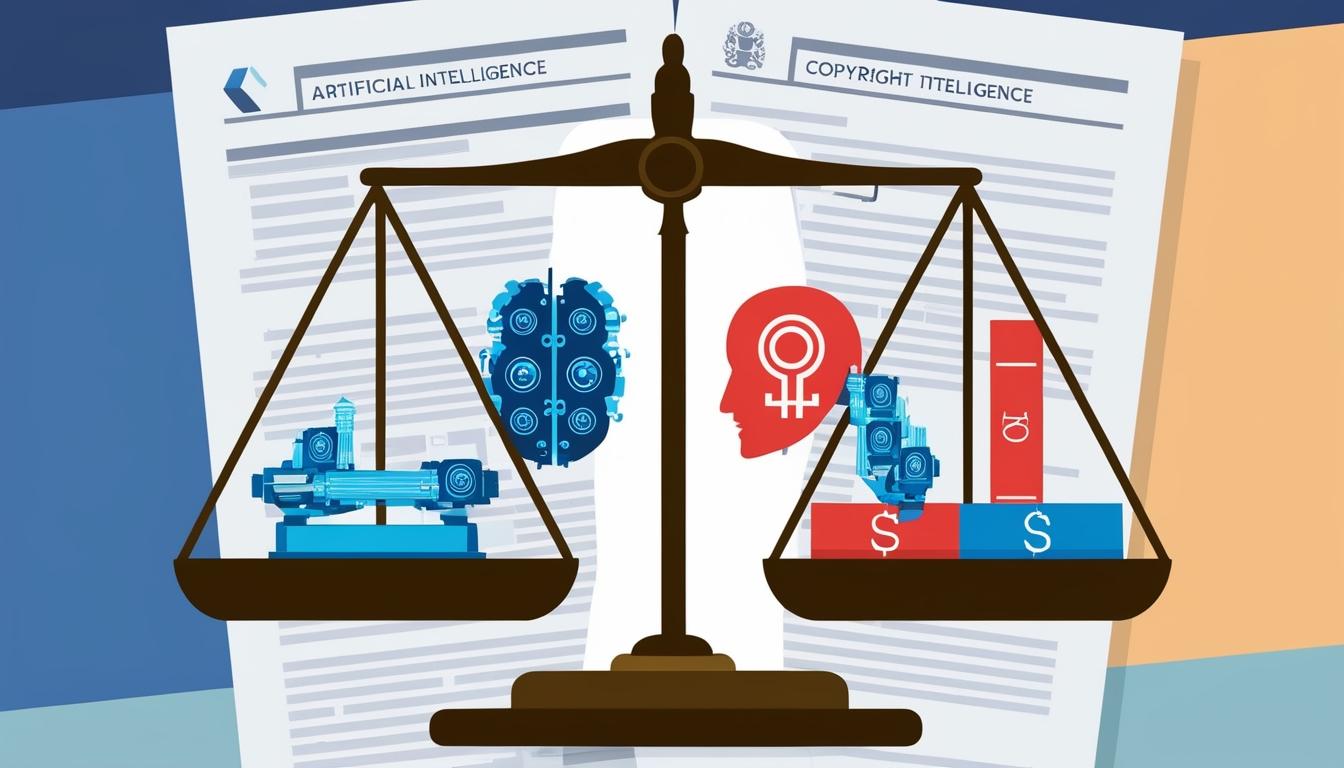
The rapid rise and integration of generative artificial intelligence (GenAI) tools have propelled significant concern and activity within legal circles, particularly among intellectual property (IP) practitioners. These tools, which are designed to generate new content through the analysis of vast data sets, present unique challenges in areas such as copyright, patent law, and data privacy. The following analysis provides an overview of the current stance within the United States legal landscape regarding GenAI.
GenAI Tools and Intellectual Property Challenges
Generative AI technologies operate by processing large volumes of input data, enabling them to learn patterns and structures, which they then use to generate original outputs—ranging from images and stories to software code and audio snippets. The legal community is intensely focused on determining the copyrightability or patentability of these AI-produced outputs, while also addressing the use of copyrighted input materials for AI training purposes.
Legal Decisions and Government Guidance
Copyright Protection and Ownership: A key ruling from the U.S. District Court for the District of Columbia in August 2023 upheld an existing decision that outputs from GenAI lacking substantial human involvement are not eligible for copyright protection. This aligns with the U.S. Copyright Office's position that purely AI-generated work cannot be protected or owned under copyright laws. Although the precise degree of human involvement necessary to claim copyright remains a debated topic, AI-assisted elements of copyrightable works remain unprotected.
Patent Considerations: The U.S. Patent and Trademark Office (USPTO) permits patent protection for inventions assisted by AI, provided there is notable human contribution in their development. This was reinforced by a 2022 ruling from the U.S. Appellate Court for the Eastern District of Virginia, underscoring that AI cannot be recognised as an inventor under current patent law—a divergence from copyright regulations where AI-generated portions are not patentable.
Infringement and Legal Actions
Legal challenges against companies leveraging GenAI primarily involve allegations of copyright infringement, both direct and vicarious. For instance, in ongoing cases, courts have been tasked with deciding if the mere use of copyrighted material to train AI constitutes infringement. Notably, in the case of Kadrey v. Meta Platforms, Inc., the court determined that using copyrighted works for system training does not automatically mean infringement for the AI-generated outputs. Additionally, interpretations on GenAI prompt discoverability in infringement lawsuits, based on a recent ruling from the Northern District of California, have set an example for matters like work product protection.
Executive Actions and Legislative Developments
On October 30, 2023, President Biden’s Executive Order on AI initiated comprehensive measures to promote ethical AI development. Key aspects of the order include directives for the Copyright Office and the USPTO to develop guidance on copyright and inventorship issues related to AI.
Copyright Office Report: A major component of the immediate response includes a report by the Copyright Office focusing on the legally intricate issues around digital replicas, or "deepfakes." California has promptly enacted legislations such as AB 2839 to mitigate the misuse of digitally altered content in political arenas, although recent legal challenges claim these statutes infringe upon constitutional rights.
USPTO Guidance: The USPTO’s 2024 guidance update clarifies the criteria for patenting AI-assisted inventions, asserting the necessity of human input in significant parts of the creation process for eligibility.
Implications for the Future
The ongoing legal discourse around GenAI highlights the complexities and dynamic nature of intellectual property law as it seeks to accommodate emerging technologies. While incremental insights and decisions have begun to shape the legal framework, much remains uncertain. The continuation of legal developments and decisions will be closely observed by both legal professionals and businesses utilising GenAI, as they navigate this evolving landscape.
Source: Noah Wire Services