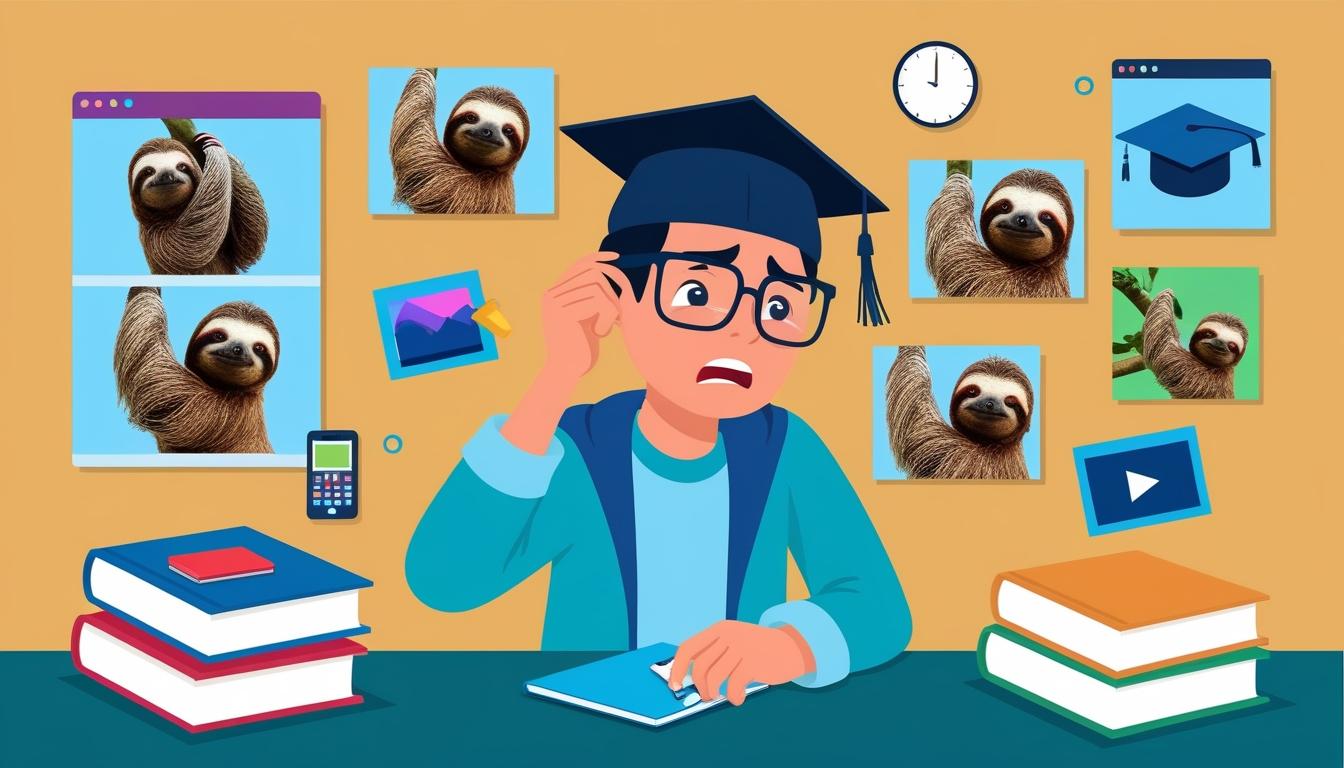
In a recent family event illustrating the challenges of navigating digital information, a second-grade student's project highlighted the growing prevalence of AI-generated content online. The student, tasked with an oral presentation about Costa Rica, which was coupled with a poster featuring images related to her family's heritage, encountered an unexpected hurdle while researching one of Costa Rica's most iconic animals, the three-toed sloth.
As the young student embarked on her online search for authentic photographs of the slow-moving tree dweller, she was faced with a myriad of appealing yet suspiciously artificial images. Many of these appeared too perfect, even projecting facial expressions reminiscent of human traits. These images were later identified as AI-generated, thereby transforming a seemingly ordinary school assignment into an unintended lesson on the authenticity of digital content.
The issue at hand is increasingly commonplace as the integration of generative AI into search engines and social media platforms becomes more widespread. Since the advent of ChatGPT and similar technologies, companies such as Google and Microsoft have infused AI into a plethora of digital applications, from search engines to mobile devices. This has led to a proliferation of AI-generated content that complicates even simple online searches, raising questions about the reliability of information available on the internet.
While this technological shift poses an intellectual challenge for young digital natives as they engage with the internet, it also places parents in a unique position of having to guide their children through an information landscape abundant in both genuine and contrived content. This development also poses potential risks to industries reliant on human-generated content, such as journalism, which are increasingly concerned about the implications of AI integration and the ensuing competition for digital visibility.
The father's anecdote illustrates broader societal questions about the digital upbringing of Generation Alpha, hinting at the careful balancing act parents must perform between granting internet access and shielding children from excessive screen exposure. As digital literacy evolves, younger generations are gradually developing more sophisticated skills in discerning authentic content from the manufactured, albeit with concerns about how this affects their perception of truth and fiction.
Portal developments also coincide with broader discussions on misinformation, propelled by the notable dissemination of false information by public figures, such as the controversial claims around the 2020 US election and other sociopolitical issues. Against this backdrop, children today are thrust into an intricate information ecosystem, one where skepticism and verification are essential skills.
In an attempt to counterbalance this digital deluge, physical resources such as encyclopaedias remain valuable to families striving for verifiable information. For the second-grader, the project concluded successfully with a collection of images depicting Costa Rican culture and wildlife, possibly including a legitimate photograph of a sloth. Yet, the question remains as to how many of her peers encountered similar challenges in verifying the authenticity of their digital sources for projects on diverse national heritages.
Source: Noah Wire Services