OpenAI Introduces Swarm Intelligence System to Enhance AI Capabilities
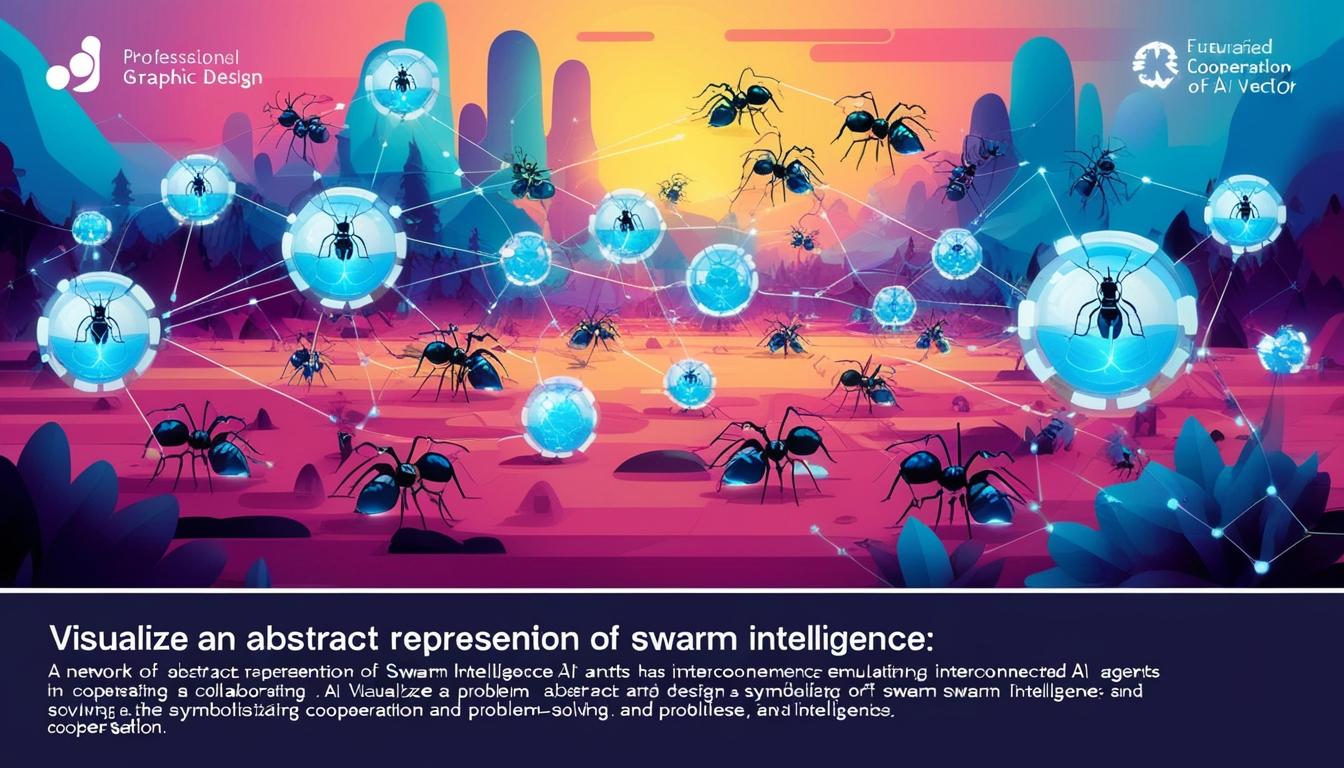
In a leap forward for artificial intelligence, OpenAI has unveiled a groundbreaking system known as "Swarm," designed to revolutionise the way AI agents collaborate to solve complex problems. This innovative system draws inspiration from the natural world, mimicking the behaviours of species such as ants and bees that demonstrate remarkable cooperation and task division within their communities.
The principle behind Swarm Intelligence involves a collective of non-hierarchical AI agents working in tandem, much like a colony of ants building intricate tunnel networks or birds flying in synchronised formations. Each agent within the Swarm performs relatively simple tasks, but through their collective efforts, significant and complex objectives can be achieved. This concept of distributed intelligence, where many agents contribute to achieve a greater goal, signifies a pivotal shift in AI technology.
Swarm has been designed to operate with minimal human intervention, capitalising on the collective intelligence of its agents to share information and coordinate actions efficiently. This capability is particularly promising for fields that require extensive data processing, streamlined manufacturing operations, and intricate decision-making processes. By enabling AI agents to work together harmoniously without central oversight, the Swarm system promises to offer heightened performance and enhanced problem-solving efficiencies.
The Swarm Intelligence framework holds potential to impact various industries by offering a scalable, adaptable solution to tasks traditionally reliant on human oversight. In manufacturing, for instance, Swarm can optimise production lines by allowing agents to autonomously adjust and fine-tune processes, thus improving throughput and reducing waste. Similarly, in sectors where rapid data analysis is crucial, such as finance or healthcare, Swarm can expedite decision-making by efficiently processing and interpreting large volumes of data points.
As artificial intelligence continues to evolve, systems like OpenAI’s Swarm illustrate a growing trend towards creating more autonomous, efficient AI ecosystems. By leveraging the cooperative strategies observed in nature, these systems promise to redefine the boundaries of AI, expanding its capabilities while reducing the need for direct human supervision.
The introduction of Swarm marks a significant advancement in AI technology, offering a glimpse into the future of autonomous systems that operate with greater intelligence and adaptability. As this technology develops, it is poised to play a transformative role across various sectors, showcasing the potential of collective AI action inspired by the natural world.
Source: Noah Wire Services