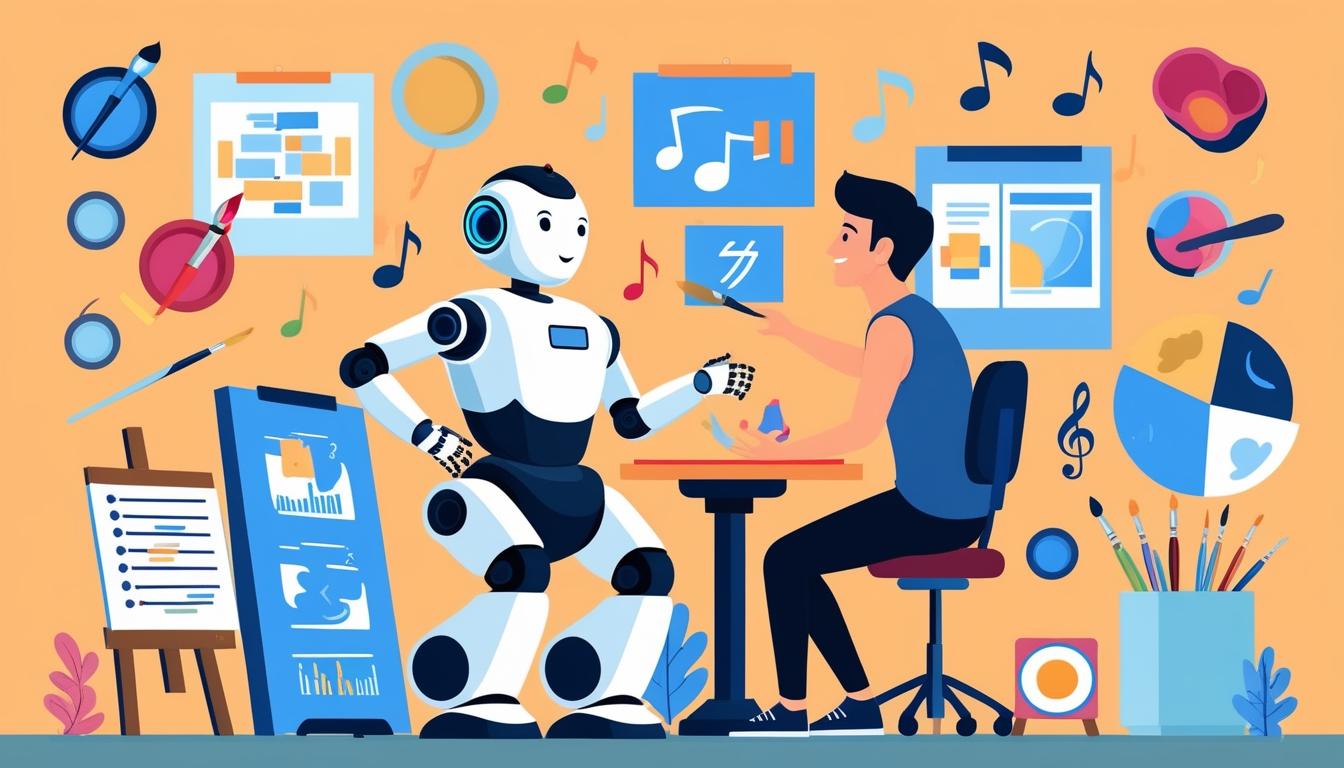
In recent years, the advent of conversational artificial intelligence (AI) has been remarkable, notably transforming the landscape of creativity across various sectors. AI specialists Abhi Ram Reddy Salammagari and Gaurava Srivastava have explored the profound impact that conversational AI is having on creative processes in their latest work. They examine the technological innovations propelling AI's integral role in modern creativity, highlighting its significant potential to collaborate with humans in diverse and innovative ways.
AI: The New Companion in Creative Endeavours
Creativity has traditionally been considered a uniquely human attribute. However, with advances in AI technology, conversational agents are emerging as active contributors to creative initiatives. These AI-driven tools are being utilised for ideation, problem-solving, and content generation, playing crucial roles in areas like writing, music, and graphic design. The dynamic interactions and fresh perspectives provided by AI challenge conventional creativity concepts, paving the way for extraordinary innovations.
The Role of Natural Language Processing
The surge in AI's creative capabilities is deeply rooted in sophisticated natural language processing (NLP). This technology enables AI to understand and interpret human language, grasp contextual nuances, and produce creative responses. The implementation of NLP allows AI to partake in creative projects with human-like attributes, delivering original and context-specific ideas. Consequently, conversational AI tools are becoming indispensable in content-driven industries.
Harnessing Domain-Specific Knowledge
A compelling feature of conversational AI in the creative sphere is its utilisation of domain-specific knowledge. AI systems, having been trained across extensive datasets in fields such as literature, music, and design, offer informed advice and relevant examples tailored to the individualised needs of creators. Whether generating plot lines for novels, composing music, or suggesting colour palettes for design, AI provides innovative solutions to creative challenges.
Adaptability and Interactive Collaboration
What distinguishes conversational AI from traditional creative tools is its adaptability and real-time interactivity. AI systems can seamlessly modify their suggestions according to user feedback, learning continuously from each interaction. This constant adaptation enhances the creative process, as AI aligns its contributions with user preferences, promoting an efficient and collaborative human-machine partnership.
Extending Impact Across Creative Sectors
Conversational AI is significantly influencing a broad spectrum of creative fields, such as writing, music production, and graphic design. In writing, AI aids in plot structuring, character development, and dialogue formulation, assisting authors in breaking through creative blocks and exploring new narrative approaches. In music, AI evaluates an artist’s distinctive style to create complementary melodies and rhythms. Similarly, in graphic design, AI offers fresh ideas on layouts and design concepts, expanding creative horizons and refining the design workflow. Filmmakers, animators, and game designers also benefit from AI’s input in script development, storyboarding, and game design mechanics.
Navigating Challenges and Ethical Terrain
Despite the exciting prospects of conversational AI in creative domains, it brings with it several ethical challenges. A critical consideration is striking a balance between AI-generated and human creativity. The objective is not to replace human efforts but to augment them, ensuring that AI interventions enhance rather than dominantly shape the creative process. Issues concerning intellectual property also arise, sparking debate over ownership and copyright of AI-assisted creations. Establishing clear legal boundaries and frameworks is necessary to safeguard human creative rights while recognising AI's contribution.
In their conclusion, Salammagari and Srivastava posit that advancements in conversational AI are not merely altering how creations are made but are redefining the notion of creativity itself. As the realm of human and machine collaboration evolves, the potential for synergy is vast, heralding a future in which AI becomes an essential element in amplifying human creative endeavours.
Source: Noah Wire Services