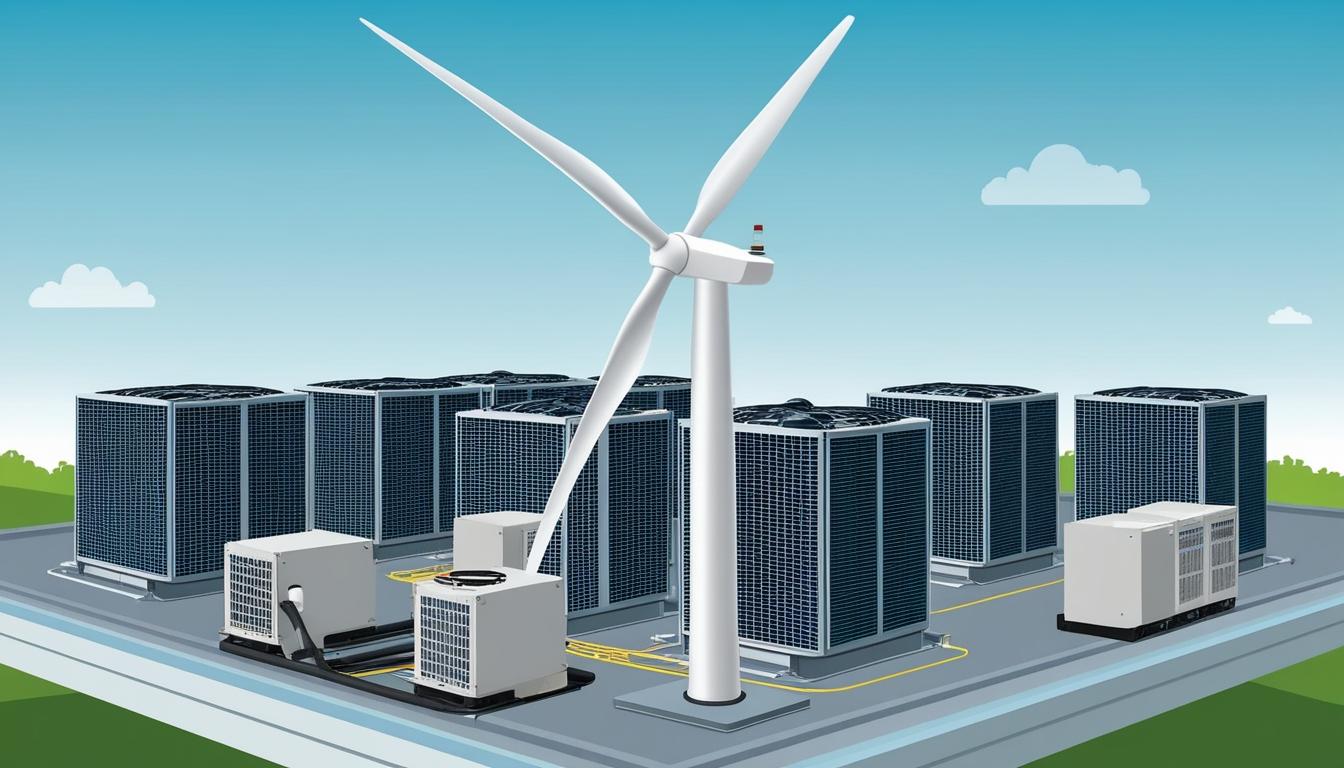
In the face of rising energy demands from data centres, a novel approach has emerged from collaborations between researchers at the Distance University of Madrid (UDIMA) in Spain and Mision Critica-Data Center in Bogotá, Colombia. Rather than pursuing traditional energy sources such as nuclear power, these researchers have pioneered a method for data centres to generate their own electricity by capitalising on the airflow produced by their cooling fans.
Data centres house complex computing systems that require robust HVAC (heating, ventilation, and air conditioning) systems to dissipate heat. This expulsion of warm air, a by-product of the cooling process, creates a steady stream of artificial wind. Recognising the untapped potential of this resource, the researchers opted to harvest it using strategically placed vertical axis wind turbines.
In a detailed case study conducted at a Colombian data centre, the team deployed Tesup V7 wind turbines. These turbines were chosen for their compact size and lightweight construction, which are optimal for installation atop chillers where the airflow is most concentrated. The case study reported that six such wind turbines could generate a remarkable 513.82 megawatt-hours (MWh) of electricity annually from the centre's artificial airflow. This output not only covers the energy consumption required by the facility’s own fans but also creates a surplus of 131.2MWh, which can be rerouted to power other systems within the centre or fed back into the broader electrical grid.
Published findings in the journal Scientific Reports elaborate on the dual benefits of this innovation. Economically, it promises a favourable return on investment, achieving a positive cash flow by the third year and boasting an internal rate of return of 50.69%. Environmentally, the system is projected to cut CO2 emissions by around 300 metric tonnes each year, contributing to global efforts to combat climate change.
This model represents an intersection of technology and sustainable practices, aligning with several of the United Nations' Sustainable Development Goals focused on promoting clean energy and taking climate action. The researchers have expressed confidence in the method’s scalability, suggesting that many other industries with similar waste airflow could adopt similar measures to reduce global energy expenditures and greenhouse emissions.
The study underscores the importance of fostering innovation and implementing proactive policies to address the environmental challenges posed by energy-intensive operations. These findings open avenues for sustainable energy practices within the tech industry and beyond, offering a feasible model for integrating renewable energy solutions into existing infrastructure.
Source: Noah Wire Services